A few days ago I decided to change my screensaver on my PC. I thought I’d look up places where my ancestors lived and fill my screensaver scroll with interesting photos of those places to provide inspiration for my family search and for blog posts. You wouldn’t believe the stories I uncovered! Right here, in the good ol’ U S of A!
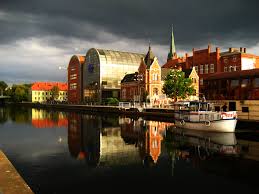
But first, a few shots from my past in the old world:
The photographs of the old world are amazing, but I do have ancestors from the colonial days in America too. My paternal grandmother was born in Potter County, Pennsylvania, and my grandfather, son of Polish immigrants, was born in Cattaraugus County, New York. The two counties share state borders, and from what I’ve heard, Grandma must have crossed the state line where she met my grandfather. I’ve actually driven through Cattaraugus County, and I even stopped in the City where my father and grandfather were born (probably the same city where my grandparents met, considering it is rural New York, and it really is more of a small town), so I really was more interested in seeing images from the Pennsylvania side. (more…)
If you’re lucky, your family has never immigrated. It happens. But since the discovery of the Americas, people have been migrating with increasing frequency. No matter where you live, if you are anything other than indigenous, you can be sure you will find immigrants in your past. People marry outside their traditional cultural and social sets all the time, bringing more groups into the mixture.
While this is usually a good thing, it often makes it difficult to do genealogy. But as my family has found, focusing on one family group at a time helps to organize and focus on the task at hand.
“What’s in a name?” Juliet’s well-known question, in Shakespeare’s Romeo and Juliet, implies that a name has no meaning, therefore Romeo could give up his family’s name without affecting Romeo as a person. Despite Juliet’s assertion, names, especially surnames, tell us a whole lot about a person. If Romeo had changed his surname, as Juliet asked him to do, he would have disassociated himself from his family, making it extremely difficult to prove his paternal identity. And Romeo’s descendants, had he changed his name and lived to have children, would have had a very difficult time growing their family tree past Romeo. As both the Montagues and the Capulets knew, a surname is very important.
Roses or bacon?
Along with a surname comes an association with a larger group of people. Your last name says a lot about who you are and where you come from. Names, like all other words in the English language, have meaning. If I give you a word, such as rose, a picture forms in your head. You have already made some sort of judgment based on that one word, and all I said was rose. In fact, this particular word implies not only a flower, but a specific smell accompanying that flower, making Juliet’s reply (to her own question) that “a rose by any other name would smell as sweet” untrue. If I gave you the word bacon accompanying a picture of a rose, a completely different smell would come to mind. It’s true. They’ve actually done studies on it! This particular phenomena, connecting words to ideas and things, is called semiosis.
But words change, making the meaning derived through semiosis change along with the words themselves. This is called etymology (the evolution of words), and this is where we run into trouble when we do genealogy. We see this in many surnames today. For example, the patronyms Johnson and Johns both indicate that an individual has a forefather by the name of John. One name, Johnson, typically indicates Nordic ancestry, while Johns indicates Welsh ancestry. If you can get that particular patronym far enough back on your family tree, you will actually get to that specific ancestor by the name of John. I have noticed this phenomenon in my family tree. Once we’ve reached the ancestor with the name of John, we suddenly find that John was the son of Harold, and in the next generation back, we learn that Harold was the son of George. This patrilineal method of naming often causes trouble when trying to figure out the matrilineal line. Didn’t John, Harold, and George have mothers too? (more…)





 StoriesFromthePast.com