
Along with his other cemetery photographs, Bernie sent me three tombstones of literary figures. How did he know I majored in English? Perhaps Bernie is more of a kindred spirit than I thought.
The first is a photo of Emily Dickinson’s grave. I have few favorites when it comes to poetry, and Dickinson is easily my American favorite. It is believed that she suffered from Seasonal Affective Disorder (SAD), and many of her poems reflect her struggle. I really relate to her poem, There’s a certain Slant of light, as I also suffer from SAD. When I read it for the first time, I felt that she put into words exactly what SAD feels like. In fact, as the days begin to grow shorter again, and the sun begins to approach that winter “slant,” I am starting to feel “the Heft of Cathedral Tunes” once again.

There’s a certain Slant of light
BY EMILY DICKINSON
There’s a certain Slant of light,
Winter Afternoons –
That oppresses, like the Heft
Of Cathedral Tunes –
Heavenly Hurt, it gives us –
We can find no scar,
But internal difference –
Where the Meanings, are –
None may teach it – Any –
‘Tis the seal Despair –
An imperial affliction
Sent us of the Air –
When it comes, the Landscape listens –
Shadows – hold their breath –
When it goes, ’tis like the Distance
On the look of Death –
The second tombstone is from St. Bonaventure Cemetery, the same cemetery where many of my relatives are buried. I had never heard of Robert Lax until I received this photo of his tombstone. He was born into Judaism in the same town my father came from, but converted to Catholicism in his adult years. He lived in the islands of Greece for more than thirty years of his adult life; first on the island of Kalymnos, then Patmos. Lax returned to his birthplace of Olean, New York during the last few weeks of his life. Most of his original work is now housed at St. Bonaventure University, where his funeral services were held. (https://www.poetryfoundation.org/poets/robert-lax)
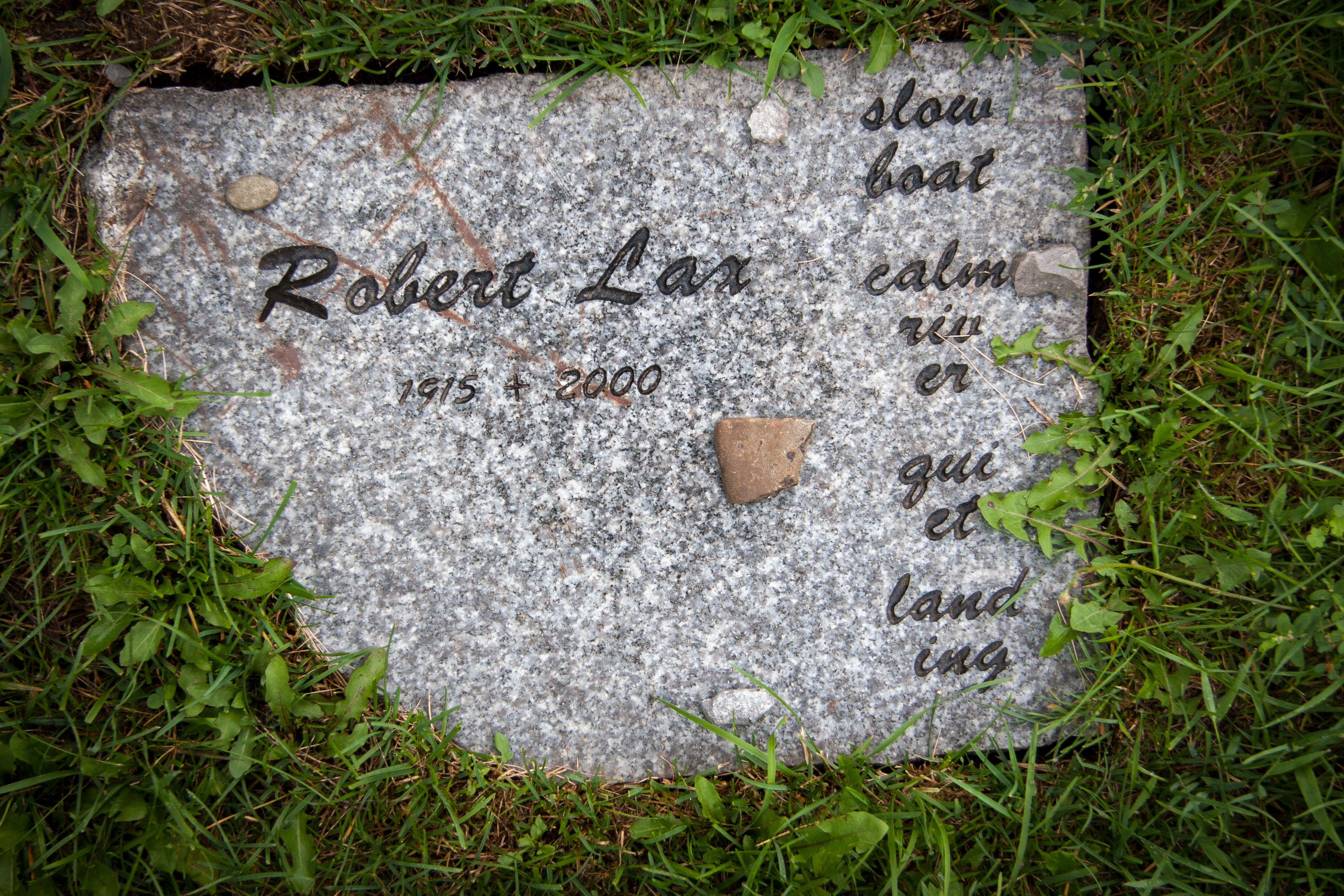
Lax was a minimalist poet. His ability to put together small words with few syllables in a single line down the page, and still pack both imagery and depth of meaning into those simple lines is amazing. I found his poem about life in Kalymnos, titled simply, “Kalymnos,” a very simple read; it only took a few minutes to get through it. Somehow though, the poem felt more like a novella as I absorbed its meaning. Divided into “chapters,” I feel 3 adequately captures the mood of the season with its description of the death of a fishing vessel. The vessel itself was the only casualty:
Kalymnos
BY ROBERT LAX
at 5
in the
morning
at the
cafeneion
the captain
described
the wreck:
the boat
had turned
over &
over
in the
water
churning it
like a
propell-
er
The final tombstone in this collection comes from America’s best known literary artist. Born Samuel Langhorne Clemens, he later adopted the pen-name Mark Twain. Despite many highly acclaimed literary successes, Twain suffered great loss as a husband and father, and was not as successful financially as he was artistically. Three of his children and his wife preceded him in death, and his declining literary success may have contributed to increasing pessimism in his later years. In his final days, Twain was said to have become a recluse prone to “volcanic rages and nasty bouts of paranoia .” (https://www.biography.com/people/mark-twain-9512564) He died in 1910 at his Connecticut home, and was laid to rest in Elmira, New York.
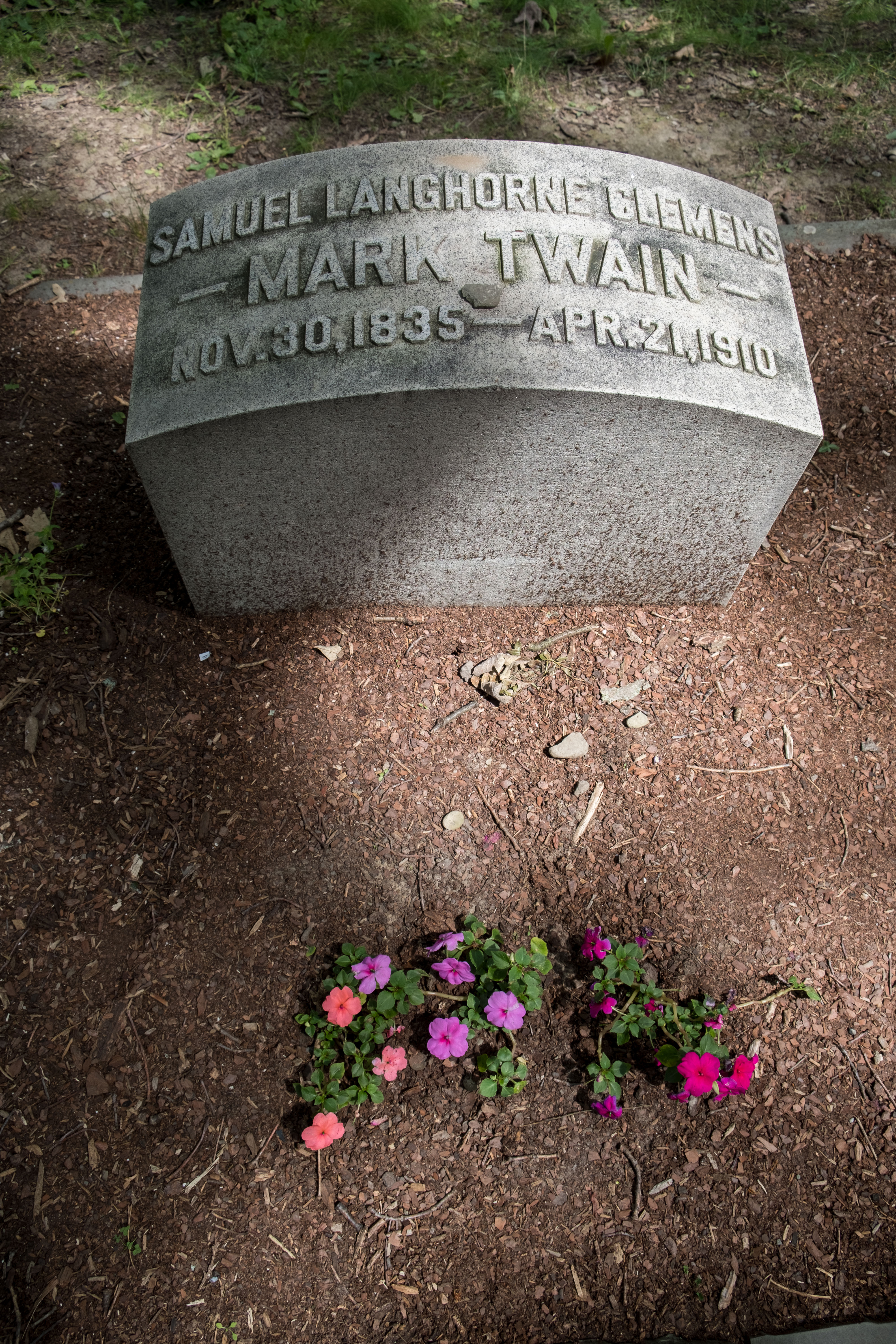
When I think of Twain, I don’t think of his final days. I think of Tom Sawyer’s Aunt Polly standing on her front porch, fists planted firmly on each hip, and shouting, “You, Tom!” while Tom runs blithely in the opposite direction. I loved both Tom Sawyer and Huckleberry Finn.
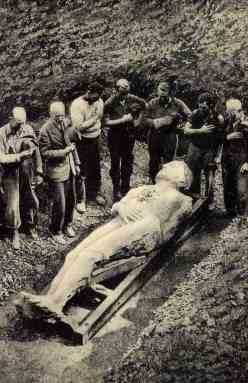
My favorite work of Twain’s is his short story, The Celebrated Jumping Frog of Calaveras County, but I wanted to include something of Twain’s more fitting for the season, so I went in search of a ghost story. I was not disappointed. In fact, what I found is actually titled A Ghost Story. Like most of Twain’s literary works, this one is quite suitable for children. Before you read it to your kids, though, I recommend that you read up on the background story of The Cardiff Giant at History.com. Share the giant’s history with your children before reading A Ghost Story. Just follow the links to each.
My birthday is this week. I consider this post my birthday gift. I thoroughly enjoyed “opening” it. Thanks, Bernie!
 StoriesFromthePast.com
