Living in Northern Kentucky, the lap of the Underground Railroad, has been an eye-opener for me. Since moving here I have learned that Kentucky has the unique distinction as the land where the civil struggle between the Union and Confederate states reaches much deeper than North vs. South.
Kentucky was a slave state before the Civil War, but it never fell to Confederate control. In fact, it was the first of the four “border states” between North and South to succumb to Union control. Because the commonwealth of Kentucky had both a Union and a Confederate constitution, the struggle between the opposing forces reached not only into neighborhoods, but into the very hearts of families where brother fought against brother, and cousin against cousin. In fact, Kentucky’s most infamous family feud, Hatfields vs. McCoys, is said to have begun over family members fighting on opposite sides of the Civil War.
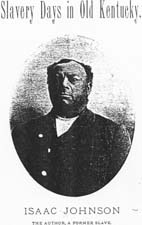
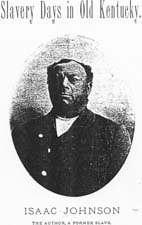
Isaac Johnson, 1844-1905
Some families were even further divided by race. Isaac Johnson’s autobiography, Slavery Days in Old Kentucky. A True Story of a Father Who Sold His Wife and Four Children. By One of the Children, is the story of a child born into a family with a white father and a black mother. Isaac’s family began in the traditional sense with a mother and father living as a happy family in nearly every sense but one: Isaac’s parents were never married, and even though they lived as husband and wife, Isaac’s mother, Jane Johnson, was actually Richard Yeager’s slave.
Yeager had originally desired nothing more than a simple family life with his common-law wife and their four boys, but he eventually gave in to the social constraints bearing down on him and made the fateful decision abandon pretense and sell off Jane and her children. Isaac’s oldest brother, Louis was nine and Isaac was seven years-old at the time.
The auctioneer continued his cry for bids and Louis was at last sold for eight hundred dollars. By this time we had taken in the situation, and it seemed as though my mother’s heart would break. Such despair I hope I may never again witness. We children knew something terrible was being done, but were not old enough to fully understand.
Isaac’s youngest brother was just two when he was separated from his father, mother, and older brothers for two hundred dollars.
Following his separation from his family, Isaac went through several owners and even made a couple of unsuccessful attempts to escape. His second escape attempt was met with the torture and murder of his fellow slave and good friend who was blamed for inciting the attempted escape.
It was the Civil War that offered Isaac his third escape attempt leading to his freedom. He found refuge with a Union regiment marching through Kentucky, and eventually enlisted in the First Michigan Colored Infantry which became part of 102nd United States Colored Regiment. Isaac stayed with his regiment until the war ended.
Upon war’s end, Isaac’s desire to see his final master amidst the destruction of his livelihood as as a slave owner led him to return to Kentucky one last time. He found his former master paralyzed and bedridden, but despite his debilitation, the master was happy to see his former slave. He welcomed Isaac as an old friend, telling him that he was the first of his slaves to leave and the first to return. He even offered Isaac a job with wages if he were to stay. Isaac. of course, could not forget the murder of his friend, and turned down the offer.
Despite his service to the Union, Isaac believed he would never be free until he left the States behind, so he moved to Ontario, Canada where he married Theodocia Allen. Isaac did finally return to the States, albeit just across the St. Lawrence river from Canada. Isaac stayed as a free man with his wife and seven children in Waddington, New York, where he worked as a stone cutter and mason on Waddington’s Town Hall.
Looking back at Stories from the Past in 2018, I have learned that monthly newsletters are my greatest success. Although I am still writing them more for my own benefit than that of others, they truly are a guideline for what to expect for the month. More importantly, my newsletters give me the opportunity to identify what went well and illuminate my trouble areas. Making them public invites my readers to cheer me on and/or provide helpful suggestions and constructive criticisms.
My newsletters have become my boardroom. Welcome to the board!
The Race is not Necessarily Won by the Swiftest
2019 certainly has not begun as I envisioned for Stories From the Past. I have encountered a few obstacles, and rather than let them keep me down, I am choosing to accept the stumble, and even the fall. As long as I am willing to pick myself up, dust myself off, and apply band-aids where necessary, I can make it to the finish line.
The transition between 2018 and 2019 reminds me of Aesop’s fable, The Tortoise and the Hare. The tortoise won the race by continually moving forward while the hare napped. I moved much slower than I wanted to last year. Sometimes I was more like the hare, and I am not at all happy about that. What I am happy about is that I finally started moving again as the year came to its close and that I am still moving.
Facing Obstacles
An unexpected, but very welcome, obstacle means that I’ll be postponing my official launch for a few months. I am planning a trip to Austria where I can meet my story-telling face-to-face. I have been invited to the opening ceremony of a museum exhibit featuring the people that once thrived in the Bucklige Welt-Wechselland Region of Austria before Hitler’s reign of terror and the Shoah. Not only will I be able to learn more about my own family’s stories, but I will hopefully gather the stories of their friends and neighbors as well.
I have a lot to do to prepare for the trip. This week alone, I’ll be applying for a new passport (I haven’t been out of the country for more than 17 years!), beginning a new course in German from Rosetta Stone, and creating a Go-Fund-Me account to help with basic expenses for the trip. Of course, I’ll also need to forward my acceptance to the invitation, arrange for lodging and travel while I am there, etc. The only other time I’ve been to Europe was when I was doing study abroad, and most of the arrangements were done for me. There’s much more to trip planning than I remembered.
I also need to go back through my records in an attempt to trace the funds donated through Facebook last year. At this point, I am not recommending that anyone donate to Facebook’s charitable causes. I’ll be happy to let you know if my opinion changes.
What Happened to the Second Wife’s Story?
December was a huge struggle for me. With barely a nod to Hanukkah, I found myself mired in four stories originally intended to be just one. Although I am glad that I decided to tell the stories separately, the final story came after Christmas when I was supposed to be wrapping up the second Chapter of Mary Davis Skeen’s biography.
As December drew to a close, I found myself mired in research for Mary Eynon Davies, mother of Mary Davis Skeen. I was supposed to have had Mary Eynon’s profile page up by the end of the month, along with a first and second chapter of the story. Instead, nothing was posted in regards to The Second Wife’s Story.
I am behind on my writing, but that doesn’t mean I am behind on my goal to publish the Second Wife’s Story by the end of 2019. It just means that I need to find a better way to accomplish that goal. I CAN STILL do this.
I need a better way to accomplish that goal. Like most of my profile pages, Mary Eynon’s will be incomplete when I post it tomorrow. A new post will appear when new profiles appear and when changes are made to existing profiles. I may also have to post chapters in parts (Why not? I did it with my Christmas Tree stories.), and they may even appear out of order, but at least my progress will be evident on Chapter One, and maybe even Chapter 2 by the end of January. Everything will be linked in order on The Second Wife Story’s book page.
My new focus is to be on The Second Wife’s Story first, ancestral stories second, and stories found along the way third. Each month will have a social-historical focus, and for each monthly focus, I will provide a short summary or review along with link/s to the original story/ies.
Since January’s focus is black history month, I’ll be looking at a story from North American Slave Narratives: a collection of books, articles, and journals telling the stories of Black America’s quest for freedom and equality, beginning with my home state: Kentucky.
Reassessment
Once again, I am reminded of James Clear’s prescription, “if you want to set your expectations appropriately, the truth is that it will probably take you anywhere from two months to eight months to build a new behavior into your life — not 21 days.”
I have learned that the early morning writing routine does not work for me because I am usually picking my daughter up from work at midnight. By the time I wake up around eight or nine, everyone else is getting up too. My best time to focus without interruptions is during the middle of the day when my granddaughter is at school and my husband is at work. This is not my morning job; it is my day job.
“It’s failure that gives you the proper perspective on success.”
– Ellen DeGeneres
I’ll be making a few minor changes as well:
Monthly Headers (a cosmetic change–you’ll know it when you see it)
Story Teasers (I’m already using these, but I need to update past posts)
Newsletters will be posted on the last Monday of the previous month when the first day of the month falls on a Tuesday or Wednesday.
December Review
Objectives met are crossed out.
Navajo Greetings and exploration of the name (Navajo vs. Diné)
Hanukkah for non-Jews (with a nod to rembembering the Shoah)
A Slovenian Christmas Eve (Recipe and Tradition)
(n)O Christimas Tree (Stories from Olean, New York, and Lark, Utah)
I hope you had a Merry Christmas. Today’s post might seem anticlimactic, but I think I just got too ambitious by adding Midnight Mass to my Christmas celebrations. (It was truly beautiful, though.) I gave serious thought to saving the fourth Christmas tree story for next year, but I promised a fourth story, so here it is.
I saved the best for last.
Dad is the only person I know who laughs harder when telling his stories than anyone else does. His laughter is contagious, which makes his stories all the more entertaining. Dad is also the only Pollack I know who told Pollack jokes when Pollack Jokes were trendy. His light bulb joke comes to mind:
Dad: How many Pollacks does it take to screw in a light bulb?
Me: I dunno. How many?
Dad: Five. One to hold the light bulb, and four to turn the chair.
Ba dum bum ching.
I think the best Pollack joke told by Dad, is actually a story that happened to him. It happened just before a staff meeting at work several decades ago. A man had come from out of town, and when introduced to my father, said, “Oh, yer a Pollack, eh?” Of course, the man had to follow up with a Pollack joke. Dad laughed. He could appreciate a good joke after all. But the poor man couldn’t be stopped. He continued telling every Pollack joke in his repertoire, and as time went on, the jokes became more off-color and inappropriate.
Dad was no longer laughing, and finally interrupted with a question, “Do you speak Polish?”
“No.” The man replied.
“How does it feel to be dumber than a Pollack?”
That put an effective end to the Pollack jokes.
Dad’s Christmas tree story is a story that sounds more like a Pollack joke, but it really is a story. It’s also more my grandfather’s story than my dad’s; but I never knew my grandfather. Dad told the story many times over the years, usually around Christmas time, and I never got tired of hearing it. Of course, I had him retell it at least three times this year in preparation for this blog post.
The story happened in Olean, New York before my father was born and before my grandparents were married in 1931. Grandma was seventeen and my grandfather was nineteen when they were wed, so he would have been a teenager at the time. Probably in the late 1920s. Grandma was not involved in the story, but it would not surprise me if she had also been one of the storytellers over the years.
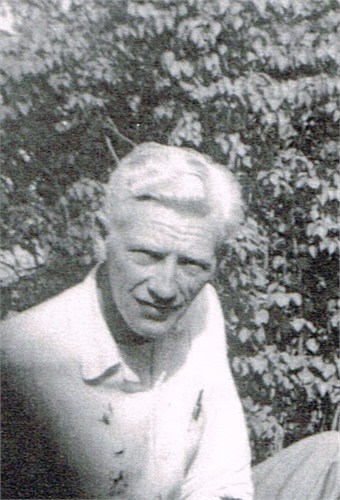
Chester John Kwiatkowski, “Chet” This is currently the only photograph I have available of my grandfather.
In the Kwiatkowski family, the boys were responsible for getting all the trees for heads of households. This was quite a big job because the family included households on the Szadlowski side (my great-grandmother’s side). It probably included living grandparents, married brothers, and uncles. In all, the amount of trees required numbered about fifteen. That’s just an educated guess from counting all the males older than my grandfather who were living at the time.
As was the tradition, Chester John Kwiatkowski (“Chet”) and his brother, Dad can’t remember whether it was Edward or Michael, set off to locate and chop down suitable trees for the whole family. I’m guessing that they must have driven to the hills nearby, because it certainly would not have been easy for two young men to get fifteen trees home in one trip. Either way, it would have taken the better part of a day.
Their job wasn’t done when Chet and his brother arrived home, though. They still had to allocate each tree to each family. I can imagine the brothers breathing a sigh of relief when the last tree was handed out. Maybe the brothers were getting ready for bed. Or more likely, since the job probably took at least a couple of days, the brothers were getting ready to head off to other activities when a knock came to the door.
It was Uncle Matt Szadlowski.
Matt had come to collect his tree. I’m sure the boys exchanged guilty looks. They told Matt they’d be right back with his tree and headed for the back door. Uncle Matt must’ve wondered what took the boys so long.
At the back door, the boys scanned the horizon, wondering how to come up with a suitable tree, and fast. It was at this point where one brother turned to the other and said, “What are we gonna do? It’s too late to go back to the hills for another tree.”
After a bit of thinking, one of them pointed out, “Matt’s got two trees in his front yard lining his walk. He won’t miss one of them.” Off the boys ran to Matt’s house. After a longer than usual wait for Uncle Matt, the boys came back in with a very nice tree.
I don’t know if Matt noticed right away, or if he figured it out when he arrived home, but Dad tells me that Uncle Matt was no dummy. It did not escape his notice that there was a sawed-off stump in his yard where a tree had once been. It wasn’t the stump that Matt brought up to the boys, though. It was the tree’s uncanny resemblance to the one that used to be in his front yard. It was a perfect tree, Matt told them; just the right size and shape for a Christmas tree, but it did look an awful lot like the missing tree.
Not so, the boys told their uncle. The tree in Matt’s living room was shorter and had been chopped. The stump in the yard had been sawed. Matt verbally accepted the explanation, but I’m pretty sure that both my grandfather and his uncle Matt knew that they couldn’t hide the truth that they had chopped the tree down, cut it to size with the ax, then sawed the stump in an attempt to provide an alibi.
I wonder if uncle Matt ever replaced the missing tree?
Now that Christmas is over, and the majority of us have made it through the season with our landscape intact, I hope you have a very Happy New Year!
Today’s Christmas Eve tradition and recipe contributor and friend of mine, just happens to have been one of my professors at DePaul University in Chicago. At first I was surprised to learn that Gloria Simo and I have so much in common. After learning her family’s story, I am even more surprised to learn the reason for our commonalities.
First, our grandmothers. Although they were born in different countries, they grew up less than 80 miles from each other. Both of them left their childhood homes at young ages and immigrated by boat to the United States alone. Josephine Daniel, my Grandma, was 21 and Anna Vitek, Gloria’s grandmother was just 16. Anna was just three years older than Josephine, they immigrated within eight years of each other, and both married fellow immigrants they met here in the United States. Josephine was raised Jewish in Austria, but she became a practicing Lutheran when she married my grandfather. Anna was also Lutheran, married to a man named John Stancik.
Anna Vitek Stancik with her granddaughter, Gloria Simo
Next, our genealogical origins. Anna was born and raised in Bratislava, Czechoslovakia. Today, Bratislava is the capital city of Slovakia. Josephine’s great-grandfather was a well-known rabbi from Pressburg, Austria-Hungary, the very same city known as Bratislava, Slovakia today. It is very likely that Josephine’s grandfather, my second great-grandfather, was born in Pressburg. I have Slavic roots as well on my Polish grandfather’s side.
Coincidence? Yeah, probably. But when Gloria described her family’s Christmas Eve meal, I said, “That sounds like something my mom used to make!” Well, we at least shared similar dietary preferences. I grew up on Polish and Austrian food. Slovakia is bordered by Poland to the North and Austria to the West. Naturally, they shared similar dinner menus.
It was the meal that featured so prominently in Gloria’s recollection of childhood:
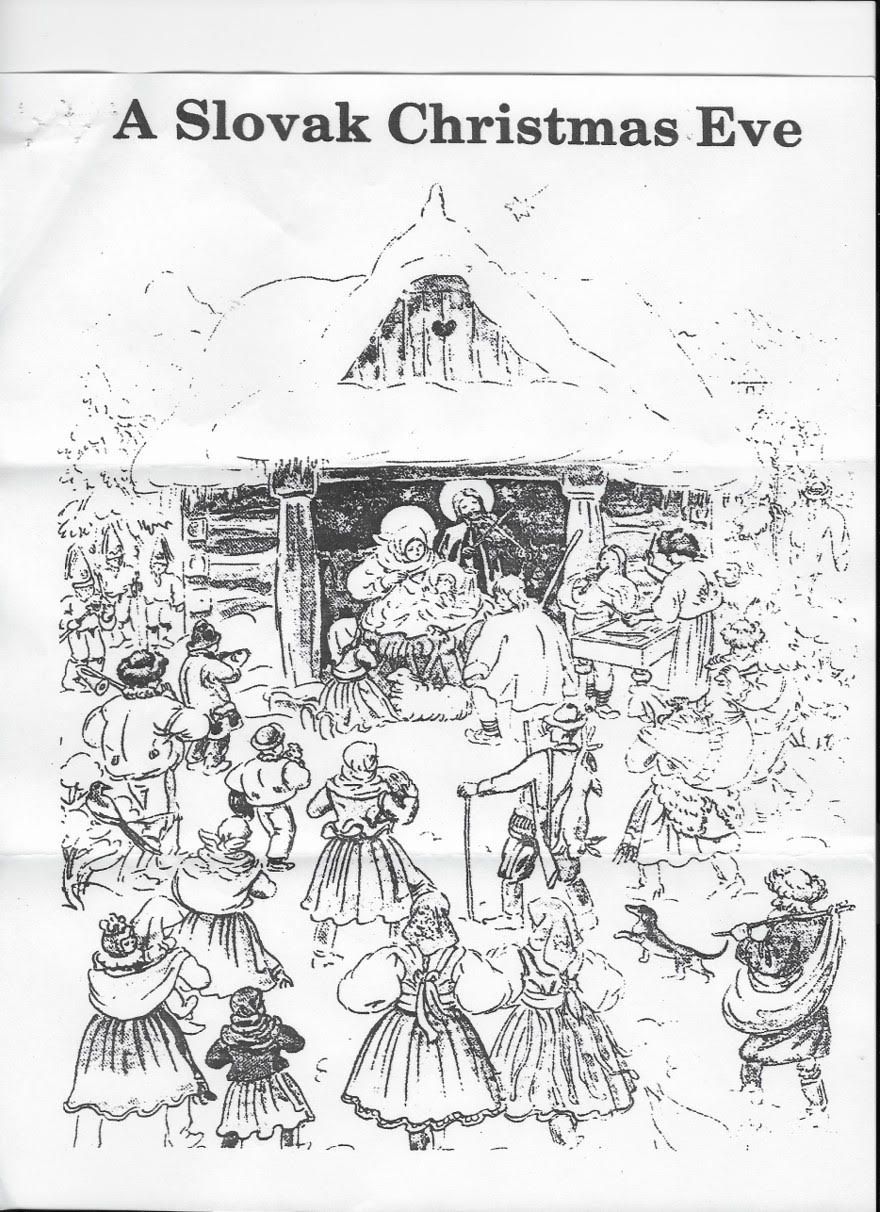
One Christmas Eve meal tradition sticks in my head and was followed by almost every family in our small Lutheran Slovak congregation. And we wouldn’t dream of missing it. The matriarch of each family made a kind of stew of sauerkraut, pork ribs, Polish :sausage, potatoes, prunes, etc (I think whatever Grandma decided on) and paired it with honey/poppyseed biscuits. Before the meal we broke a communion like wafer called Oplatky smeared with honey and shared it around the table while saying grace. After the meal we went to candlelight services – where we knew everyone had just had the same meal – and then out Christmas caroling.
The “stew” Gloria describes is called Kapustnica, and is almost identical to a Polish dish called Bigos, or Hunter’s Stew. Trust me, it’s delicious. I have been thinking that I might want to get ambitious and start making it as part of our Christmas Eve tradition before we go to midnight mass (a Catholic tradition). Oplatky is also a Polish-Catholic tradition.
Click here for the Slavic recipe (Kapustnica), or here for the Polish version (Bigos). I think you’ll see they are quite similar!
Gloria also sent recipes along with detailed instructions for celebrating in the Slovak tradition. I will post them on their own page in the coming weeks. If you’d like to have a copy sooner, please contact me here.
I don’t think I ever met Robert Moulton, but I remember his father, Bob Moulton. We lived just down the street from Bob and his wife for two years while my dad was preparing the foundation for a new home in the hills nearby. I always thought the Moultons lived in the most beautiful house in Lark, Utah.
After Dad was laid off at Christmastime in 1974, Bob Moulton hired him as a custodial assistant at Bingham High School in Copperton, Utah. It wasn’t a full-time job, but Dad was so grateful for it in the months before he found another job in his field of civil engineering the next fall.
The Old Bingham High School was torn down in 2002. Photo by Scott Crump.
The town of Lark no longer exists, but its memories are kept alive thanks to a Facebook group dedicated to former residents. I’ll have to share Lark’s Story in the coming months. I came across Robert Moulton’s Memoirs shared with the group a couple of months ago. I was surprised at how so many of his stories paralleled stories from my father’s childhood in Olean, New York, especially young Robert’s quest for a Christmas tree.
Just like my father’s stories, Robert’s stories made me laugh. Prepare to be amused.
REAL CHRISTMAS TREES
From LARK TAILS, a selection of memoirs by Robert D. Moulton, PhD:
Lark was surrounded by what we called “junipers” and they were our Christmas trees, and Dick and I hated them. We hated them because they reminded us that other Lark families had more money than the Moultons and could afford to buy “real” Christmas trees. We thought that only pine trees made good Christmas trees. Pine trees have pointed tops that you can attach stars and angels to, and pine trees have needles that you can hang tinsel and ornaments on. But junipers are more bush than tree, have rounded tops, and they lack needles. No matter that the juniper trees came already decorated with blue-green berries and filled our house with their lovely, distinct perfume; and no matter that cutting a juniper Christmas tree meant an outing with our dad and Jill. We were ashamed of juniper Christmas trees and always insisted that Mom and Dad place them away from our windows so they couldn’t be seen from the street.
I don’t know how Dick and I knew that “real” Christmas trees grew high on the mountain above Lark. Perhaps Dad had mentioned pine trees in his stories of hunting mountain lions and mule deer up there. In any event, we knew that pine trees grew on top of the mountain, and Dick and I decided to go on a Christmas tree expedition. There was considerable secrecy about the trip. The mountain was private property, full of dangerous, abandoned mines and other scary stuff, and Mom and Dad had forbidden us to go up there. But we were convinced that our parents, too, were ashamed of junipers and would understand once we presented them with a real Christmas tree.
Dick and I probably thought it fitting that we planned the hike to the mountain top on a Saturday when Mom and Dad were in the Salt Lake valley shopping for Christmas presents. I should add that Mom and Dad had earned the family’s Christmas money by thinning and then picking apples in Alpine at a big commercial orchard on Saturdays throughout the summer and fall. They did this along with Mom’s brother, Virgil, and his wife, Rita, who also lived in Lark. Uncle Virg was tall and could work even the tallest apple trees without a ladder, so they said.
When the day of our big adventure finally came we waited impatiently for our parents to leave so we could set off. We had hoped that they would leave early so that we would have enough time to climb the mountain, find a tree, and return before they got home that night. However, Mom never could leave the house without first making all the beds, washing the dishes and cleaning everything that could be cleaned. It was noon by the time they left and we feared that there wouldn’t be enough daylight left for our trek. Nevertheless, we took Dad’s axe, and with Jill, our lop-eared boxer, headed west, toward the top of the mountain.
We were hiking through snow that got deeper and deeper as we climbed. We thought we had dressed warmly, but as it got later in the day the sun went behind the peaks above us and it got colder and colder. I don’t know how poor Jill managed with her short-haired coat, and Dick and I were about as cold as cold can be. I kept thinking about one of Dad’s favorite stories. He told us that when he was a boy, his generation of Moultons spent a few winters in Montana. He claimed that winters were so cold there that words froze and conversations were not heard until spring thaw.
At last Dick and I found a stand of pine trees near the top of the mountain. They were beautiful and came complete with needles and pointed tops. In our minds, we could see them decorated smartly and sitting proudly in front of our living room window. We were so excited that we forgot for a moment how cold we were. We ran from tree to tree looking for the perfect one. When we finally found it, I claimed the honor of cutting it down. With what I imagined was a mighty swing of the axe, I hit the base of the would-be Christmas tree. It shook a little, and all its needles fell to the snow.
Dick blamed my clumsy axemanship and claimed his turn. Same result: one swing of the axe and we were looking at a naked pine tree. We kept trying, but after we had denuded a dozen or so trees we figured out that they were so frozen that it was impossible to cut them down without shaking their needles off.
And so we gave up and started our hike back down the mountain toward Lark, cold and hungry. All too soon we were plowing through deep snow in the dark, tripping, falling, rolling, and shivering. We had no lights with us. Dad had a flashlight or two, but we hadn’t been brave enough to “borrow” one. And besides, we hadn’t planned on hiking back in the dark.
As we got closer to Lark, we saw what must have been thirty or forty lights moving below us and heard people calling our names.
As the first group of would-be rescuers reached us, they called out, “Seen the Moulton boys? Their parents think they have fallen into a mine shaft or been buried in an avalanche.”
“No, we’re lookin’ for ‘em, too.” we answered.
Eventually we got home, cold, hungry, without a Christmas tree, and in big trouble. Later, after we were forgiven a little, Dick and I went with Dad and Jill to cut a juniper Christmas tree.
My four children will tell you that when they were growing up in Texas I was never very enthusiastic about buying Christmas trees. You just can’t buy a good juniper in Texas.
From my childhood imagination, I remember the Moulton’s house as the most beautiful in town. Mom tells me it was because of Edna Moulton’s immaculate landscaping.
That lean Christmas in a 19-foot travel trailer was a tough one for me, but it was great preparation for the next Christmas. The trailer was a temporary fix for my family, and even though we called it “home” for less than a year, it seemed like an eternity at the time. In the first few weeks, Mom and Dad slept on the sofa which folded out to a full-sized bed, while two of my brothers slept in a drop-down bunk that acted as a storage cupboard in its “up” position. Both of those beds were not quite full-sized, but they weren’t exactly cramped.
My sister and I, however, shared the bed over the drop-down dining table. It was not quite as wide as a twin bed, and yes, it was cramped; there was literally no room to roll over. But my four year-old brother had just a thin strip of foam laid down on the floor. He had it the worst. If anyone wanted to get to the bathroom near the entrance of the trailer at night, they would have to step over him (assuming they hadn’t already stepped on him).
As it was, Mom and Dad only stayed in the trailer long enough for Dad to put a lid of sorts over the cement foundation. It was to be quite a large home in its finished state, so the basement level functioned as a storage unit/work shed, with a corner sectioned off as a master bedroom of sorts. If I remember correctly, Mom kept the bed covered with plastic sheeting in an attempt to keep the sawdust out of the sheets. During that summer, Dad worked hard to get the upper floors framed in. He ran a power line from a transformer to the trailer and another to the house in order to keep an upright freezer and an old refrigerator running. Extension cords fed a work light and power tools, and we made a weekly drive to the nearest laundromat fifteen miles away . A laundry room and a bathroom with a full-sized tub were the first rooms finished.
By fall, the roof trusses were up and covered over with plywood and tar paper, and insulation in the form of shredded, recycled, fire retarded newspaper particles filled the walls. It was the best insulation to be found at the time, the wall studs were covered and it was blown into the walls through a layer of plastic. It was one of the very few projects on the house that Dad contracted out, and my brothers helped with most projects calling for more than two hands. This tough task was compounded by the fact that Dad was working a full-time job and functioning as a bishop in our local ward of the Church of Jesus Christ of Latter-day Saints. If Dad wasn’t at his paid job, he could be found attending meetings with church leaders or counseling church members. In his spare time, Friday evenings and Saturdays, he worked on the house. I’m amazed he got so much done during that first year.
As it was, there were still no windows installed and the roof shingles had not yet been laid on the roof as October neared its close. That fall, Dad spent nearly every waking moment either harnessed to the steeply pitched A-frame roof or installing windows. There would be no sitting down for a family meal during those weeks. Mom would often bring Dad’s dinner to him while he worked. He even tried working on the house one Sunday, but ran a two-by-four through a newly installed window as he was cleaning up the next Sunday. Dad never, ever, worked on a Sunday again after that, but he still managed to get the house fully closed in before the winter snow began to collect. Thankfully, Christmas of 1974 would be white.
America’s Problems get Personal
1974 was a tough year world-wide, but it was even tougher in the United States than in most nations. In response to its support of Israel during the 1973 Yom Kippur War, the United States was banned from oil trades with the world’s oil producing nations (OPEC). By the year’s end, As the country using the largest percentage of the world’s fossil fuel resources, the oil embargo hit hard, causing fuel prices to quadruple, followed by increased prices on imported products, including anything that could not be produced locally. Adding insult to injury, President of the U.S. Richard Nixon, resigned his position amidst allegations of White House involvement in a break-in of Democratic headquarters during an election year. To this day, Nixon is the only U.S. president to voluntarily resign, adding political upheaval to the nation’s deepening economic woes.
To avoid fuel shortages, people were asked to drive only when necessary. We lived a mile uphill from the nearest neighbor, five miles from church, ten miles to school and the nearest grocery store, and more than fifteen miles to work. Walking was out of the question.
Families across the United States were tightening their belts, including ours. Because of the increased strain on the family’s resources, Mom got a job working at a workshop/school for disabled adults. That really helped, and thanks to her, the building project was moving along as quickly as could be expected under the existing conditions. What wasn’t expected was the loss of Dad’s job in December. If last year’s Christmas was lean, this year’s would be worse.
Well, at least we had snow.
I’m Dreaming of Any Kind of Christmas
I had finally reconciled with Santa’s fall from Christmas grace, and I figured that nothing could be worse than the binder paper Christmas. The trailer had been moved closer to the basement entrance, and Dad’s tools and building materials went to to the second floor. With windows and insulation added, Mom and Dad’s “bedroom” was moved to it’s permanent home on the third floor despite the lack of carpeting, painted walls, or electrical amenities. Now there was plenty of room on the basement level for a dining/living area. We no longer had to use the trailer for bathroom purposes, and we could actually sit on a full-sized sofa and watch whatever channel might be getting reception on our thirteen-inch black and white television set.
It also meant room for a real Christmas tree. I didn’t care about presents, but I couldn’t face another year without a real tree. Apparently Mom felt the same way.
Mom’s Side of the Story
The only good news coming from Dad’s Christmastime lay-off was that he now had much more time to work on the house. Despite her meager salary, or perhaps to spite it, Mom felt the burden of Christmas falling directly upon her shoulders. Dad took a practical approach–stuff like this happens, and the world would not end without a tree or presents. His focus was on keeping a roof, unfinished as it was, over our heads, and getting a new job as quickly as possible so he could get everything under that roof finished.
Mom wasn’t quite so pragmatic about it.
Mom is the most creative person I know. If it’s too expensive or cheaply made, she figures out a way to create a better home-made version. The first thing Mom did was cut down a four-foot juniper tree from our six-acre property. It wasn’t the traditional fir tree we were used to, it had a fuzzy trunk, and it didn’t have that familiar Christmas tree smell. In addition, it was short. But it was still an evergreen, very nicely shaped, not school bus yellow, and it fit perfectly beneath the open staircase. I was thrilled. We had a Christmas tree.
Mom must have garnered a lot of trust at her job, because her boss gave her unlimited use of the scrap bins and let her use the shop’s power tools after hours. Mom made wooden ornaments in various shapes and drilled holes for red yarn. They looked so cute on the tree. She also gathered up some nice round branches from other trees on our property, and cut them into evenly shaped pieces. Using scraps of lumber from the building project and her workshop scraps, she built three sturdy lumber trucks–just as good or better than can be found in vintage toy shops today. I am not at all sure what my brothers thought of them, but I thought they were amazing. I’m pretty sure Dad helped some with that project, but I was impressed to learn that my mom actually had woodworking skills.
Woodwork wasn’t the only thing mom was good at. In her adolescence, She learned to sew; and from a very young age, she sewed her own clothes. She made her own wedding dress, and when I got married the first time, she remade it for me. I was aware of a stigma that came with having homemade clothes versus store-bought clothes, but I never worried about it. If mom could find nice affordable fabric, she could make any clothing look better than its commercial counterpart. That year, Mom made fabric dolls for my older sister and I, and although I no longer played with dolls, I thought mine would make a nice decoration when I finally moved in to my new bedroom.
There wasn’t much in the way of Christmas baking that year but there was one tradition Mom was determined that we would not go without–Stollen and hot cocoa. Stollen is a German sweet bread made with nuts, spices, and dried or candied fruit, coated with confectioner’s sugar icing. As the daughter of an authentic German baker, it just wouldn’t be Christmas without it. I don’t know how she managed to get all of the ingredients, and she does say that she knows the bread went without the usual, albeit expensive, pine-nuts, but I know I didn’t notice.
Love–The Best Gift of All
Along with wooden trucks and rag dolls, mom made a new pair of pajamas for each of us. I think, though, that most dazzling was the wide array of treats and trinkets to be found in our stockings. Mom said she scrounged around everywhere to find cool things to fill them up. My favorite gift that year came from a local automotive shop–a transistor radio that bore an uncanny resemblance to a car battery. It worked great, and even though I was no car enthusiast, I truly loved it.
My favorite gift in 1974. Not as tacky as a leg lamp.
When I asked Mom about that Christmas, she told me that year was such a hard one for her that she had forgotten much of it. She suffered so much angst that year, and I know we felt it, but I’m still so amazed at what she was able to pull off. It simply hadn’t occurred to me that it was the worst Christmas in her memory. Looking back at my own motherhood though, especially as a single mother, I now realize that tough times are difficult for kids, but they are always toughest on the parents because we worry that we cannot give our children so many of the things they need, and that at the very least, their innocence will be lost in the process.
Until I started writing this story it hadn’t even occurred to me that my two younger brothers would have had to come to terms with the man in the red suit that year. The youngest would have been just five or six years old at the time. If either of them believed in Santa before that year, they certainly would not have afterwards. I didn’t bother to ask for anything, and if my younger brothers asked, they definitely didn’t ask for wooden logging trucks. For me, the magic I had lost in the abrupt revelation that there is no Santa two years earlier had returned. For my brothers, the magic was definitely changing.
Lessons Learned
Christmas can be magical for children, but it’s not about Santa Claus or about the gifts we get. It’s about love and giving. There is no greater love than that of a parent to a child, and there is no better gift than one that comes from the heart. Homemade gifts are thoughtful gifts, and everyone knows it’s the thought that counts. Mom never stopped thinking in December of 1974. That Christmas was filled with so much love that I didn’t care weather or not we had eggnog for the New Year. I wasn’t thinking of what we had to do without, but of our fortune in being able to have the things that we had.
Dad found a new job by the next fall, and the next Christmas was celebrated in a nearly completed home. Dad received a huge Christmas bonus in thanks for helping his new boss maintain the trust of a very important client. It was big enough that we were able to help out two other families for Christmas. Gifts were more than plentiful, and we even had our very first full-sized color television set. But the most appreciated presents, once again, were the handmade ones from Mom.
I still have two wooden ornaments from that year– a star and an A-frame house. The star remains in its unpainted form just as it was that Christmas, but the little wooden house, along with many of those ornaments from the Christmas of 1974, is tole-painted to resemble an Austrian style chalet (painting–another one of my mother’s many talents). Mom had managed to capture the image of our mountain home in that ornament, and in the other, the true spirit of Christmas. I normally include them in my annual decorations, but after our cross-country move, and last summer’s bout of bed bugs, the ornaments have accidentally been relocated to a storage unit, and I haven’t yet gone to retrieve them. I’ll add a photo of them as soon as I am able.
It’s been more than a decade since I celebrated with a real Christmas tree, and these days I don’t even bother with a full-sized tree. Now I have a Christmas tree collection. I display miniature trees everywhere, and every year I add to it, knowing that no matter how lean the celebration, there will always be trees.
As a Christian, I have often lamented the commercialization and capitalization of Christmas. As a Jew, I have learned to see the season as a celebration of light and miracles in the midst of darkness and oppression. As a historian, I have embraced the combination of the pagan roots behind the celebration of continuing of life in the midst of the deep-winter and the anticipation of the lengthening of days bringing back light, warmth, and renewed life. Among many schools of thought and perspectives, I am finding my place among the deep-seated traditions embraced by my ancestors, both Jewish and Christian, along with the winter celebrations of pagans and skeptics.
Which brings me to Christmas trees.
While the history of the Christmas tree is vague and can’t necessarily be pinned down to one particular historical event or individual, the evergreen itself has held a more reliable place in the season’s celebrations. Most historians agree that the tree itself is a much more recent custom with strong ties to Christianity. So instead of deliberation the origins of the tree itself, I’m choosing to go with the legend which so strongly ties to my German-Lutheran roots: Martin Luther’s story.
The story goes that Martin Luther encountered a snow-crusted evergreen while walking one moonlit winter night. The sight of the snow glimmering on the branches of the tree in the light of the moon dazzled Luther, and he was inspired to bring a similar tree indoors where he affixed candles to the boughs of the tree and lit them at night as a way to bring light and hope into the home during the Christmas season. There are several other legends, most occurring in centuries previous to Martin Luther, and I assume that today’s Christmas tree is probably the descendant of all, or at least most, of them.
Whatever the reasons for putting a decorated evergreen into the home, the Christmas tree has become a staple of the season. No matter the circumstances, it just doesn’t seem like Christmas without one.
No Magic
My early childhood Christmases were filled with happiness and wonder. But at least two in a row stood apart for me as a deep disappointment and loss of faith in the magic of childish imagination.
The first disappointments came just after my eighth and ninth birthdays beginning on the Christmas Eve when my sister offhandedly told me that there was really no Santa. I had begun the day with eager anticipation of the magical event to be coming late that night, but went to bed in deep sorrow knowing that my big sister was downstairs with my parents laying out gifts and filling stockings in the guise of a great man who really didn’t exist. Naturally following, but much easier to reconcile, were the Easter Bunny and Tooth Fairy. I was still mired in that disappointment when the next Christmas came and went, despite the bounty of gifts appearing beneath the tree and the wonderful treats in my stocking. Surely the next year would be better. After all, I was growing up, and beginning to understand that sooner or later childhood must end.
No Tree
Ready as I was to accept no Santa, my eleventh year was even tougher. In the spring of 1973, five kids and our parents moved into a nineteen-foot trailer deep in the Oquirrh mountains of Utah so my father could be closer to the construction site of our new home. Despite my ever widening Christmas comfort zone, that tiny camping trailer sitting beside a boxed-in cement foundation at least a mile from the nearest neighbor was not the place for a traditional Christmas. There was no room for a Christmas tree, let alone presents. To make matters worse, there was no snow that year– the only Christmas in my young memory I had ever experienced without snow. No one dreams of a brown Christmas.
It was worse for the whole family because the building project, so carefully planned out, was unexpectedly caught in the midst of a world-wide recession caused by an oil embargo from a land far, far away. Prices of lumber doubled nearly overnight, and though my father had already received a large delivery of lumber for the house, the remaining lumber and building materials had not yet been paid for. Suddenly the building project was no longer feasible within the funds set aside, and Dad would have to take out a loan for the rest. Exacerbating the problem were interest rates on construction loans. They had gone up even more steeply than the price of materials.
On Christmas Eve, I prepared for bed in very cramped quarters with a heavy heart. Mom and Dad told us that things would be tight that year, and to keep our expectations low. I could see how Dad was stressing over finances, so asked for binder paper.
I’m not kidding.
The good news was, we would save money on a tree.
A few days before Christmas, Mom brought a tiny “tree” into the trailer and set it atop our extremely limited counter space. I could not stretch my limited imagination to see the twelve-inch foam cone with butterscotch disks attached as any sort of tree, especially a Christmas tree. First of all, trees are green, not school bus yellow. God bless the poor family friend who made it for us. I know butterscotch tastes better, but couldn’t they have attached peppermint candies? At least peppermint looks Christmassy.
Like this, only with butterscotch disks. Seriously?
All Over but the Shouting
Okay, there was no shouting, but I probably shed a few tears in private.
By the time Christmas Eve arrived, I was really regretting my request for paper. All of my siblings had at least asked for something that they wanted. As we prepared for bed, the roar of a motorcycle and a jingling of bells could be heard. Then a knock at the door.
Was it actually possible that carolers had decided to come up and down the winding hills via motorcycle? Nope. But Santa did. Along with his girlfriend. We were presented with a sack full of treats and presents and then with a Ho Ho Ho, he hopped back on his ride and headed back down the hill. No sleigh, no reindeer, and no helmet. I wonder how he could see under all that fake hair.
When we unwrapped gifts early the next morning, there was my binder paper, just as I’d asked, along with a handful of two-player games and some much needed clothes. I was disappointed that the only gift I’d really had to myself was that paper. I considered the games family gifts. After all, if I wanted to play them, I’d have to ask a family member to play along.
It wasn’t terrible. I mean, Connect Four is kinda fun. I don’t even remember what the other games were, but I do remember that my favorite gift that year was some much needed clothes. The binder paper got played with more than the games, I’m afraid.
I remember watching my brothers and sister playing with their requested toys, and having a great time. I put on my poker face and tried to be happy, but I know I spent a lot of that day drawing and writing on my paper. Believe it or not, I already had a passion for writing by then. Too bad I never caught the math bug.
I digress. Math has nothing to do with this.
We had our traditional family dinner, and I know the food was awesome, but I was glad when the day was over. I figured New Year’s Eve would be better. At least we didn’t have to worry about where to put a tree or presents. It probably even snowed at least a little in the week between Christmas and the New Year.
Mom made her famous clam dip served with chips and crackers. There was eggnog in the two-and-a-half foot refrigerator and 7 Up cooling on the doorstep waiting for the midnight “toast.” I was so excited for the eggnog, but I’ve never been a late nighter, so I told my family to wake me up if I dozed off. I think I fell asleep around 10 PM. No one woke me up, and in the morning all of the eggnog was gone and the remaining 7 Up had lost its fizz.
Before I moved to Page Arizona, I always thought the traditional Diné (Navajo) greeting was pronounced Yah-ta-hey.
Someone just smack me.
I came by it honestly, I guess. I learned my lousy pronunciation from the Brady Bunch. Sorry, folks, it was the only point of reference I had at the time.
I quickly learned, though, that pronunciation wasn’t the only thing I was struggling with. I had confusedly assumed, as I bet you do too, that Hello and Yá’át’ééh meant the same thing.
Well, they don’t.
First of all, hello is little more than a holler. You may have even guessed correctly that hello is actually a derivation of holler. But yá’át’ééh is a lot warmer and fuzzier than that. The greeting is an equalizer–a recognition that you approach your fellow human being with good intentions, and that you expect the same from them. The actual meaning of the term is it is good. As it was explained to me: it is good between us. So now that we have set the expectation, we can converse without animosity.
I love it.
Now back to pronunciation
It’s a good thing I listened a few times and actually asked someone to help me pronounce the word before I tried it on my students from the rez. As it was, I absolutely butchered it, but I am getting better at it, even though I now live in Kentucky and have absolutely no one to try it on.
As I was struggling to figure out how to help my grandchildren learn Dinè terms correctly, I ran across this awesome website called Navajo WOTD (word of the day). I’ll be using it a lot as I explain what I have learned about the Dinè language and culture.
It turns out that yá’át’ééh is two short syllables and one long one. Emphasis on the first and last. Take a listen:
Now say it again. Keep trying ’til you get it right. I think it’s gonna take me forever, but I’ll bet those smart grandkids of mine will get it right.
For the sake of those awesome grandkids, I’m gonna keep at it, so that as I learn, they can learn about their Diné grandmother and their family from the rez. Maybe one day they will be able to go back and actually put their native language to the test.
What does Brody have to do with this?
I knew you were gonna ask that.
I have decided that in honor of my grandchildren’s Native American heritage, I would post a story or fact to help them learn about, and to appreciate, their native ancestors on or near their birthdays, and it just so happens that today is Brody’s fourth birthday.
One thing that everyone said when they saw that big boy with piles of dark hair is that he looks like a little Navajo boy. I said it too. Because he is.
So Happy Birthday, Brody! I love you lots, and I can’t wait to practice this with you!
Like my previous newsletter, this is more for my benefit than anyone else (I’m still practicing).
Before I get this party started, I need to point out that today is the second day of Hanukkah! For Jews, this party is already well underway. Happy Hanukkah everyone!
November did not go as I planned. I started off gung-ho, but by the end of the month I was off track, and missed my most important post: Chapter One of The Second Wife’s Story. All I can say is hooray for a new month!
Maybe the holiday season was not the best time to be reviving and preparing for a relaunch of Stories From the Past. Maybe I should have started off slower. I could probably blame my missing first chapter of The Second Wife’s Story on the flu that I caught immediately after Thanksgiving. Or just maybe I could say, Well, I’m not quite there yet; take a closer look at where I went wrong, and start fresh.
So without any more excuses, and remembering that every day is a clean slate, I can take a look at the past, see where I went wrong, and try again.
Habit Building
As I think about the month of December, and my plans for the New Year, I am reminded that I am building new habits for the rest of my life. Habits don’t change overnight, and I have to be patient and not take on more than I can handle. I am building a blog, writing a book, and building a habit, so I need to take on one task a time.
In his article, How Long Does it Actually Take to Form a New Habit? (Backed by Science), James Clear debunks the 21-day habit myth and explains, “if you want to set your expectations appropriately, the truth is that it will probably take you anywhere from two months to eight months to build a new behavior into your life — not 21 days.” This is encouraging, and a bit daunting, as I was hoping to have my new daily routine set before the New Year begins.
There I go again, expecting perfection overnight. Well, that ain’t happening.
But eight months? I’m not expecting it to take that long, but at least I can be assured that with dedication and determination, my goals of regular, on-time posting and having Mary Davis Skeen’s biography, The Second Wife’s Story, ready for publishing will be accomplished within the new year. I CAN do this.
Re-launch
I have to remember that December is the busiest month of the year in the United States, and that my readers are probably just as overwhelmed with holiday preparations as I am. I still have a lot of planning and organizing to do in order to prepare for a professional New Year launch.
I intend to follow my own inner clock which tells me that December is a time for reflection while January is a time for renewal. This month I’ll be looking over what I have completed so far, and tweaking and preparing for a clean new start in January.
My posts will be simple, as my focus will be on completing two chapters of The Second Wife’s Story (appearing after Christmas), and cleaning up and preparing Stories From the Past for its new start in January.
To accommodate for the holidays, posts will not necessarily appear on their regularly scheduled days and times.
Fundraising for Austria:
New generations are already forgetting, and denying,
I’ve been invited to Austria for the inauguration of a museum housing exhibitions on the Jews in Bucklige Welt and Wechselland regions titled “With – Without Jews.” The museum will tell the stories of the many families who disappeared during the Holocaust–including mine.
I will be able to gather so many more stories of people who can’t tell them.
Looking into my own past, Thanksgiving has always been a warm fuzzy day ushering in the holiday season in the United States. But stories? I have plenty to say about Christmas. I can come up with stories about the New Year, Valentine’s Day, and even Halloween, but Thanksgiving just tends to get plopped right there as a place to stop and breathe between ghosts and goblins and shop, shop, shopping.
Ugh.
But I digress.
I LOVE Thanksgiving. I especially love the history behind Thanksgiving in the United States.
I’m not talking about Mayflower Pilgrims and Native Americans; I’m talking about finding opportunities to be thankful even when there doesn’t seem to be much to be thankful for.
Take that so-called first Thanksgiving for instance. When the Mayflower arrived in Massachusetts Bay, it carried 102 people. Twelve months later, their numbers had been cut in half. Not a good beginning for people seeking freedom from oppression. But despite loss of friends and family, those 52 pilgrims did have much to be grateful for.
They survived a long hard winter full of hunger, disease, and death. They were lucky to have been aided by Tisquantum (Squanto) who helped them learn to survive in their new surroundings and to forge an alliance, albeit uneasy, with the neighboring Wampaoag tribe. Squanto was one of the last remaining members of the Patuxet tribe which had been decimated by European diseases, and the Wampanoag hadn’t fared much better for the same reason. For both groups, the fall of 1621 brought in a decent harvest with the hope for better times to come.
Thanksgiving in the United States is often thought of to as a uniquely American tradition stemming from that harvest celebration in 1621. But harvest celebrations were really nothing new. As long as there have been growing seasons and winters, people around the world have been celebrating harvests, and the pilgrims were actually participating in a centuries-old tradition originating with the Celtic Pagans called Lammas. It’s also probable that Squanto and the Wampanoag were sharing their own customary harvest celebrations with the newcomers.
Despite what we were taught in grammar schools, the Massachussetts Bay celebration was probably not as peaceful as we are prone to believe. Several accounts tell of gunfire and threats resulting in bloody skirmishes within a very short time following their three day meal. Within a generation there was nothing left of the Patuxet people, and the Wampanoag people had been pushed nearly to extinction between warfare with European settlers and neighboring tribes. The peace and harmony of the fall of 1621 was short-lived.
The celebration of harvest may have waxed and waned depending on the size and qualtity of the harvest, but the idea of finding reasons to be grateful caught hold in Colonial America. At the end of the Revolutionary war. George Washington proclaimed the first official day of Thanksgiving, but that was a one-time thing. But by 1863, several states in the U.S. had officially adopted annual Thanksgiving holidays.
Thinking back to those early colonial days when two clashing cultures came together to celebrate survival in the hardest of times, I’d like to say that “first Thanksgiving”was the inspiration for Abraham Lincoln’s Thanksgiving declaration in the midst of Civil War.
Just that word, thanksgiving, has been inspirational to me in years when I felt like I didn’t have much to celebrate. Instead of lamenting the commercialization of Christmas and dreading the upcoming holiday season, or even decrying the inequity of fate and ignorance leading to the maltreatment of remaining Native American people, I have learned to embrace the opportunity to share a meal with friends and family, and find opportunities to give thanks.
Because there is always something to be thankful for.


















 StoriesFromthePast.com
