Category: Navajo

  • Yá’át’ééh, Brody, It is Good

    Yá’át’ééh, Brody, It is Good

    Well, I just repeated myself.

    Before I moved to Page Arizona, I always thought the traditional Diné (Navajo) greeting was pronounced Yah-ta-hey.

    Someone just smack me.

    I came by it honestly, I guess. I learned my lousy pronunciation from the Brady Bunch. Sorry, folks, it was the only point of reference I had at the time.

    I quickly learned, though, that pronunciation wasn’t the only thing I was struggling with. I had confusedly assumed, as I bet you do too, that Hello and Yá’át’ééh meant the same thing.

    Well, they don’t.

    First of all, hello is little more than a holler. You may have even guessed correctly that hello is actually a derivation of holler. But yá’át’ééh is a lot warmer and fuzzier than that. The greeting is an equalizer–a recognition that you approach your fellow human being with good intentions, and that you expect the same from them. The actual meaning of the term is it is good. As it was explained to me: it is good between us. So now that we have set the expectation, we can converse without animosity.

    I love it.

    Now back to pronunciation

    It’s a good thing I listened a few times and actually asked someone to help me pronounce the word before I tried it on my students from the rez. As it was, I absolutely butchered it, but I am getting better at it, even though I now live in Kentucky and have absolutely no one to try it on.

    As I was struggling to figure out how to help my grandchildren learn Dinè terms correctly, I ran across this awesome website called Navajo WOTD (word of the day). I’ll be using it a lot as I explain what I have learned about the Dinè language and culture.

    It turns out that yá’át’ééh is two short syllables and one long one. Emphasis on the first and last. Take a listen:

    Now say it again. Keep trying ’til you get it right. I think it’s gonna take me forever, but I’ll bet those smart grandkids of mine will get it right.

    For the sake of those awesome grandkids, I’m gonna keep at it, so that as I learn, they can learn about their Diné grandmother and their family from the rez. Maybe one day they will be able to go back and actually put their native language to the test.

    What does Brody have to do with this?

    I knew you were gonna ask that.

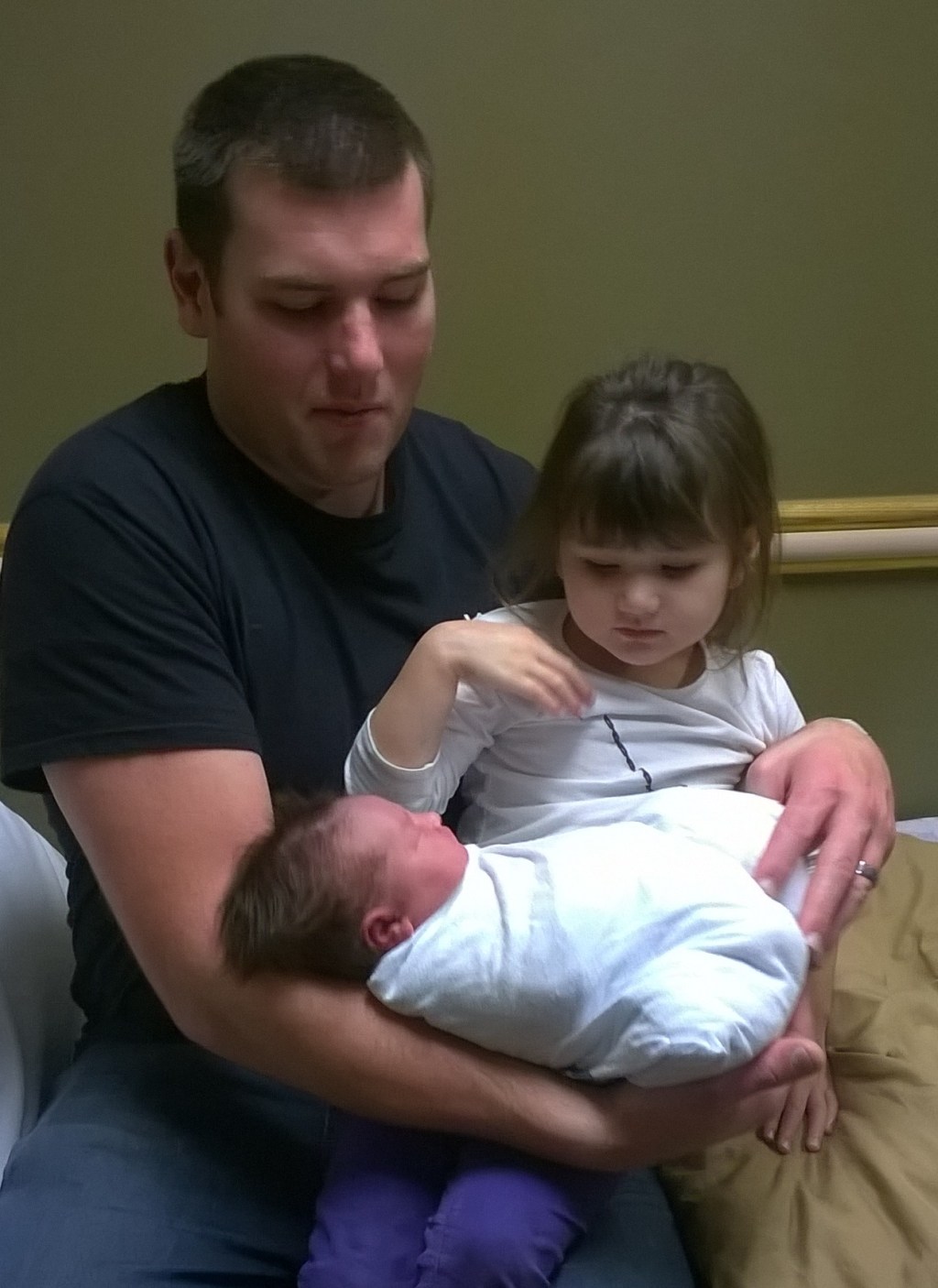
    I have decided that in honor of my grandchildren’s Native American heritage, I would post a story or fact to help them learn about, and to appreciate, their native ancestors on or near their birthdays, and it just so happens that today is Brody’s fourth birthday.

    brody and rozy
    One thing that everyone said when they saw that big boy with piles of dark hair is that he looks like a little Navajo boy.  I said it too.  Because he is.

    So Happy Birthday, Brody! I love you lots, and I can’t wait to practice this with you!

  • Ready to Launch–No Excuses

    Ready to Launch–No Excuses

    December Newsletter

    Like my previous newsletter, this is more for my benefit than anyone else (I’m still practicing). 

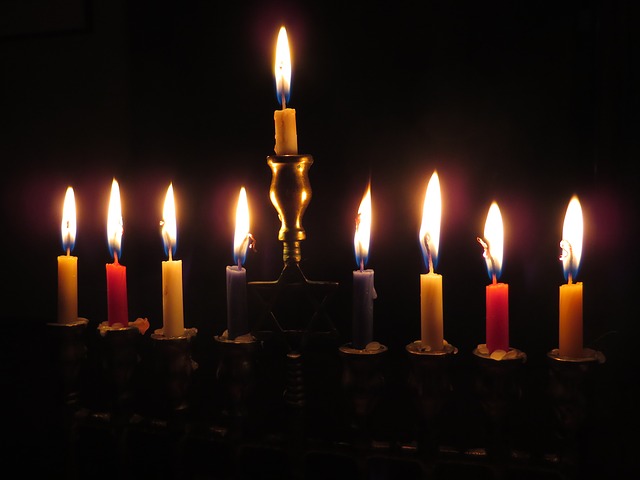
    Before I get this party started, I need to point out that today is the second day of Hanukkah! For Jews, this party is already well underway. Happy Hanukkah everyone!

    menorrah candles-897776_640

    November did not go as I planned. I started off gung-ho, but by the end of the month I was off track, and missed my most important post: Chapter One of The Second Wife’s Story. All I can say is hooray for a new month!

    Maybe the holiday season was not the best time to be reviving and preparing for a relaunch of Stories From the Past. Maybe I should have started off slower. I could probably blame my missing first chapter of The Second Wife’s Story on the flu that I caught immediately after Thanksgiving. Or just maybe I could say, Well, I’m not quite there yet; take a closer look at where I went wrong, and start fresh.

    I think I’ll do that.

    No Excuses

    I was inspired by a simple post from one of my favorite bloggers. Christian Mihai, titled The Five Habits of Extremely Prolific Bloggers.  The first habit on his list? Yeah. “They never make excuses.”

    So without any more excuses, and remembering that every day is a clean slate, I can take a look at the past, see where I went wrong, and try again.

    Habit Building

    As I think about the month of December, and my plans for the New Year, I am reminded that I am building new habits for the rest of my life. Habits don’t change overnight, and I have to be patient and not take on more than I can handle. I am building a blog, writing a book, and building a habit, so I need to take on one task a time.

    In his article, How Long Does it Actually Take to Form a New Habit? (Backed by Science)James Clear debunks the 21-day habit myth and explains, “if you want to set your expectations appropriately, the truth is that it will probably take you anywhere from two months to eight months to build a new behavior into your life — not 21 days.” This is encouraging, and a bit daunting, as I was hoping to have my new daily routine set before the New Year begins.

    There I go again, expecting perfection overnight. Well, that ain’t happening.

    But eight months? I’m not expecting it to take that long, but at least I can be assured that with dedication and determination, my goals of regular, on-time posting and having Mary Davis Skeen’s biography, The Second Wife’s Story, ready for publishing will be accomplished  within the new year. I CAN do this.

    Re-launch

    I have to remember that December is the busiest month of the year in the United States, and that my readers are probably just as overwhelmed with holiday preparations as I am. I still have a lot of planning and organizing to do in order to prepare for a professional New Year launch.

    I intend to follow my own inner clock which tells me that December is a time for reflection while January is a time for renewal. This month I’ll be looking over what I have completed so far, and tweaking and preparing for a clean new start in January.

    My posts will be simple, as my focus will be on completing two chapters of The Second Wife’s Story (appearing after Christmas), and cleaning up and preparing Stories From the Past for its new start in January.

    What to Expect this December

    photo of a fire lamp
    Photo by Vlad Bagacian on Pexels.com
    • Navajo Greetings and exploration of the name (Navajo vs. Diné)
    • Hanukkah for non-Jews (with a nod to rembembering the Shoah)
    • A Slovenian Christmas Eve (Recipe and Tradition)
    • (n)O Christimas Tree (Stories from Olean, New York, and Lark, Utah)
    • Mary Eynon ancestor profile page (not a post)
    • The Second Wife’s Story, Chapter 1, Wales
    • The Second Wife’s Story, Chapter 2, Aboard the Clara Wheeler: from Liverpool to New Orleans

    To accommodate for the holidays, posts will not necessarily appear on their regularly scheduled days and times.

    Fundraising for Austria:

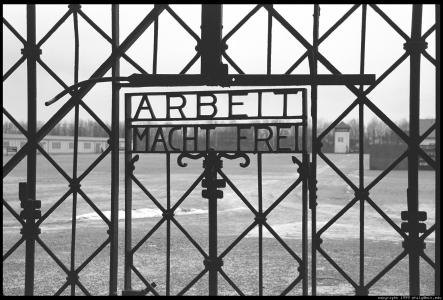
    dachau-arbeit-59.4
    New generations are already forgetting, and denying,

    I’ve been invited to Austria for the inauguration of a museum housing exhibitions on the Jews in Bucklige Welt and Wechselland regions titled “With – Without Jews.” The museum will tell the stories of the many families who disappeared during the Holocaust–including mine.

    I will be able to gather so many more stories of people who can’t tell them.

    Fundraising for this trip begins in January.

    Tentative stories for the upcoming months:

  • When a Navajo Introduces Herself, She Gives her Genealogy

    When a Navajo Introduces Herself, She Gives her Genealogy

    Happy American Indian Heritage Month! 

    Talk about Native Americans and the first two things to come to my mind are my grandchildren. My oldest granddaughter and her younger brother are both Navajo by birthright, but I know more about what it means to be a Navajo than they do, which saddens me.

    I taught high school English to students from the Navajo Reservation for just one year, but that is not where my son met his wife. While I was teaching, and learning from, the Navajo people in Arizona (Most prefer to be called the Diné), my son was living 350 miles away in Utah where he met and married a graduate of Brigham Young University who identifies as half-Navajo. This makes my grand children one-quarter Navajo.

    My daughter in law does not talk much about her family history. In fact, I can easily tell what I do know about her genealogy in just one paragraph. She is half Italian (her father is an immigrant), and half Navajo. Her mother was born on the Navajo Reservation (the largest reservation in the U.S.), but was raised in Utah with a foster family. Her mother passed on a few years ago, and though she remembered her family from the reservation, she was never really interested in returning or integrating with the culture. And that’s it.

    My daughter in law is quite reserved, and doesn’t talk much about her family’s background, but I wish she would. Over time, I believe I’ll be able to get more out of her and I will share as I learn more. In the meantime, I am determined not to let my grandchildren lose their indigenous identity. I hope that one day they will come to understand all sides of their geneology, and maybe even come to embrace the  Diné culture.

    Part of the Diné culture includes knowing and embracing your clans (best described as branches of the family tree). I had originally planned to put the traditional introduction into my own words, but it is a complicated system (maybe not so complicated to those who were born into it), and I don’t feel that I can give it justice. Thankfully there are many indigenous Americans still interested in reviving and embracing their native cultures, so it wasn’t hard to find a good video to explain it. 

    I do feel that it is important to explain one thing that doesn’t usually get explained by the Diné, probably because it is so ingrained in traditional Diné living that that they just don’t think about it. Navajo culture and society are organized matrilineally. Similar to the western patrilineal system of family organization, emphasis is put on the clan of the mother, and mothers are the heads of households and central focus of each clan. 

    Keep the matrilineal system in mind as you watch the video. I liked this one so well that I subscribed to the Vlog. Here is what the author, daybreakwarrior, says about the clan system and proper Diné  introductions:

    This video goes into the “basics” of Navajo clans, describing the importance of Navajo clans in the present day: it’s implications on identifying yourself & establishing Clan-relatives, how it identifies your ancestry, how it can “hint” at where you’re originally from, how it determines who you can & can’t marry, & how having Clan-relatives can help you in times of need. The main role that Navajo Clans have in this day and age is in introducing one’s self in public, and showing respect.

    I recommend watching the video in it’s entirety.     

    I hope you enjoyed it as much as I did. I’ll be back at least four times a year with more cool stuff about the Navajo Nation and the heritage of my grandchildren (November, December, March, and July– American Indian Heritage Month and birth months of my grandchildren and their mother).  

    Yá’át’ééh (it is good)!

  • Know Your Groups

    Know Your Groups

    If you’re lucky,  your family has never immigrated.  It happens. But since the discovery of the Americas, people have been migrating with increasing frequency. No matter where you live, if you are anything other than indigenous, you can be sure you will find immigrants in your past. People marry outside their traditional cultural and social sets all the time, bringing more groups into the mixture.

    While this is usually a good thing, it often makes it difficult to do genealogy. But as my family has found, focusing on one family group at a time helps to organize and focus on the task at hand.

    Take a look at my family: (more…)

  • A new Branch on my Family Tree

    A new Branch on my Family Tree

    My silence for the past few weeks has not been purposeful.  After the birth of my newest grandchild, I spent some time caring for his big sister, and then nursing a sinus infection.  I’d like to say that I am over the sinus infection, but every time I say so, it flares back up again.  And on days when it does, I am not capable of thinking straight enough to catch up on my writing. This morning was another rough one, but I’m feeling better for now.

    So about that new grandkid.  He’s a cutie!  Brody was nine pounds and six ounces, and we assumed he was completely healthy; but on the morning that he was scheduled to go home, the doctor came into my daughter-in-law’s room to tell her that Brody had been moved to NICU.Brody NICU swing

    Brody spent a week hooked up to tubes and monitors fighting off an unknown infection. He’s home now, and doing fine.  He’s been to the doctor twice already just to make sure.

    One thing that everyone said when they saw that big boy with piles of black hair is that he looks like a little Navajo boy.  I said it too.  Because he is.

    Brody’s mom is half Italian and half Navajo.  His grandmother on his mother’s side was born on the reservation in Arizona. Brody won’t know his Navajo grandmother. She died about a year ago.  His grandmother was kind of like my grandmother.  She didn’t like to talk much about her life on the reservation (my grandmother didn’t talk about being Jewish), so Brody’s mom doesn’t know much about being Navajo (like my mom didn’t know about being a Jew).

    With my daughter-in-law, we have a whole new limb grafted into our nearly 100% European tree. That new limb brings some authenticity to the transplanting of our tree in North American soil. But it also brings a different way of doing genealogy.

    I lived for just one year in Page, Arizona, where I taught English to students from the Navajo Reservation.  I fell in love with the Navajo people and their ways of doing things.  Because of that year, I know a little more about the Navajo way than my daughter-in-law does.  We are both looking forward to learning more about the Navajo culture as we help Brody and his big sister grow.

    So . . .  Ya’at’eeh. Welcome to the world, little Brody!