There is a sign hanging in my mother’s laundry room. It says, “On this site in 1897 nothing happened.” But who knows if that’s actually true? Who’s to say nothing happened on that site. Right there. You know, on that very spot right next to the washing machine? If there’s no evidence of schoolchildren following a path to an old schoolhouse just down the road, a young woman milking cows, an old farmer stooping to clear a clogged ditch, or a native woman searching for firewood to warm her hearth, I’m betting that there were a whole lot of somethings going on not too far away, and every time I see that silly sign, I wonder exactly what those somethings were.
Of course, I might be exaggerating a little, but the first log cabin was built in the area in 1877, so something could have happened there. Mom’s laundry room memorial makes me think. We post memorials for all sorts of historical events, things like battles, negotiations, inventions, catastrophes, births of historical figures, and of course, deaths (to name a few). Those memorials can tell us a lot. And although I could probably visit the local museum to find out if anything happened in the general vicinity of my mother’s dryer in 1897, I was inspired by Edgar Lee Masters’ somewhat irreverent and semi-fictional collection of poetic epitaphs to look in a graveyard.
I have always been drawn to cemeteries. In 1997 when Utah celebrated the 150th anniversary of the arrival the first wave of Mormon Pioneers, metal plaques emblazoned with the phrase, “Faith in every footstep,” began appearing on tombstones throughout the state. Those tombstones belonged to Utah pioneers who traveled by foot, horseback, wagon, or handcart, before the arrival of the transcontinental railroad in 1869. The year was 2001, and those markers were the first thing I thought of, so I headed for the first cemetery I could think of.
I was raised in Utah and I have absolutely no pioneer ancestors, but I still remember the stories of courage, struggle, heartache and triumph that accompanied the many families who crossed the American plains mostly by foot. It was an unfathomable journey taking about three months. I tried it a few years ago by car with my daughter and granddaughter from Kentucky to Utah. It took us four days. Of course, it was a round-trip ride, which meant a total of eight days in an air conditioned car. By the time we arrived back home, we discovered that we’d picked up stowaways in the form of bed bugs along the way. I am in no hurry to try that trip again any time soon.
By 2001 when my interest in graveyards had fully matured. The histories known, and the mysteries unknown, called to me like ghosts in a romantic novel. So when I stepped into the Cemetery in Plain City Utah, I was hoping those ghosts would lead me to a story.
And they did.
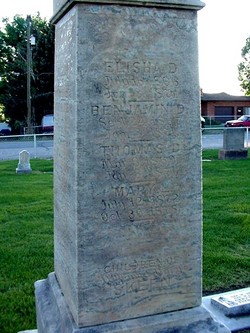
Inscriptions on tombstones are not usually put there to make you laugh (even though some do). They are there to make you think. The family memorial I found that day left me thinking for years. Along with the pioneer grave marker, names and dates are inscribed on all four sides of the tombstone. I could tell just by looking at birth dates that this was the grave site of pioneer settlers, but that’s not what got me thinking. It was the birth and death dates accompanying nine other names; all children. In the Fall of 1870, and into early winter of the next year, eight of those children died. Now I knew there had been an epidemic of some sort and I could see that there was a mystery begging to be solved.
I was in college on that initial visit, and a single mom at that. I didn’t have time to look for clues and answers, but that story stuck with me enough that I knew I had to write about it. I used an essay assignment from one of my English classes as an excuse to put my conjectures into writing. The essay won second place in a department contest at Weber State University, and I kept it over the years.
When I finished school and became an empty-nester, I finally started digging for the tombstone’s story. My first foray came up with some answers–enough to help me see that I could easily build a history around that grave marker. I went back to Plain City and took pictures of all four sides of the tombstone. What I found, shocked me. On the backside of the tombstone are the names of three of the children who died during the epidemic, and one more who was born and died in the following years. It wasn’t those children that surprised me, though. It was the inscription I had missed in my first visit at the bottom of the back side of the tombstone. It said, “Children of William and Mary Skeen.” I stepped back around to the front and looked at the bottom. It said, “Children of William and Caroline Skeen.” There were two different mothers and one father. This was a polygamous family.
If you zoom in, you can see Mary’s name at the bottom of the memorial. The names of her progeny, Elisha, Benjamin and Thomas, who died as children are above hers.
I grew up in Utah as a member of the Church of Jesus Christ of Latter-day Saints. Most of the English speaking world knows us as Mormons. In recent years, active members of the church have cast off that misnomer, and choose the full mouthful of the title or simply use the acronym of LDS. Those who don’t know us well often conflate the term Mormon with polygamy. However, I am very familiar with polygamy. Many Utah pioneers practiced polygamy, and I had friends who were descendants of polygamous marriages. There were even a handful of families in my old neighborhood who still practice it even though it was disavowed by the LDS Church in the late 19th century. Current church members who enter into such unions are now quickly excommunicated.
Knowing what I know about Utah and polygamy, I won’t pass judgment on the pioneer families of the past, or discuss those who still practice it despite laws and church condemnation. But I am not blind to the fact that some sects have taken the practice much too far by forcing children into unwanted marriages. It’s because of that second marriage that I decided to focus on Mary Davis, the second wife of William Dolby Skeen. I have no plans to base Mary’s story on her polygamous marriage. I will build the narrative around polygamy at the point where it affects her personally, but Mary’s story is the story of her life and polygamy was a small part of it.
I’ve lived outside of Utah for most of the time since I started my research, but that hasn’t stopped me. The internet was in its infancy when I started the project, but now I have access to nearly everything I need to complete my research. It’s a wonder to me that I could build a compelling biography of an utter stranger without ever having met her or having any access to written memoirs.
I nearly missed Mary, tucked away as she was at the bottom of the backside of that monument. When I found her, I realized that her story is far more compelling than the location on the tombstone suggests. At a first glance, it’s easy to think nothing happened here. But from surrounding names, places, and dates, I could see that something had happened, and that little name tucked away at the bottom on the back side had been there and had played an integral role in the town’s history.
It’s not her death that’s important, it’s her life. I don’t want Mary Davis Skeen to be forgotten, and I feel compelled to commit her to the memory of others who would never have known her otherwise.
We are surrounded on a daily basis by people living what they feel are ordinary and unremarkable lives, but if we make an effort to get to know them, we can learn valuable lessons and come to see them as crucial members of our community. Mary’s tale unfolds in bits and pieces. Like a patchwork quilt, it is colorful, warm and inviting. Her story includes heartache, tragedy and tribulation along with faith, perseverance and promise. While Mary’s story reminds us that happily ever after never happens, it also tells us that happy endings do.
Please join me in my journey to tell Mary’s story. Your comments and helpful criticism are welcome and encouraged. Treat each post as rough drafts to Mary’s biography, as that is what they are intended to be. Mary’s story will be told one chapter at a time, and one month at a time, over the next year. My ultimate goal is to publish them together in a book. If you feel that you have information that may be helpful, or that will clarify ambiguities in Mary’s story, please leave a comment or contact me. And thank you in advance for your help!
Truth is often stranger than fiction. Maybe that’s why I like historical fiction. Even though the story line isn’t true, the background of the story is truthful and accurate. This is the case with most novel ideas that have come to me. In this case, the truth is that I developed a close relationship with a man fourteen years younger than myself. Josh had become my best friend. I warned him that I was falling in love with him, but he ignored my warning and the warnings of others until it was too late. Just over a year after we first met, Josh finally admitted that it wouldn’t be possible to marry me. He blamed the age difference, but I was angry with his mom for standing in our way. Although I knew that I should have blamed Josh, I was just sad, because he couldn’t stand up to her.
I learned so much about love with Josh. I was convinced that I had found my soulmate. I was hurt that he couldn’t see it. I am confident that this will make an excellent story, but I needed Josh’s permission to write it. Heaven forbid it should appear in print without his consent. Josh, being the understanding spirit that he is, read the story based on one of my journal entries as it appears in this multi-genre work, and gave me his blessing. It’s no wonder that I love him.
Any Man of Mine
Shania Twain
Any man of mine better be proud of me Even when I’m ugly, he still better love me And I can be late for a date that’s fine But he better be on time
Any man of mine’ll say it fits just right When last year’s dress is just a little too tight And anything I do or say better be okay When I have a bad hair day
Well any man of mine better disagree When I say another woman’s lookin’ better than me And when I cook him dinner and I burn it black He better say, mmmm, I like it like that.
And if I change my mind A million times I wanna hear him say Yeah, yeah, yeah, yeah, Yeah, I like it that way.
Any man of mine better walk the line Better show me a teasin’ squeezin’ pleasin’ kinda time I need a man who knows, how the story goes He’s gotta be a heartbeatin’ fine treatin’ Breathtakin’ earthquakin’ kind
Any man of mine.
First
Impressions
I had been married. Got divorced. After a controlled marriage, I had to be the one in control.
I went back to school. Something I wasn’t allowed to do– When I was married.
I liked my freedom. I liked being in control. I didn’t like men.
The absolute truth? I could trust no man with my heart.
Summer term, Students raved about the new math tutor– Said his name was Josh And he could do math in his sleep.
This man looked nothing like the typical 21 year-old Utah boy. He certainly looked like a math tutor, though.
“Are you tutoring, or can I sit here?”
“Please sit.”
“So Josh, how was your weekend?”
“… Marianne, just what is it that you’re after?”
“I beg your pardon?”
“What are you after?”
“Um… I don’t know, Josh, what am I supposed to be after?
“My mom says that women like you are only after one thing, so what is it?”
“Maybe you should ask your mom, cuz I have no clue. Apparently you find this more amusing than I do; and how do you raise just one eyebrow at a time like that? Are you going to tell me?”
“Don’t be offended, but I really do think it’s funny. When I came home on Friday I was raving about you. When Jim came over on Saturday, I was still going on about you, and my mom finally asked, ‘So Josh, just who is this Marianne?’ So I told her about you.”
“And what exactly did you tell her?”
“Everything.”
“What did she say?”
“She didn’t say anything for a minute, and then she got mad. The next thing I knew, she was the one raving. By Sunday, my dad was trying to calm her down.”
“So she thinks I’m after something.”
“Yep. She told me I should stay away from you.”
“So what are you doing here with me, Josh?”
“You approached me, remember? Should I stay away from you?”
“I don’t know, should you? Tell your mom I’m after your body and your money.”
“I’m not staying away from you, Marianne.”
“You’re a glutton for punishment.”
“It’s all good.”
March 16, 2001
Dear Peppi,
I’m so confused. Josh knows that I’m falling for him, and he says that we’ll always be friends, but I think I want more than that. I have no clue what he wants, but everything he does points straight to eternity.
I tried to hide in a corner study room with my headphones and CDs today, but Josh found me. He walked in, closed the door, sat down next to me and raised one eyebrow. I burst into tears, and he pulled me to him. I wanted so much more than just a hug, but I didn’t do anything but lay my head on his shoulder. He let me go, and asked what was wrong. I shook my head and didn’t say anything for a minute. He just sat there with his hand on my knee and watched and waited. Josh is so patient.
I know how his mom feels about us, and it frustrates me that she gets so upset when she knows we’re together. It bugs me, because Josh and I really do spend a lot of time together, but most of the time we’re with other people, and we’ve never done anything that either one of us would ever be ashamed of. I’ve never even kissed him.
I finally told him that I was frustrated because he is going to be such an awesome husband. It hurts to know that I spent thirteen years in an abusive marriage, and now that I’m free, and have found the perfect man for me, the age difference seems insurmountable. It doesn’t matter who Josh marries, he is going to treat that woman the same way that he’s treated me and every other woman I’ve seen him interact with. I so want to be that woman, and I can’t see it happening.
Josh did nothing more than pat my knee and say, “I know.” Why can’t he just say Marianne, will you marry me? I would say yes. He says his mother’s opinion doesn’t mean anything, because she just doesn’t know me, but I know that if he wasn’t so worried about disappointing his mom, that we could get past the age difference. I know that if his mom knew me like Josh knows me, she wouldn’t be having this problem. She’s never even met me!
I left my CDs with Josh while I went to class. He likes my music, and I never mind sharing. When I came back, Josh had returned to the corner room. I walked in, and he pointed to the headphones on his ears and said “John.” He meant John Denver. I grabbed the headphones and said “Mine.” He grabbed them back and said, “Can’t you share?” I know that Josh understood I was teasing, but I was still hurting, and all I really wanted to do was sit with my CDs and feel sorry for myself. I gave up, and just sank into my seat. Josh put the headphones on my head and said, “Let’s take turns.”
I listened to a couple of songs, then passed them back. Josh loves digging through my CDs and listens to a variety of stuff. Sometimes he brings his own music and we share that too. Once he brought Michael Boulton, and I was thinking about How am I Supposed to Live Without You? It’s one of Josh’s favorites. I wanted to stick the music in, and make him listen to it, but he didn’t have it with him today. Why doesn’t he get it?
We studied, passing the headphones back and forth, for more than an hour. Maybe I should say that we tried to study, but most of the time we spent talking about music and comparing homework. Josh is taking a Shakespeare class, and he loves to tell me about it. I didn’t get much done, and now, I’ve spent the last hour writing in my journal. I hope I don’t fall behind.
I was actually relieved when he glanced at his watch and said, “Uh Oh, I’m supposed to be tutoring!” I thought I might finally get some homework done, but Josh grabbed the headphones off my head, took Shania Twain out, put the headphones back on his head, and stuck John Denver back in the CD player. He did it all so fast that I didn’t even have time to ask what are you doing? He started pushing buttons madly, then slowed down, listened for a second, took the headphones off and put them back on my head, pushed a couple more buttons and then ran out of the room.
There’s no way I could do any more homework today, anyway. When Josh left the room and the music started playing, the message came loud and clear; “Lady, are you crying, do the tears belong to me?” Obviously, Josh understands more than I think he does. Now I’m more confused and frustrated than before. Why would he want to send that message to me?
Josh knew that I had to leave during his tutoring session so I could get home to my kids. I couldn’t ask him what he meant. This is so not fair!!!
My Sweet Lady
John Denver
Lady, are you crying? Do the tears belong to me? Did you think our time together was all gone? Lady, you’ve been dreaming, I’m as close as I can be. I swear to you our time has just begun.
Close your eyes and rest your weary mind. I promise I will stay right here beside you. Today our lives were joined, became entwined; I wish you could know how much I love you.
Lady, are you happy, do you feel the way I do? Are there meanings that you’ve never seen before? Lady, my sweet lady, I just can’t believe it’s true And it’s like I’ve never ever loved before.
Close your eyes and rest your weary mind. I promise I will stay right here beside you. Today our lives were joined, became entwined. I wish you could know how much I love you.
Lady, are you crying, do the tears belong to me. Did you think our time together was all gone. Lady, my sweet lady, I’m as close as I can be. I swear to you our time has just begun.
How do You Love Me? Let Me Count the Ways
Apologies to Elizabeth Barrett Browning
You look at me and one raise one eyebrow.
You sing loudly and off-key in while assembling my new computer desk.
You play with my hair from the seat behind me in our Book of Mormon class.
You whisper John Denver lyrics in my ear as I catnap in the student union building.
You lead me by the hand to your secret hideaway to calm my nerves after I locked my keys in the car.
You try to hold my hand from the back seat of Sandra’s car while I ride shotgun. It’s awkward, but we make it work.
You ask a question that only my heart can answer while gazing into my eyes and replying with your own.
You lay your head on my shoulder until my tears slow.
You fold my laundry as you wait for me to get ready for a Michael McLean concert.
You bring me a miniscule piggy bank with my name printed in tiny letters from your weekend trip to California.
You interrupt a study session to drag me down the hallway to a “found” penny for my new piggy bank.
You present a downy duck feather to me halfway through one of our many walks around the duck pond.
You brag to our co-workers that you can outrun my ex-husband.
If outrunning him doesn’t work, you say you will hide under a table because he is six inches taller than you and won’t fit.
You sit quietly next to me without saying a word.
You nurse my injured foot on a broken-down pier while everyone else is splashing and playing in the lake.
You throw your arms around me saying “I missed my Marianne” when I come back from a month in Europe.
You say, “I’m right here.” in a voice so low only I can hear through the encroaching crowd.
You eat cherries with me and spit the pits in the bushes as we discuss more serious matters.
You lay next to me on the grass and watch the stars for 45 minutes after the post-fireworks traffic has cleared.
You play with my children as if I weren’t even there.
You hug a tree to show me you’re on my side because my family thinks I’m a crazy tree-hugger.
You stay with me as I wait for the last bus of the day, then hop on your bike for a seven-mile ride into an oncoming storm.
You call to tell me you’ve made it home safely.
When You Say Nothing at All
Ronan Keating
It’s amazing how you can speak right to my heart. Without saying a word, you can light up the dark. Try as I may, I could never explain What I hear when you don’t say a thing.
All day long I can hear people talking out loud, But when you hold me near, you drown out the crowd. Old Mr. Webster could never define What’s being said between your heart and mine.
The smile on your face lets me know that you need me. There’s a truth in your eyes saying you’ll never leave me. The touch of your hand says you’ll catch me if ever I fall. You say it best when you say nothing at all.
A Broken Pipe
It was Josh’s silence that caused so much trouble that summer. Josh was always willing, even eager, to listen to anything and everything that Marianne had to say, but when it came to revealing himself to her, he was disturbingly silent.
It took a discussion about a broken pipe in his uncle’s lawn to get Josh to open up. The pair sat at the top of a man-made waterfall on a large stone. Marianne’s children were spending the weekend with their father, so she had invited Josh to visit Utah State University with her. She had made it sound so innocent, but she desperately needed to talk.
Josh was going on about his uncle who wouldn’t fix a broken water pipe in his lawn. Marianne seized the moment, “I have a broken pipe.”
Curiosity piqued, “Is it a big pipe or a little pipe?” Josh asked.
Marianne swallowed. “It’s a big pipe.”
“That’s a real problem.” She could tell that Josh was thinking about a broken water pipe, and she continued to let him think that. She needed him to understand the enormity of her problem.
“You should get it fixed as soon as possible.” he said.
“That’s what I’m trying to do.”
“Is it inside or outside?”
Marianne was tempted keep the charade going and tell him that it was inside. Instead, she swallowed again, “It’s an emotional pipe.”
“Oh, I see.” Josh grew quiet. He could see where she was going with the conversation. “Do you need some help fixing it?”
“Josh,” Marianne choked, “I can’t fix it without your help.”
Another significant silence. She didn’t dare look at him; her vision was clouded by brimming tears.
“Did I break the pipe?” Josh asked.
It takes two to play in the game of love, and Marianne knew that she was not an innocent bystander, “You helped.” It still wasn’t easy to tell him, even though it was clear to both of them that he already knew the answer. She decided to get straight to the point by explaining that she needed to communicate, and he didn’t see the need. She reminded him of similar talks that they’d had in the past, and of the age difference.
“If I were fourteen years younger . . .”
“There’d be no question.”
Marianne was cut to the very core of her soul. “None whatsoever?”
“I’d marry you in a heartbeat.”
Ouch. That hurt. That was it. She had to tell him, but it was still so hard. Marianne was so sure that he already knew. “Josh, I thought that I had made my feelings for you very clear when we talked before.”
“You made them very clear.”
“Very clear?” From Josh’s recent behavior, she wasn’t sure she’d been clear enough.
“Very clear.”
“Well, I need to be sure, so I have to make them perfectly clear, okay?”
Josh smiled and sat back. “Go ahead.”
Go ahead. Just like that. She decided she was a glutton for punishment; “This is so difficult. . . “
“Marianne, just say it.”
She gulped. The tears were running down her cheeks, and she so desperately wanted to think clearly. She couldn’t. “Josh, I love you more than I have ever loved any man in my life.”
The truth of the matter was that she hadn’t even known what true love was until now. Why did it have to be this way?
Silence. Except for a few muffled hiccoughs.
“Was that perfectly clear?” She had her glasses in her hand, and she couldn’t see him through her watery eyes, but she looked at him anyway.
“Perfectly.” His reply was quiet as he wrapped an arm around her and laid his head upon her shoulder. The tears continued to flow as she laid her head on his.
“Josh, this has been the most difficult summer of my life.” It was the happiest, hardest, saddest time of her life.
“It’s because of me, isn’t it?”
“I tried to warn you…”
“But I wasn’t listening.”
“Is it possible that I was saying something you didn’t want to hear?”
“No, but it is possible that I just can’t figure out how to fast forward or reverse time.” They talked about time, eternity, and the age difference.
“Josh, you don’t see time the way I do. I don’t separate eternal time from worldly time.”
“I don’t see how you can live in this world without separating it from God’s time.”
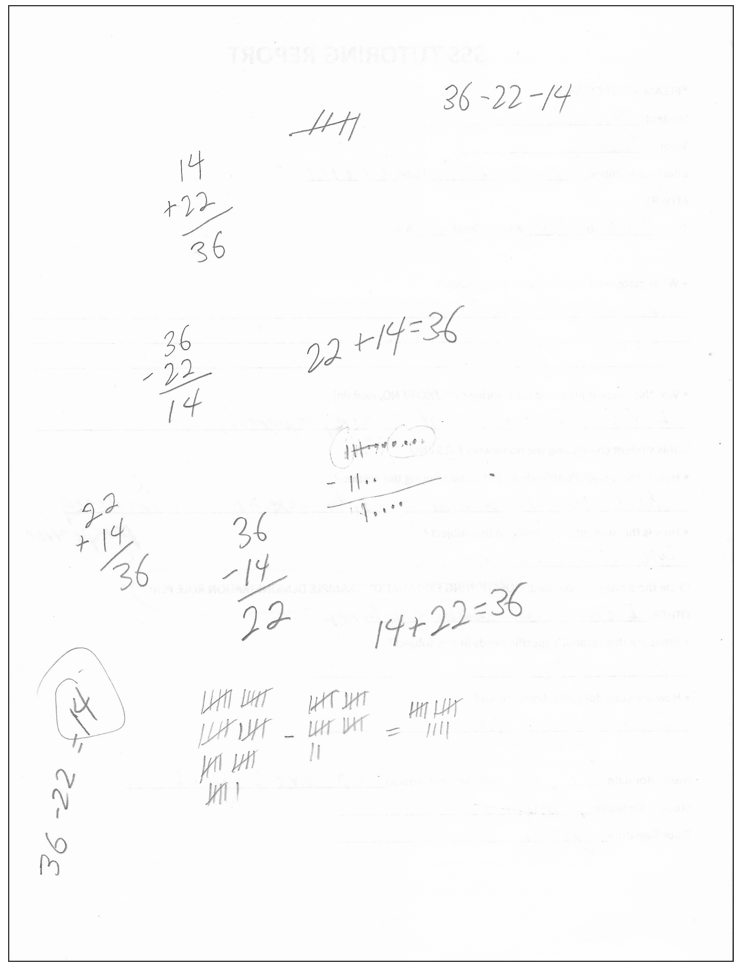
“You think like a mathematician.” Thirty-six, minus twenty-two, equals fourteen. . .
“It’s not going to work, is it?”
“I don’t see how it can.”
Marianne was completely devastated. How was she supposed to live without him? Even though She had already learned that she could get along just fine without a man, she just didn’t want to get along without the companionship of her best friend. He wasn’t even gone but she was already missing him. For a while she just sat, snuggled in his arms until the tears slowed.
“Josh, you’re going to go on with your life. You’ll get married, be a fantastic husband, make some lucky girl incredibly happy, and I’m going to remain single for the rest of my life.”
“How can you say that? You’ll get married again.”
“Josh, you can’t really believe that.”
“What do you mean? You’re an awesome lady; someone will want to marry you.”
“That’s not the point, Josh. I could easily find a man, but I don’t want just any man, I want the right man, and it’s taken thirty-six years to find him. I don’t want to spend another thirty-six years looking.”
“Marianne, you’ll find someone.”
“Yeah, when Hell freezes over.”
“I hear they’ve been having a cold snap…”
She laughed a funny little hiccuppy laugh spawned by a breaking heart. Then sighed, and said flatly, “Josh, you just go on with your life. I’ll be right here waiting.” She placed her palm over her heart.
“Right here?” He looked down at the rock and patted it. “This isn’t the most comfortable place in the world. Where will you sleep at night? It might rain or snow. You’ll get cold. You’re gonna want an umbrella and a jacket.”
“Oh Josh, you know what I mean. “For the next few days, the tears fell freely until Marianne had to admit to herself that the emotions she was experiencing felt too similar to the pain of divorcing Bob. Because she had loved Josh so much more deeply than she had loved Bob, her immediate fear was that the deep emotional pain would last a lifetime.
It was useless; that pipe was never getting fixed.
Right Here Waiting For You
Richard Marx
Oceans apart day after day And I slowly go insane I hear your voice on the line But it doesn’t stop the pain.
Wherever you go, Whatever you do, I will be right here waiting for you. Whatever it takes, Or how my heart breaks, I will be right here waiting for you.
I took for granted, all the times That I thought would last somehow. I hear the laughter, I taste the tears, But I can’t get near you now.
Wherever you go, Whatever you do, I will be right here waiting for you. Whatever it takes, Or how my heart breaks, I will be right here waiting for you.
I wonder how we can survive This romance. But in the end if I’m with you, I’ll take the chance.
Wherever you go, Whatever you do, I will be right here waiting for you. Whatever it takes, Or how my heart breaks, I will be right here waiting for you.
Profound Loss
Josh and I were introduced by one of the students he was tutoring. In fact, I would have to say that Jenni went on and on about Josh just about the same as he would soon be going on and on about me. Like me, Jenni was a single mom, and just a year older than me. And like me, she found him to be a good friend. Unlike me, her friendship with Josh never changed. Because I was also a tutor, I knew I would soon know him as well, so I asked her to describe him to me. From Jenni’s nondescript description, I really couldn’t figure who he was. But I ran into her a few days later on her way to her appointment with Josh while I was on my way to work, so I asked her to show him to me. The poem, “First Impressions,” appears exactly how I saw him, and yes, even though it’s a stock photo, the cover photo is pretty true to my first impression of Josh.
That was Summer Term 2000, and the “What are You After?” conversation occurred at the beginning of Fall Semester after I’d set him up on a lunch date with the hottest girl in the room. We had a strong bond, and soon found ourselves doing nearly everything together during our school hours. During winter break, we even went on a double date. I was with another tutor closer to my age, and I’d fixed him up with a younger friend of mine from the bus we rode. It was a weird date because by the end of the night, Josh and I somehow ended up together deep in conversation while our dates sat awkwardly at either end of the room. It was Josh that got the goodbye hug while I don’t think my date even got a handshake.
I don’t recall when my physical attraction to him changed, but I do know it was after I found myself falling in love with him sometime in midwinter of 2001. I remember when the sudden realization hit me. Josh and I were on our way back to campus after attending an LDS temple session together. We’d already been talking about the age difference because I knew his mom flew into a rage every time my name came up or she found out we’d been spending time together. We were stopped at a traffic light, and it hit me like a punch in the gut. That was the first time the tears fell, and even though I didn’t actually say the words, it was at that moment we both realized I was falling in love with him. It was also when I began to feel the pain from the well-found fear of losing him.
That summer I spent a month in Europe immersing myself in the German language. I’m sure I was driving the students in my group a bit nuts over the fact that I couldn’t help myself from bringing him up in nearly every conversation. Either that or talking about my kids. Although we’d gone together on the same plane, a large portion of the students extended their stay to visit other countries, while I was more than happy to get home to my kids. I was homesick nearly the whole trip.
I remember quite vividly my flight over New York City on the way into Newark. It was my first time seeing the Statue of Liberty, the Empire State Building, and the Twin Towers. I’d never in my life been that far East, let alone to Europe, so I was more than happy to have seen them up close even though it was from the air.
When I came back on campus, I was pleasantly surprised at Josh’s welcome home hug. It was the first time he’d ever called me My Marianne.
I so wanted to be his.
But there was something in the air that day, telling me it was the beginning of the end. There were two new women in the room, both with their eyes on Josh. Sandra had been hanging out with Josh while I was away, and she had set her sights on him. Yes, she’s the same Sandra driving the car while Josh held my hand from the back seat. She was none the wiser. The other, I might describe as mousy but not in a derogatory way. She was quiet and I don’t know if I’d say shy, but there was nothing more than ordinary about her. Looking back, she was the kind of woman who deserved a man like Josh.
At the end of that summer, I found myself sitting on the rock talking about a broken pipe. It was my last attempt to make him put up or shut up. He did neither. I’d say the Broken Pipe story was the day we broke up, but Josh didn’t see it like that. For me, it was that day that I knew for a certainty it was over.
Fall semester of my senior year came a week later. I found myself weeping from a broken heart whenever I was alone. But I also found myself looking for hiding places where I could study alone. It was so tough for me because Josh seemed to know where to look and I had to get more creative as time went on, and the more I needed to be left alone. I still loved being with him, but it was torture for me to feel that tiny glimmer of hope all the while knowing it was hopeless.
Just three or four weeks later, I remember crying a bit in the early morning hours while the kids were still asleep. Wiping my tears, I headed down the stairs to start my morning routine of switching the TV on to the morning news, more as background noise than anything else, while I woke the kids up for school. Dressed and nearly ready to go, I started back down the stairs to find the TV screen filled with the image of the North Tower with a gaping hole and black smoke billowing into the beautiful blue September sky. The complete irony of that day was not lost on me. It is the only day I remember where the skies were blue, and the weather was perfect from coast to coast.
My daughter seemed completely nonplussed when I pointed out the billowing tower on the screen, so I didn’t bother to bring it up to her five year-old brother. I shooed them into the car, turned the TV off, and headed out the door where my next-door neighbor informed me that the second tower had been hit. By that time, it was obvious to everyone that it was a terrorist attack. I didn’t know what to do, so I dropped the kids off at school and decided not to take the bus in that day. I wasn’t sure if I’d want to turn back around and go home. Despite those blue skies and temperate weather, a gray pall hung in the atmosphere and there was absolutely nothing normal about the traffic.
Regardless of the complete lack of accidents, road work, or emergency vehicles, traffic was going at a crawl and no one, including myself, seemed to care; we were all transfixed by the narrative replacing the music on every radio station. The first tower fell about halfway through my commute, and I suddenly found myself in a quandary: Do I go home to my children who were already at school, or do I keep going even though I was already an hour late for work? I was sure the kids didn’t care one way or another (they didn’t), so I kept going. From the parking lot, I called the tutoring center to tell them I would not come in that day, and was told that everyone was cancelling, both students and tutors, so it really didn’t matter anyway.
On campus, TVs had been brought out from everywhere, and every screen, including the theatres, displayed the same scene. Passageways, though filled with students, were eerily quiet except for the commentary from the screens. Some teachers canceled classes, but most kept their schedules in case students needed to talk. It didn’t matter whether or not I’d done my homework; it was irrelevant that day. I decided I didn’t want to be alone, so I headed to our favorite haunt– the nontraditional student center. Josh’s age and marital status may have made him a traditional student, but there was nothing traditional about him. He was there waiting for me. He took me by the hand and led me to the theater next door where we sat with my head on his shoulder crying and watching the horrific aftermath unfold. I still feel the irony of that day with the two of us snuggled in the theater like lovebirds at the movies. I cried and cried that day as I felt the double loss over and over again.
After that day, I marveled at the fact that my first time flying over New York came so close to the day when the towers fell. I wondered about other students doing study abroad who suddenly found their way home blocked by closed airways. I’m so glad it wasn’t me. I was so glad to be home with my kids when it happened, and even happier to know that I had gotten my chance to see the towers in person, even if it was from the air.
By the end of Fall Semester Josh was dating that sweet quiet girl, and I was looking even harder for better places to hide. I didn’t bother to deny the fact that I was hiding from him when he confronted me, and I was glad that to have finally found one place where he never looked in the Art building.
At the end of Spring semester, 2002, Josh and I went our separate ways. Josh married that girl the next year and they moved to Logan to finish school at Utah State. I did the graduation walk, with one incomplete class and took a two-year break while trying to focus on family issues. It was a disaster, and I fell into a deep depression. When I came back to Weber State, I completed that class, entered the teaching program, resumed work as a tutor, and tried to get used to the old familiar places without the old familiar face. I was grateful that I no longer thought of him on a daily basis, but the familiar places and faces often brought back raw hurt.
Loving Josh was sweet, beautiful, and painful. I fought that depression for another three years, but finally found my way out when I moved to Chicago for grad school and met and married Tony. Tony read this story before I married him, and said he’d love to meet Josh someday. That was when I knew I’d found a great guy. I haven’t shed any tears over Josh for more than fifteen years, except when one of those songs catches me unaware. Even then, I think I’m finally truly done with the tears.
Why They Call it Falling
Lee Ann Womack
It’s like jumpin’ It’s like leapin’ It’s like walkin on the ceiling It’s like floatin’ It’s like flying through the air It’s like soarin’ It’s like glidin’ It’s a rocket ship you’re ridin’ It’s a feeling that can take you anywhere
So why they call it fallin’ Why they call it fallin’ Why they call it fallin’ I don’t know
There was passion There was laughter The first mornin’ after I just couldn’t get my feet to touch the ground Every time we were together We talked about forever I was certain it was Heaven we had found
So why they call it fallin’ Why they call it fallin’ Why they call it fallin’ I don’t know
But you can’t live your life Walkin’ in the clouds Sooner or later You have to come down
It’s like a knife Through the heart When it all comes apart It’s like someone takes a pin to your balloon
It’s a hole It’s a cave It’s kinda like a grave When he tells you that he’s found somebody new
So why they call it fallin’ Why they call it fallin’ Why they call it fallin’ Now I know.
Ooh, why they call it fallin’ Why they call it fallin’ Now I know.
I don’t think I ever met Robert Moulton, but I remember his father, Bob Moulton. We lived just down the street from Bob and his wife for two years while my dad was preparing the foundation for a new home in the hills nearby. I always thought the Moultons lived in the most beautiful house in Lark, Utah.
After Dad was laid off at Christmastime in 1974, Bob Moulton hired him as a custodial assistant at Bingham High School in Copperton, Utah. It wasn’t a full-time job, but Dad was so grateful for it in the months before he found another job in his field of civil engineering the next fall.
The Old Bingham High School was torn down in 2002. Photo by Scott Crump.
The town of Lark no longer exists, but its memories are kept alive thanks to a Facebook group dedicated to former residents. I’ll have to share Lark’s Story in the coming months. I came across Robert Moulton’s Memoirs shared with the group a couple of months ago. I was surprised at how so many of his stories paralleled stories from my father’s childhood in Olean, New York, especially young Robert’s quest for a Christmas tree.
Just like my father’s stories, Robert’s stories made me laugh. Prepare to be amused.
REAL CHRISTMAS TREES
From LARK TAILS, a selection of memoirs by Robert D. Moulton, PhD:
Lark was surrounded by what we called “junipers” and they were our Christmas trees, and Dick and I hated them. We hated them because they reminded us that other Lark families had more money than the Moultons and could afford to buy “real” Christmas trees. We thought that only pine trees made good Christmas trees. Pine trees have pointed tops that you can attach stars and angels to, and pine trees have needles that you can hang tinsel and ornaments on. But junipers are more bush than tree, have rounded tops, and they lack needles. No matter that the juniper trees came already decorated with blue-green berries and filled our house with their lovely, distinct perfume; and no matter that cutting a juniper Christmas tree meant an outing with our dad and Jill. We were ashamed of juniper Christmas trees and always insisted that Mom and Dad place them away from our windows so they couldn’t be seen from the street.
I don’t know how Dick and I knew that “real” Christmas trees grew high on the mountain above Lark. Perhaps Dad had mentioned pine trees in his stories of hunting mountain lions and mule deer up there. In any event, we knew that pine trees grew on top of the mountain, and Dick and I decided to go on a Christmas tree expedition. There was considerable secrecy about the trip. The mountain was private property, full of dangerous, abandoned mines and other scary stuff, and Mom and Dad had forbidden us to go up there. But we were convinced that our parents, too, were ashamed of junipers and would understand once we presented them with a real Christmas tree.
Dick and I probably thought it fitting that we planned the hike to the mountain top on a Saturday when Mom and Dad were in the Salt Lake valley shopping for Christmas presents. I should add that Mom and Dad had earned the family’s Christmas money by thinning and then picking apples in Alpine at a big commercial orchard on Saturdays throughout the summer and fall. They did this along with Mom’s brother, Virgil, and his wife, Rita, who also lived in Lark. Uncle Virg was tall and could work even the tallest apple trees without a ladder, so they said.
When the day of our big adventure finally came we waited impatiently for our parents to leave so we could set off. We had hoped that they would leave early so that we would have enough time to climb the mountain, find a tree, and return before they got home that night. However, Mom never could leave the house without first making all the beds, washing the dishes and cleaning everything that could be cleaned. It was noon by the time they left and we feared that there wouldn’t be enough daylight left for our trek. Nevertheless, we took Dad’s axe, and with Jill, our lop-eared boxer, headed west, toward the top of the mountain.
We were hiking through snow that got deeper and deeper as we climbed. We thought we had dressed warmly, but as it got later in the day the sun went behind the peaks above us and it got colder and colder. I don’t know how poor Jill managed with her short-haired coat, and Dick and I were about as cold as cold can be. I kept thinking about one of Dad’s favorite stories. He told us that when he was a boy, his generation of Moultons spent a few winters in Montana. He claimed that winters were so cold there that words froze and conversations were not heard until spring thaw.
At last Dick and I found a stand of pine trees near the top of the mountain. They were beautiful and came complete with needles and pointed tops. In our minds, we could see them decorated smartly and sitting proudly in front of our living room window. We were so excited that we forgot for a moment how cold we were. We ran from tree to tree looking for the perfect one. When we finally found it, I claimed the honor of cutting it down. With what I imagined was a mighty swing of the axe, I hit the base of the would-be Christmas tree. It shook a little, and all its needles fell to the snow.
Dick blamed my clumsy axemanship and claimed his turn. Same result: one swing of the axe and we were looking at a naked pine tree. We kept trying, but after we had denuded a dozen or so trees we figured out that they were so frozen that it was impossible to cut them down without shaking their needles off.
And so we gave up and started our hike back down the mountain toward Lark, cold and hungry. All too soon we were plowing through deep snow in the dark, tripping, falling, rolling, and shivering. We had no lights with us. Dad had a flashlight or two, but we hadn’t been brave enough to “borrow” one. And besides, we hadn’t planned on hiking back in the dark.
As we got closer to Lark, we saw what must have been thirty or forty lights moving below us and heard people calling our names.
As the first group of would-be rescuers reached us, they called out, “Seen the Moulton boys? Their parents think they have fallen into a mine shaft or been buried in an avalanche.”
“No, we’re lookin’ for ‘em, too.” we answered.
Eventually we got home, cold, hungry, without a Christmas tree, and in big trouble. Later, after we were forgiven a little, Dick and I went with Dad and Jill to cut a juniper Christmas tree.
My four children will tell you that when they were growing up in Texas I was never very enthusiastic about buying Christmas trees. You just can’t buy a good juniper in Texas.
From my childhood imagination, I remember the Moulton’s house as the most beautiful in town. Mom tells me it was because of Edna Moulton’s immaculate landscaping.
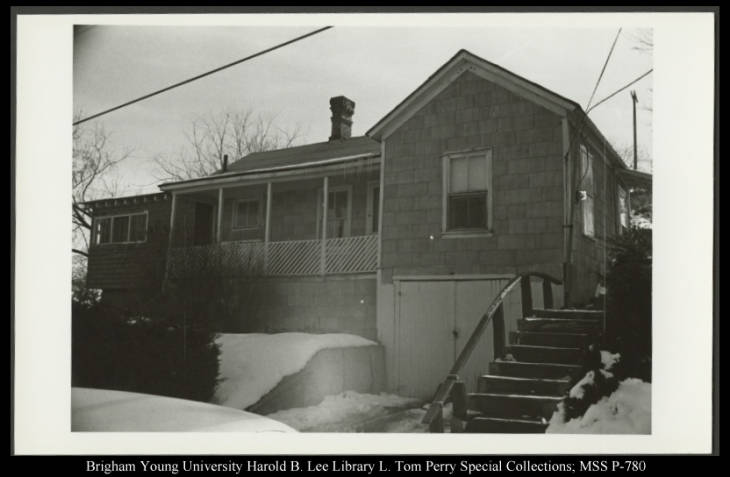
If a picture paints a thousand words, this one certainly did. More than that, it painted memories.I had no idea of the flood I’d break loose when I posted this photograph to a group in Facebook four years ago. It’s just an old house that my family lived in for less than two years. My memories of it at the time were minimal. I turned eight a few days after we moved in, and we moved out when I was still nine.
But this post isn’t about me. It’s about the people from an old mining town overwhelmed by the encroaching ore dumps of the Bingham Canyon Mine, more commonly known as Kennecott Copper Mine. The town was Lark; named after one of the prospectors who laid claim to the land in 1863. Originally owned by the two miners who started two different claims, Dalton and Clark, the mine was merged and later bought out by the United States Smelting and Refining Company. By 1923 the company owned the whole town.
Lark expanded and hit its heyday in the decade following World War II. It boomed as the babies boomed. I can imagine spanking white houses, freshly paved streets, and a steady stream of traffic down the main road to the mercantile and post office. But that Lark only exists in my imagination and the memories of the remaining people who bonce built their lives there.
The mine had closed by the time my family rented the big house in the picture. Many of the old miners had already moved out when we moved in. By the time we left, the old mercantile with the only gas pump in town had closed and the town had come under control of the Kennecott Copper Corporation. In 1977, less than three years after we moved out, the people of the town were told to leave.
The town of Lark was set at the foot of the same mountain which housed the old Bingham Canyon Mine. It was a 45 minute drive around the edge of the mountain from Lark to Bingham Canyon. By 1972, the year we moved in, the mine had gained the dubious distinction of being the largest open pit mine in the world, and the town no longer existed at the foot of a mountain but the foot of an ore dump. If my memories serve me correctly, it was the encroaching ore dump from the Bingham Canyon Mine that forced Kennecott to close the town. The dump had nowhere to go except to the edge of the mountain it existed in, and Lark was right in its path.
Article from Green Bay Press Gazzette, Green Bay, Wisconsin, 29 Dec 1978, Main Edition, Page 22. Found on Newspapers.com
So three years after my family moved out of the old Lark house, Kennecott announced the eviction of the remaining residents. It took a couple of years to get everyone out and resettled, but when the last resident in city limits left, every building within city limits was razed to the ground. By 1979, the only buildings left standing were a couple of houses on the way into town and the old Drift Inn (the local bar). Lark had become a ghost town.
Fast forward a few decades. Being the nostalgia nut that I am, I eagerly joined Lark, Utah’s Facebook Group and started conversing with some of my old classmates. I don’t remember if I posted much, and I visited the group only occasionally, but when I posted that photograph, something remarkable happened. People started commenting, not on the picture, but on their memories of Lark in relationship to the picture. It was really cool to learn so much about a town I didn’t think I had remembered much of.
I honestly don’t remember what my expectations were, but here is my original post accompanying the photograph:
This is the house I lived in while my family lived in Lark. Floyd Rasmussen’s family lived there for several years before we moved in. We lived here for two years before moved on to our property in the Oquirrh Mountains. I think we were the last family to live there.
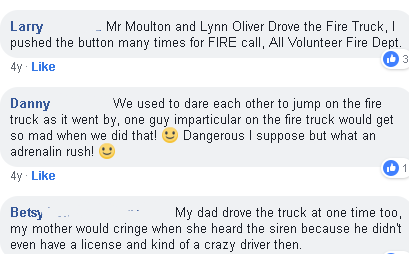
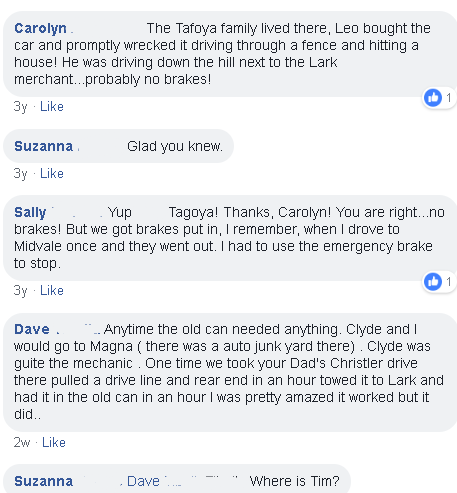
Within the first few hours a flurry of comments flowed in, and the vibrancy of the old town of Lark immediately showed its face.
People were remembering:
Yes, I was on that zoo trip. I remember girl scouts with much fondness and most of the names as well.
renewing connections:
and telling stories:
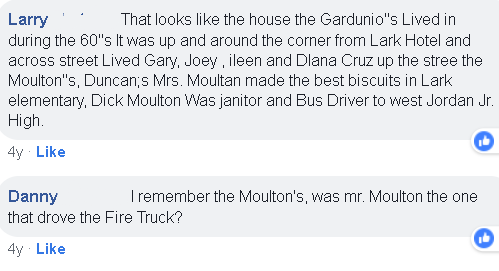
Mr. Moulton’s first name was Bob. There might be a few other slight inaccuracies, but that’s how we remembered it.
So many comments and conversations that had absolutely nothing to do with me appeared in my news feed, and this went on for more than a year. I went on with life and ignored the comments for a while. Things were quiet for at least a couple of years and I essentially forgot about it until a couple of weeks ago when someone randomly picked up the conversation just as if it had never ended. This is similar to all other posts. Just one photo, question or statement leads to all sorts of conversations in the comments.
I’m really not the greatest fan of Facebook but there are a few things I have noticed. If you’re a history buff or a displaced member of a community or family, Facebook is a great place to reconnect and gather stories that otherwise might not have been told. I’ve used it extensively for Stories From the Past, and thanks to Steven Richardson, administrator of the Lark, Utah group page, I’ll be using it a lot more.
You can look forward to more stories from Lark, Utah’s past in the upcoming year.
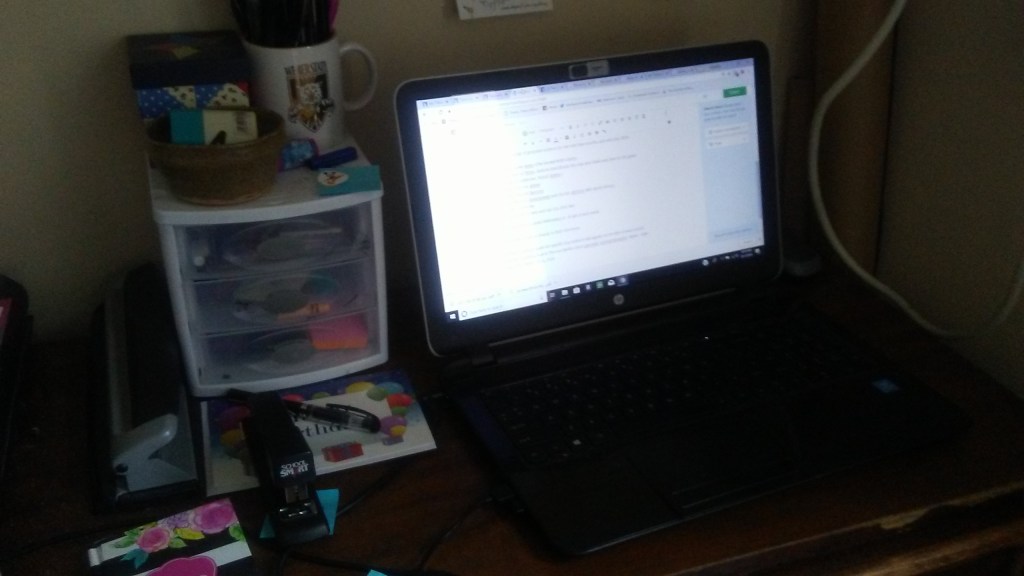
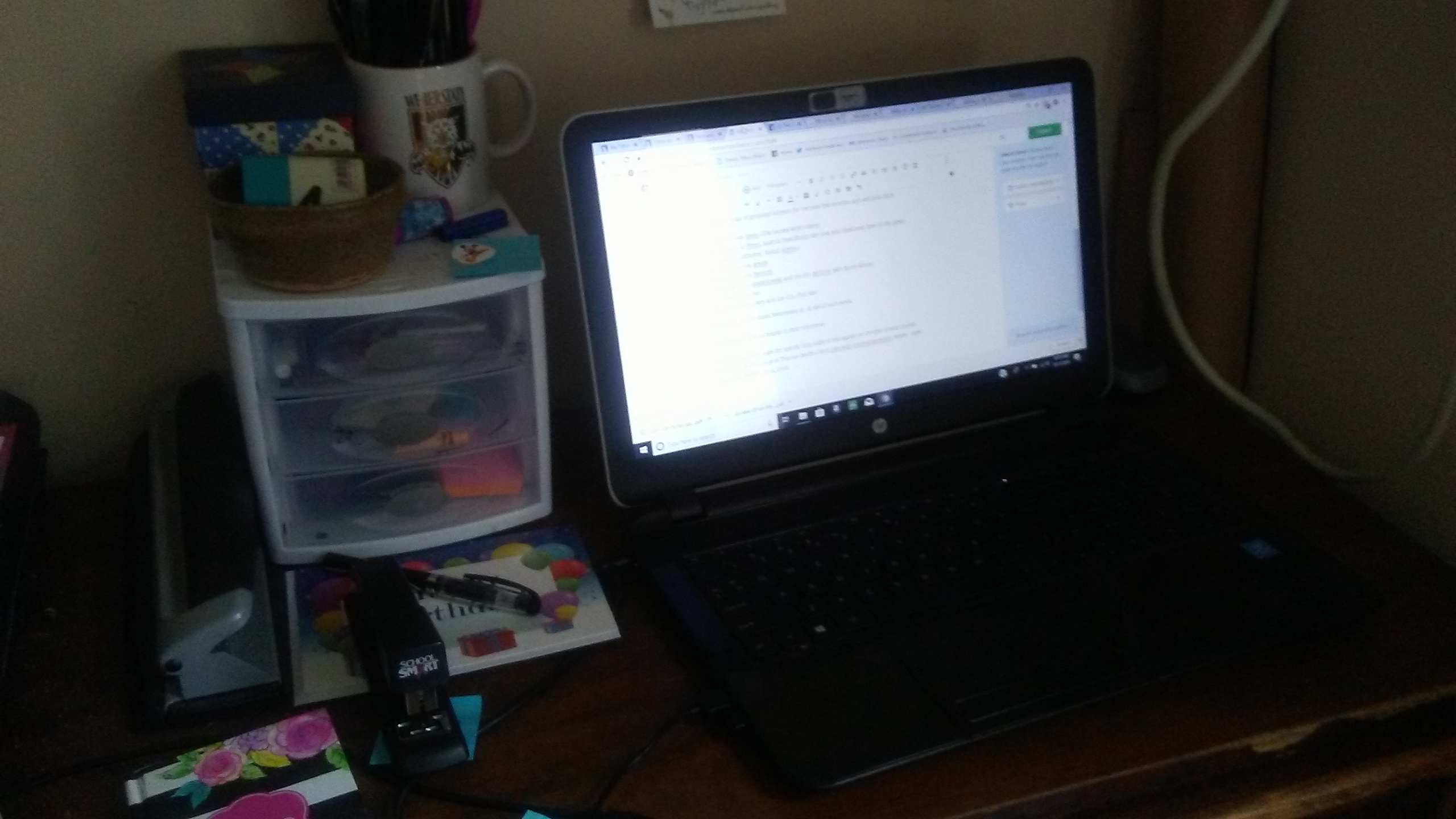
Over the summer, Stories From the Past was never far from my mind. In fact, I felt a lot of anxiety over no posts, but between two grandkids and a broken PC (I have six grandkids but two were staying with me), my ability to blog was reduced to bits and snatches of time with a tablet or a phone. Have you ever tried to blog from your tablet or phone? Well, I’m a perfectionist, so I wasn’t even going to attempt it. In fact, I suffer from perfection paralysis. It’s a real thing, which means that if I can’t do something right, I’m not going to do it at all. Thankfully, knowing you have a problem is the first step in solving it, and I am now working hard to get over my fear of doing a less-than-perfect job. Now that both grandkids are back at home and in school, and I have a new PC, Stories From the Past is ready to roll, and I’m gearing up to launch a professional, remodeled, website for 2019.
back at work ( I hope it’s true that a messy desk is a sign of a genius mind.)
Many of you are waiting for stories about your own ancestors, and if I told you I’d be writing about them, I WILL. In fact, I hope to be turning several of them into books. I’m getting started right away on at least one of them, but I consider this just the beginning, knowing it can only get better from here.
I don’t have a set priority list, with the exception of the story that started it all, and that will be The Second Wife’s Story. Mary Davis Skeen is the subject of my first book, so all of you Davis/Davies/Skeen progeny can look forward to getting the first read. I plan to publish the unedited book one chapter at a time. I’ve been planning to author a book for more than three decades now, so all I can say about that is it’s ABOUT time!
So here is my list of proposed subjects for the next few months and well into 2019:
Mary Davis Skeen (The Second Wife’s Story)
The Jews of Pitten, Austria (Specifically the ones who lived next door to my great-great-grandfather, Rudolf Abeles.)
Rosa Rebecca Abeles
Mary Rogers Damron
Sgt. Bernard Kwiatkowski and the WWII 5th Airforce 90th Bomb Group
new cemeteries
Kentucky slavery and the U.S. Civil War
Blog posts are scheduled Wednesday at 10 AM of each week.
Next Week: A special thanks to Ruth Contreras
Ancestor Landing pages for specific blog subjects will appear on the first of each month. October’s Landing page is Thomas Davies (1816 Llannelly, Carmarthenshire, Wales – 1899 Plain City, Weber, Utah, USA)
I made some cosmetic changes to StoriesFromThePast last year. I changed my background, and experimented with new designs, but as readership increased and I began making new connections, the potential of this project became clear. I was connected with readers in unexpected ways, and by the end of the year, StoriesFromthePast had taken on a life of its own. This is exactly what I had hoped would happen, but it’s too much and too little all at the same time.
As StoriesFromThePast moved full-steam ahead, life applied the brakes. I can see that I need more time to apply to this project, but instead of having more time as an empty-nester, I now have a little grandchild to take care of on a nearly-full-time basis. Not a problem, I thought, I’m a morning person anyway, so I could research, write stories, and revamp the blog while my granddaughter sleeps. Nope. The website isn’t making money yet, and our family can’t afford to wait, so I’ve had to take on a morning job teaching ESL online. Curses. Foiled again.
I’m not giving up though. StoriesFromthePast has become the avenue for realizing my lifelong dream of becoming a published author. Well, technically that’s already happened, but I’m talking full-length biographies. Getting that first biography out takes time, and day-to-day living takes money. Not only that, but I have decided to get some professional consultation to make this work well into retirement. It looks like 2018 is the year for some major changes.
While I’m preparing for this major overhaul, I am applying a few immediate changes. I’m planning some new additions and streamlining to make it easier for both me and my readers while I am learning and implementing some new tricks of the trade.
Since there are, on average, four weeks to each month (and occasionally five), I have decided to organize information I present by weeks. My current goal to publish one new article each week. It should look something like this:
Week 1: Stories and/or chapters from the lives of people who are no longer alive to speak for themselves.
Week 2: Cousin Connections
Week 3: Cousin landing pages
Week 4: A chapter from my own life: This is the part of genealogy I dread the most. You would think a writer would love writing about herself. For me, his is true only to the extent that I like sharing my thoughts and feelings about things I find interesting. However, I think we all share the responsibility for preserving our own past for the sake of our progeny, so I’m beginning this task publicly.
Week 5: Genealogy tips and tricks
I don’t know if anyone else will be interested, but it is helpful for me to get my plans out in a visible way. I have not received a paycheck from my new job (I’m in training and haven’t officially started yet), so it will be at least two months before I begin workshops to learn the business end of blogging. You’ll be seeing changes beginning next week, but I don’t expect the biggest changes to come for a few months at least. In the meantime, thanks so much for following and reading, and please don’t give up! You never know whose ancestor’s name is going to pop up next!
Shalom and Hanukkah Sameach! Hanukkah 2017 begins this evening. And because I do identify as Jewish by virtue of my ancestral birthright, we find no problem with fitting it in among our celebrations of the season.
Being Jewish has everything to do with my passion for Family History. I grew up knowing that my grandmother was a Jew, but I did not feel its impact until I was required to read The Diary of Anne Frank in junior high school. The connections I made between my grandmother, Anne, and the Holocaust suddenly became very real to me, and I longed to know more about my own family’s experiences during those dark days, but it would be several decades before the truths of those times would come to light.
I know that my personal commitment to religious, cultural, and racial tolerance had its beginnings in those early literature and history lessons. I was solidly struck by the fact that I would have been targeted for death camps had I lived in Europe during those rough times, simply because my grandmother was born into Judaism. I could not wrap my mind around the fact that my whole family could have been slaughtered based on the identity of one grandparent. I still can’t.
Those early lessons in prejudice and religious/racial tension led me to want to know more. As I learned, the desire to understand that extreme commitment to birthright and religious heritage led me to make connections between my parents’ chosen religion and the tenets of faith espoused by my third great grandfather, Rabbi Heinrich Abeles.
For the longest time, the only things I knew about my Jewish predecessors were related to what I could learn through my history classes at school and church. Unfortunately, those lessons were limited to the Spanish Inquisition, the Holocaust, and the older-than-dirt-and-twice-as-dusty Old Testament, the latter of which I found beyond boring. In the intervening years between high school and the advent of the internet, I was able to glean a few more insights into Judaism, but really only enough to help me to understand the basic differences between Christmas and Hanukkah, along with the fact that all of those “potato pancakes” I’d been eating over the years as a side dish to Mom’s Christmas Saurbraten, were really Latkes, the traditional food of Hanukkah.
This photo was taken from our 2016 celebration. Tonight, Jews all over the world will light the first candle to begin their festivities.
Thanks to the internet though, I have been able to bring to life the Jewish commitment to God and tradition, and to intertwine them with my past and present. It was during those early days of inquiry that led me to understand myself as a Messianic Jew. I think there is an actual established religion out there that identifies as such, but for me, Messianic Jew is simply a way to identify my personal faith in Jesus Christ as the god of the Old Testament (“Yahweh”—whose name is too sacred to be spoken aloud). Since then, I have not only learned how to make Hanukkah an annual tradition in my home, but I have learned how music, prayer, and practice come together to make religion an integral part of daily life as a Jew. I have even been able to participate in, and appreciate, the deeply spiritual Passover Seder. Those early days of inquiry and discovery brought that dusty Old Testament back to life for me.
But doing Jewish genealogy has not been so easy. This has a lot to do with the Holocaust and the intersection of German, Hebrew, and Yiddish languages, upon none of which anyone in my family has much of a grasp. We have struggled to make connections between my grandmother’s verbal history and the truth of her past as a European Jew with not much to go on. Were it not for a handful of trinkets, photographs, and letters in a handwritten language we have yet to decipher, that past would have been nothing more than rumor.
All of that changed exactly one month ago when I received an email from a woman I’ve never met by the name of Ruth Contreras. Ruth’s letter asked about the family of Rudolf and Charlotte Abeles. She implored, “If there is the possibility to get into contact with someone of the descendants of the Abeles Family you may give them my e-mail address . . . so they can decide if they want to contact me.” Ruth not only provided the names of my great-great grandparents, but the name of my great grandmother along with the name and birthdate of my grandmother, all of whom had lived in Pitten, Austria at one point or another. This was information we already had on record, but her letter indicated that she could provide even more that we did not have. I was so overcome with excitement I had to read the email three times before I could actually believe what I was reading. The first thing I did was call my mother, after which I swiftly replied, “We are very pleased to report that you have made direct contact with descendants of the Abeles family in the United States.”
Ruth Contreras, the lovely woman who would not give up her search until we were found. (Photo Courtesy of Ruth Contreras).
After a series of back and forth emails in which we both asked and answered questions, I asked Ruth for a candid interview regarding her background and interest in finding my family. To my delight she was completely forthcoming in her answers. Ruth’s family had been next door neighbors to my family before all of the residents in the Jewish sector of Pitten were displaced or murdered in the dark days of the Holocaust. As I told her, “We must not let the world forget.” Ruth agreed, and the interview proceeded as follows:
Q: Would you prefer to be called just Ruth, or may I also share your surname?
A: You may do as you like and feel better.
Q: I have noticed that your official title is “Mag. Dr.” Does the Mag. stand for magistrate? Is the Dr. a Doctrate of Philosophy or some other kind of doctor? If magistrate, are you a magistrate for the town of Pitten?
A: My titles are „Master of science“ (I studied biology and have been teaching for some year in Vienna at a highschool.) and Dr. phil. Yes, indeed when I studied in spite of studying a branch of natural sciences the degree was Dr. phil. I have been working as an entomologist at the Natural History Museum in Vienna since 1972. From 1995 to 2003 (my retirement) I was the Head of the Department of Entomology at the Natural History Museum. After my retirement I did some terms of Jewish Studies at the University in Vienna.
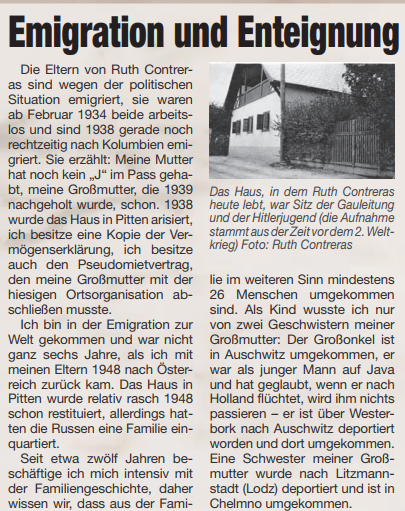
A more detailed biography of Ruth Contreras along with a photograph of her family’s home in Pitten.
Q: I can see that you have a personal vestment in this project, but do you also have a more official role in the Jews of Bucklige Welt project? What is your role?
A: One of my interests is the history of Jews in Austria before the Shoah. I am working since several years on a project about the Jews that lived in the 10th district of Vienna and so I learned first about Rosa Rebecca Abeles who was deported from Alxingergasse 97 to Theresienstadt.
Some years ago I was interviewed for a book on the history of our family and the house where we are living: Johann Hagenhofer, Gert Dressel (editors) (2014) „Eine Bucklige Welt – Krieg und Verfolgung im Land der Tausend Hügel.“ ISBN: 978-3200037342 . Publisher:Alois Mayrhofer.
Q: What is the official name of the project, and how did it come about?
A: Last year I was invited by Dr. Hagenhofer to participate in the team that is doing research for a project „Die jüdische Bevölkerung der Region Bucklige Welt – Wechselland“
(English translation:The Jewish Population of the Bucklige Welt Region – Wechselland. Bucklige Welt covers more than 23 villages with approximately 39,000 inhabitants. Wechselland is a region of mountains and valleys in Lower Austria, South of Vienna. )
Q: Will there be a museum? A book? A website?
A: This project is part of the preparation for a regional Jewish Museum in Bad Erlach, which will be inaugurated in on occasion of the Lower Austrian Provincial Exhibition 2019 and yes, there are also plans for a book.
Q: How many towns in the region does the project cover?
A: We are 17 working on this project on about 25 villages and their former Jewish fellow citizens.As I am living in Pitten and had already some information, I was invited to participate in this project.
Q: How did you know to look for the Abeles family, and what was important about Rudolf, Lotti, and their children?
A: The history of the Jaul- Family in Pitten was known as well as the history of our house. In order to get more information I started with the permission of the Mayor of Pitten to check old registries at the school in Pitten where I found the information on Josefine Daniel and Heinrich Abeles. The other children of Rudolf have been added with the help of the archive of the Jewish Community in Vienna and by using the Austrian genealogical website https://www.genteam.at/.
The other important source where the registration forms where I found Rosa Rebecca repeatedly also hosting people at her home and this last document when she had to leave Pitten..
From the registration forms at the municipal archive in Wr. Neustadt I learned that Jakob Abeles had changed his name into Aldor.
The next step was to go to the Jewish Cemetery in Neunkirchen where I found the gravestone of Franziska Daniel. There is also a grave stone of a Ruben Abeles. The letters are in Hebrew, do you know the Hebrew name of your great great grandfather?
(The only name we have for my great-great grandfather is Rudolph)
Q: What was the surname of your family living next door to the Abeles family?
A: My grandparents who bought the house in 1917 were Rosa and Fritz Weiss. My parents were Elfi Lichtenberg (maiden name Weiss) and Franz Lichtenberg.
Q: Do you have any details of comradery or community between the families that can be shared?
A. I have no information if there was any contact between the families. As I told you, my mother did not talk much about this. My grandmother was born in 1880 (she was two years younger than the youngest son of Rudolf Abeles who was born in 1878) Maybe he did not even live there anymore. My mother was born in 1904 and my dad was born in 1907 so I think there was too much difference in the ages of them.
Q: How difficult was it to find us, and what led you to my website?
A: As Rosa Rebecca was the third person directly deported from Pitten I considered it important to find more information about this family. And yes, it was not easy at all to find your blog. After having contacted several groups of 2nd generation of survivors of the Shoah without success it was really by incident that I tried by using Google to look if I could find something about Josephine Daniel Wimpassing and came to your article A Renewed Tribute to Tante Rosa – Stories From the Past .
(Rosa Rebecca was a previously unidentified daughter of Rudolph Abeles. She was my great-great aunt)
One of the most fun parts of the Hanukkah celebration is the dreidel game. The dreidel is a four-sided spinner with the Hebrew letters nun, gimmel, hey, shin; one letter appears on each side. My children have very fond memories of that game which we played as a family. The letters stand for the Hebrew words, nes gadol haya sham, meaning “a great miracle happenedthere.” For my family,connecting with Ruth is a great miracle, and we are so very thankful to welcome her as a new part of our continued quest to discover the truth of our Judaistic past.
Along with his other cemetery photographs, Bernie sent me three tombstones of literary figures. How did he know I majored in English? Perhaps Bernie is more of a kindred spirit than I thought.
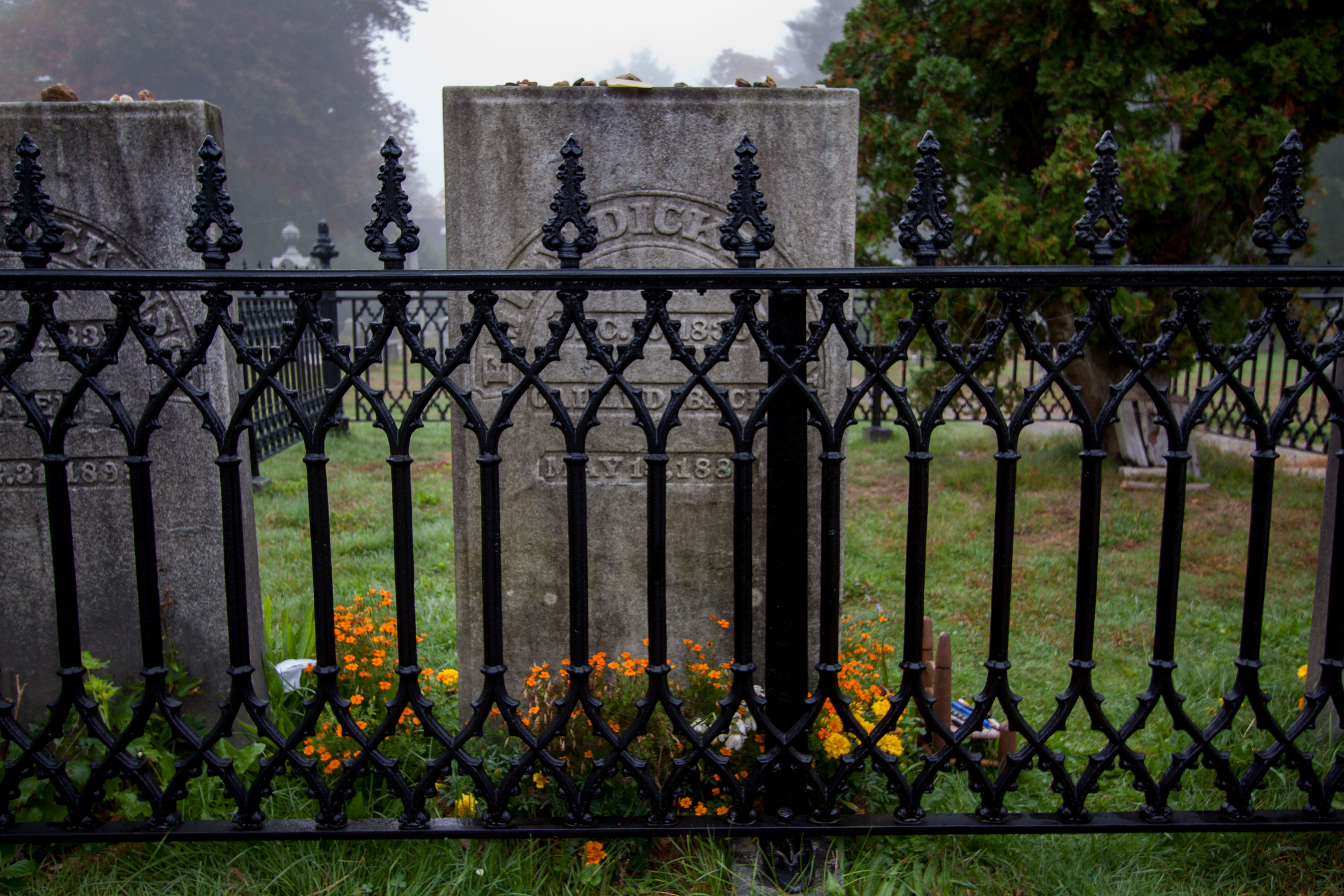
The first is a photo of Emily Dickinson’s grave. I have few favorites when it comes to poetry, and Dickinson is easily my American favorite. It is believed that she suffered from Seasonal Affective Disorder (SAD), and many of her poems reflect her struggle. I really relate to her poem, There’s a certain Slant of light, as I also suffer from SAD. When I read it for the first time, I felt that she put into words exactly what SAD feels like. In fact, as the days begin to grow shorter again, and the sun begins to approach that winter “slant,” I am starting to feel “the Heft of Cathedral Tunes” once again.
Emily Dickinson tombstone, West Cemetery, Amherst MA, Photographed by Bernie Kubiak
There’s a certain Slant of light
BY EMILY DICKINSON
There’s a certain Slant of light,
Winter Afternoons –
That oppresses, like the Heft
Of Cathedral Tunes –
Heavenly Hurt, it gives us –
We can find no scar,
But internal difference –
Where the Meanings, are –
None may teach it – Any –
‘Tis the seal Despair –
An imperial affliction
Sent us of the Air –
When it comes, the Landscape listens –
Shadows – hold their breath –
When it goes, ’tis like the Distance
On the look of Death –
The second tombstone is from St. Bonaventure Cemetery, the same cemetery where many of my relatives are buried. I had never heard of Robert Lax until I received this photo of his tombstone. He was born into Judaism in the same town my father came from, but converted to Catholicism in his adult years. He lived in the islands of Greece for more than thirty years of his adult life; first on the island of Kalymnos, then Patmos. Lax returned to his birthplace of Olean, New York during the last few weeks of his life. Most of his original work is now housed at St. Bonaventure University, where his funeral services were held. (https://www.poetryfoundation.org/poets/robert-lax)
Robert Lax tombstone, St. Bonaventure University Cemetery, Allegany NY, Photographed by Bernie Kubiak
Lax was a minimalist poet. His ability to put together small words with few syllables in a single line down the page, and still pack both imagery and depth of meaning into those simple lines is amazing. I found his poem about life in Kalymnos, titled simply, “Kalymnos,” a very simple read; it only took a few minutes to get through it. Somehow though, the poem felt more like a novella as I absorbed its meaning. Divided into “chapters,” I feel 3 adequately captures the mood of the season with its description of the death of a fishing vessel. The vessel itself was the only casualty:
Kalymnos
BY ROBERT LAX
at 5
in the
morning
at the
cafeneion
the captain
described
the wreck:
the boat
had turned
over &
over
in the
water
churning it
like a
propell-
er
The final tombstone in this collection comes from America’s best known literary artist. Born Samuel Langhorne Clemens, he later adopted the pen-name Mark Twain. Despite many highly acclaimed literary successes, Twain suffered great loss as a husband and father, and was not as successful financially as he was artistically. Three of his children and his wife preceded him in death, and his declining literary success may have contributed to increasing pessimism in his later years. In his final days, Twain was said to have become a recluse prone to “volcanic rages and nasty bouts of paranoia .” (https://www.biography.com/people/mark-twain-9512564) He died in 1910 at his Connecticut home, and was laid to rest in Elmira, New York.
Samuel Langhorne Clemens, a.k.a. Mark Twain, tombstone, Woodlawn Cemetery, Elmira, New York. Photographed by Bernie Kubiak
When I think of Twain, I don’t think of his final days. I think of Tom Sawyer’s Aunt Polly standing on her front porch, fists planted firmly on each hip, and shouting, “You, Tom!” while Tom runs blithely in the opposite direction. I loved both Tom Sawyer and Huckleberry Finn.
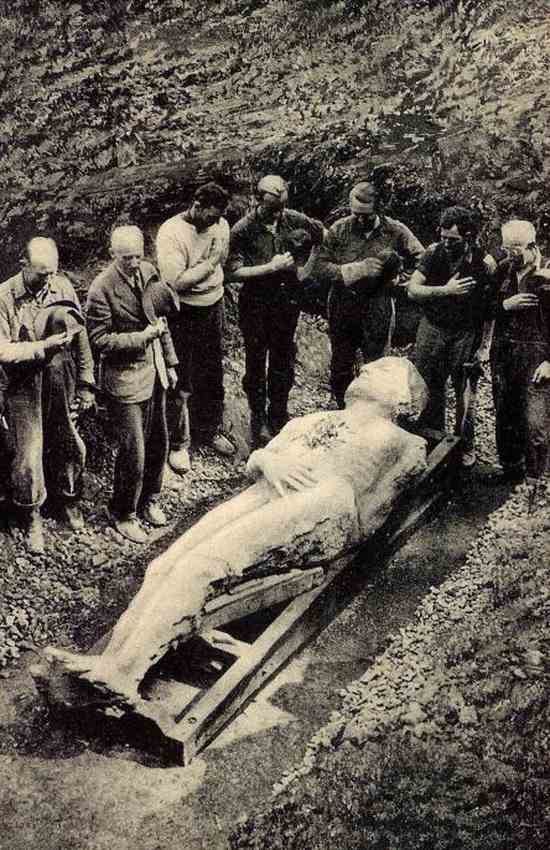
My favorite work of Twain’s is his short story, The Celebrated Jumping Frog of Calaveras County, but I wanted to include something of Twain’s more fitting for the season, so I went in search of a ghost story. I was not disappointed. In fact, what I found is actually titled A Ghost Story. Like most of Twain’s literary works, this one is quite suitable for children. Before you read it to your kids, though, I recommend that you read up on the background story of The Cardiff Giantat History.com. Share the giant’s history with your children before reading A Ghost Story. Just follow the links to each.
My birthday is this week. I consider this post my birthday gift. I thoroughly enjoyed “opening” it. Thanks, Bernie!
You can scan and send your registration form to Shirlene or Karin at the corresponding email address in the image directly above and on the left. See you there!
















 need more time to apply to this project, but instead of having more time as an empty-nester, I now have a little grandchild to take care of on a nearly-full-time basis. Not a problem, I thought, I’m a morning person anyway, so I could research, write stories, and revamp the blog while my granddaughter sleeps. Nope. The website isn’t making money yet, and our family can’t afford to wait, so I’ve had to take on a morning job teaching ESL online. Curses. Foiled again.







 StoriesFromthePast.com
