
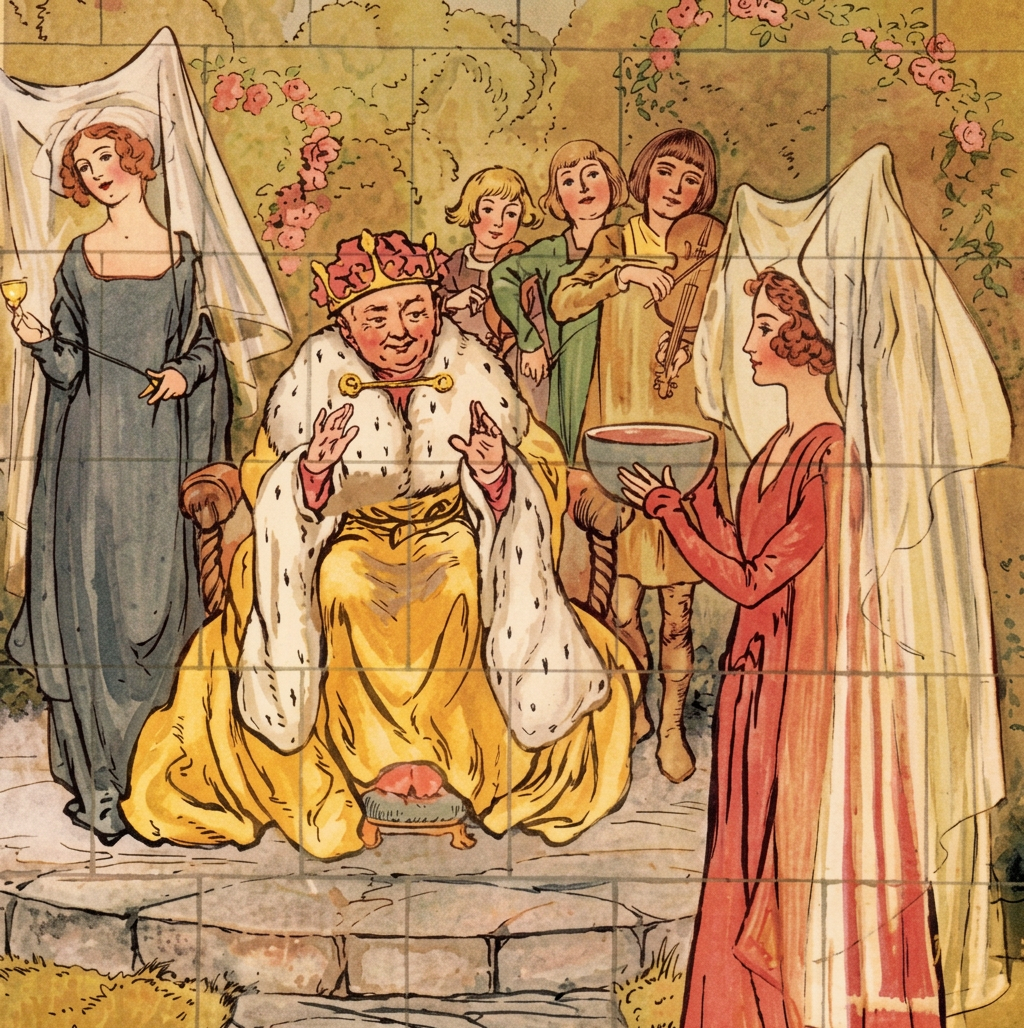
Good King Cole
And he call’d for his Bowle,
And he call’d for Fidlers three;
And there was Fiddle Fiddle,
And twice Fiddle Fiddle,
For ’twas my Lady’s Birth-day,
Therefore we keep Holy-day,
And come to be merry.
-from William King’s Useful Transactions in Philosophy for January-September 1709
Does it look familiar? It sounds close enough to me. Perhaps you’ll recognize this one:
Old King Cole was a merry old soul,
-Roud Folk Song Index #116
And a merry old soul was he;
He called for his pipe, and he called for his bowl,
And he called for his fiddlers three.
Every fiddler, he had a fiddle,
And a very fine fiddle had he;
Oh, there’s none so rare, as can compare,
With King Cole and his fiddlers three.
The old nursery rhyme doesn’t necessarily matter. It came with a tune, one I don’t recognize, but it’s a good example of the Welsh tradition of oral storytelling. More importantly, oral poetry was historical and genealogical record keeping when few people could read and write.
Those responsible for telling such stories, often put to melody, were called bards. In popular culture, they are called minstrels and troubadours. Bards were well-trained, held in high regard, and usually worked for nobility. Putting stories into rhyme and/or music made them easy to remember. Not just for the bards and the people of the courts, but the for preservation of culture and law.
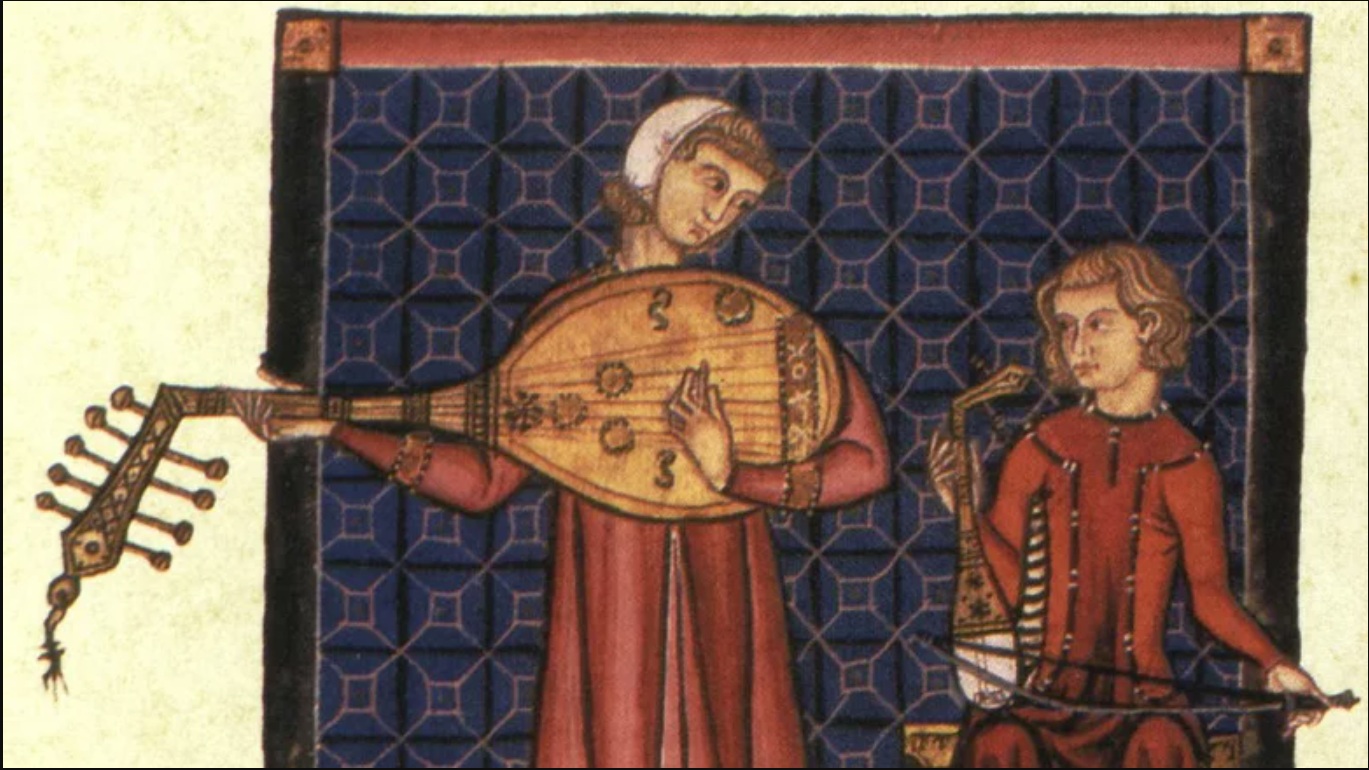
There were several problems with bardism. First and foremost, the storyteller was obliged to please their sovereign through exaggeration and excessive praise, leading their audiences to believe the narrative to be true. Family History is just one of the ways information was passed along in this manner.
To make things worse, time became the enemy. As the stories were passed from one storyteller to the next, truths were lost and heroic feats became even more exaggerated. If you’ve ever played Gossip or the telephone game, you know that as the story is passed from one person to the next in several repetitions, it becomes so convoluted that the final repetition bears little resemblance to the final telling. These oral stories were passed on for hundreds of years before they were finally put in writing.
Along with adulation of warriors made great in battle, stories of noble feats by the ruling class became commonplace in early Christian culture. The Ruling class and heroic warriors often became part of the Christian canon in this manner. Evidence of this truth is found in pedigrees of many early Brittonic leaders, including close relatives of King Arthur and Old King Cole.
So what does Old King Coel have to do with this?
While cleaning up my research, I found a family tree connected to a Welsh king in Roman occupied Briton named King Coel Hen The Welsh translation for hen is old, leading to the translation of Old King Coel. Although there is some speculation that our Old Coel is the subject of the nursery rhyme, there is very little proof. There were other King Coels, but this one may have been the oldest. Our old Coel lived in the fourth century, while the first known publication of the rhyme appeared around 600 years later.
Nevertheless, a titillating piece of evidence connecting King Coel Hen to several Arthurian characters, including King Arthur himself, appeared in family tree format about 600 years later. And this is where the story gets interesting, especially since it tells us a lot about the people of Wales, both in culture and legend. King Coel Hen may even make a more than one royal connection through King Arthur’s brother to Mary Davis.
More about King Arthrwys, King Coel Hen, Vortimer and Myrddyn and how they relate to Mary Davis next week!
Recommended Reading:
Useful Transactions in Philosophy (January–September 1709) pp. 48–59 “The Art of Writing Unintelligibly”. This is a photocopy of the original written and annotated in the style and vernacular of 1709 English.
Bensusan-Butt, John . Essex in the Age of Enlightenment by John Bensusan-Butt (2009) ISBN 978-1445210544.
Read more about Wales during the Reign of King Coel Hen
sources include:
Coel Hen, Wikipedia, 9 March 2026, https://en.wikipedia.org/wiki/Coel_Hen, accessed May 2026
King Coel Hen ap Tecfan of Brittania, L66T-RPY, “FamilySearch Family Tree,” FamilySearch, https://www.familysearch.org/en/tree/person/details/L66T-RPY, accessed May 6, 2026
King, William (January–September 1709). “The Art of Writing Unintelligibly”. Useful Transactions in Philosophy. London: Bernard Lintott: 52–53. https://archive.org/details/s1id11857700/page/n63/mode/2up, accessed 6 May 2026
Dr. Andy Letcher, 2009, What is a Bard?, The Tenth Mount Haemus Lecture “Doctoral thesis, Oxford Brookes University”, https://druidry.org/wp-content/uploads/2020/02/The-Tenth-Mount-Haemus-Lecture.pdf accessed May 6, 2026
Old King Cole, Roud number 1164, Mitford Family, https://archives.vwml.org/record/RoudFS/S156579, 6 May 2026, Vaughan Williams Memorial Library (host)
 storiesfromthepast.com