Blog

  • (n)O Christmas Tree

    (n)O Christmas Tree

    Part One of Four–My Story

    As a Christian, I have often lamented the commercialization and capitalization of Christmas. As a Jew, I have learned to see the season as a celebration of light and miracles in the midst of darkness and oppression. As a historian, I have embraced the combination of the pagan roots behind the celebration of continuing of life in the midst of the deep-winter and the anticipation of the lengthening of days bringing back light, warmth, and renewed life. Among many schools of thought and perspectives, I am finding my place among the deep-seated traditions embraced by my ancestors, both Jewish and Christian, along with the winter celebrations of pagans and skeptics.

    Which brings me to Christmas trees.

    While the history of the Christmas tree is vague and can’t necessarily be pinned down to one particular historical event or individual, the evergreen itself has held a more reliable place in the season’s celebrations. Most historians agree that the tree itself is a much more recent custom with strong ties to Christianity. So instead of deliberation the origins of the tree itself, I’m choosing to go with the legend which so strongly ties to my German-Lutheran roots: Martin Luther’s story.

    The story goes that Martin Luther encountered a snow-crusted evergreen while walking one moonlit winter night. The sight of the snow glimmering on the branches of the tree in the light of the moon dazzled Luther, and he was inspired to bring a similar tree indoors where he affixed candles to the boughs of the tree and lit them at night as a way to bring light and hope into the home during the Christmas season. There are several other legends, most occurring in centuries previous to Martin Luther, and I assume that today’s Christmas tree is probably the descendant of all, or at least most, of them.

    Whatever the reasons for putting a decorated evergreen into the home,  the Christmas tree has become a staple of the season. No matter the circumstances, it just doesn’t seem like Christmas without one.

    No Magic

    My early childhood Christmases were filled with happiness and wonder. But at least two in a row stood apart for me as a deep disappointment and loss of faith in the magic of childish imagination.

    The first  disappointments came just after my eighth and ninth birthdays beginning on the Christmas Eve when my sister offhandedly told me that there was really no Santa. I had begun the day with eager anticipation of the magical event to be coming late that night, but went to bed in deep sorrow knowing that my big sister was downstairs with my parents laying out gifts and filling stockings in the guise of a great man who really didn’t exist. Naturally following, but much easier to reconcile, were the Easter Bunny and Tooth Fairy. I was still mired in that disappointment when the next Christmas came and went, despite the bounty of gifts appearing beneath the tree and the wonderful treats in my stocking. Surely the next year would be better. After all, I was growing up, and beginning to understand that sooner or later childhood must end.

    No Tree

    Ready as I was to accept no Santa, my eleventh year was even tougher. In the spring of 1973, five kids and our parents moved into a nineteen-foot trailer deep in the Oquirrh mountains of Utah so my father could be closer to the construction site of our new home. Despite my ever widening Christmas comfort zone, that tiny camping trailer sitting beside a boxed-in cement foundation at least a mile from the nearest neighbor was not the place for a traditional Christmas. There was no room for a Christmas tree, let alone presents. To make matters worse, there was no snow that year– the only Christmas in my young memory I had ever experienced without snow.  No one dreams of a brown Christmas.

    It was worse for the whole family because the building project, so carefully planned out, was unexpectedly caught in the midst of a world-wide recession caused by an oil embargo from a land far, far away. Prices of lumber doubled nearly overnight, and though my father had already received a large delivery of lumber for the house, the remaining lumber and building materials had not yet been paid for. Suddenly the building project was no longer feasible within the funds set aside, and Dad would have to take out a loan for the rest. Exacerbating the problem were interest rates on construction loans. They had gone up even more steeply than the price of materials.

    On Christmas Eve, I prepared for bed in very cramped quarters with a heavy heart. Mom and Dad told us that things would be tight that year, and to keep our expectations low. I could see how Dad was stressing over finances, so asked for binder paper.

    I’m not kidding.

    The good news was, we would save money on a tree.

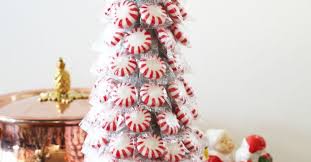
    A few days before Christmas, Mom brought a tiny “tree” into the trailer and set it atop our extremely limited counter space. I could not stretch my limited imagination to see the twelve-inch foam cone with butterscotch disks attached as any sort of tree, especially a Christmas tree. First of all, trees are green, not school bus yellow.  God bless the poor family friend who made it for us. I know butterscotch tastes better, but couldn’t they have attached peppermint candies? At least peppermint looks Christmassy.

    peppermint tree
    Like this, only with butterscotch disks. Seriously?

    All Over but the Shouting

    Okay, there was no shouting, but I probably shed a few tears in private.

    By the time Christmas Eve arrived, I was really regretting my request for paper. All of my siblings had at least asked for something that they wanted. As we prepared for bed, the roar of a motorcycle and a jingling of bells could be heard. Then a knock at the door.

    Was it actually possible that carolers had decided to come up and down the winding hills via motorcycle? Nope. But Santa did. Along with his girlfriend. We were presented with a sack full of treats and presents and then with a Ho Ho Ho, he hopped back on his ride and headed back down the hill. No sleigh, no reindeer, and no helmet. I wonder how he could see under all that fake hair.

    When we unwrapped gifts early the next morning, there was my binder paper, just as I’d asked, along with a handful of two-player games and some much needed clothes. I was disappointed that the only gift I’d really had to myself was that paper. I considered the games family gifts. After all, if I wanted to play them, I’d have to ask a family member to play along.

    It wasn’t terrible. I mean, Connect Four is kinda fun. I don’t even remember what the other games were, but I do remember that my favorite gift that year was some much needed clothes. The binder paper got played with more than the games, I’m afraid.

    I remember watching my brothers and sister playing with their requested toys, and having a great time. I put on my poker face and tried to be happy, but I know I spent a lot of that day drawing and writing on my paper. Believe it or not, I already had a passion for writing by then. Too bad I never caught the math bug.

    I digress. Math has nothing to do with this.

    We had our traditional family dinner, and I know the food was awesome, but I was glad when the day was over. I figured New Year’s Eve would be better.  At least we didn’t have to worry about where to put a tree or presents. It probably  even snowed at least a little in the week between Christmas and the New Year.

    Mom made her famous clam dip served with chips and crackers. There was eggnog in the two-and-a-half foot refrigerator and 7 Up cooling on the doorstep waiting for the midnight “toast.” I was so excited for the eggnog, but I’ve never been a late nighter, so I told my family to wake me up if I dozed off. I think I fell asleep around 10 PM. No one woke me up, and in the morning all of the eggnog was gone and the remaining 7 Up had lost its fizz.

    Curses.

    Maybe next year.

    The next December Dad lost his job.

    Maybe not.

    –To be continued tomorrow with Mom’s Story.

  • Yá’át’ééh, Brody, It is Good

    Yá’át’ééh, Brody, It is Good

    Well, I just repeated myself.

    Before I moved to Page Arizona, I always thought the traditional Diné (Navajo) greeting was pronounced Yah-ta-hey.

    Someone just smack me.

    I came by it honestly, I guess. I learned my lousy pronunciation from the Brady Bunch. Sorry, folks, it was the only point of reference I had at the time.

    I quickly learned, though, that pronunciation wasn’t the only thing I was struggling with. I had confusedly assumed, as I bet you do too, that Hello and Yá’át’ééh meant the same thing.

    Well, they don’t.

    First of all, hello is little more than a holler. You may have even guessed correctly that hello is actually a derivation of holler. But yá’át’ééh is a lot warmer and fuzzier than that. The greeting is an equalizer–a recognition that you approach your fellow human being with good intentions, and that you expect the same from them. The actual meaning of the term is it is good. As it was explained to me: it is good between us. So now that we have set the expectation, we can converse without animosity.

    I love it.

    Now back to pronunciation

    It’s a good thing I listened a few times and actually asked someone to help me pronounce the word before I tried it on my students from the rez. As it was, I absolutely butchered it, but I am getting better at it, even though I now live in Kentucky and have absolutely no one to try it on.

    As I was struggling to figure out how to help my grandchildren learn Dinè terms correctly, I ran across this awesome website called Navajo WOTD (word of the day). I’ll be using it a lot as I explain what I have learned about the Dinè language and culture.

    It turns out that yá’át’ééh is two short syllables and one long one. Emphasis on the first and last. Take a listen:

    Now say it again. Keep trying ’til you get it right. I think it’s gonna take me forever, but I’ll bet those smart grandkids of mine will get it right.

    For the sake of those awesome grandkids, I’m gonna keep at it, so that as I learn, they can learn about their Diné grandmother and their family from the rez. Maybe one day they will be able to go back and actually put their native language to the test.

    What does Brody have to do with this?

    I knew you were gonna ask that.

    I have decided that in honor of my grandchildren’s Native American heritage, I would post a story or fact to help them learn about, and to appreciate, their native ancestors on or near their birthdays, and it just so happens that today is Brody’s fourth birthday.

    brody and rozy
    One thing that everyone said when they saw that big boy with piles of dark hair is that he looks like a little Navajo boy.  I said it too.  Because he is.

    So Happy Birthday, Brody! I love you lots, and I can’t wait to practice this with you!

  • Ready to Launch–No Excuses

    Ready to Launch–No Excuses

    December Newsletter

    Like my previous newsletter, this is more for my benefit than anyone else (I’m still practicing). 

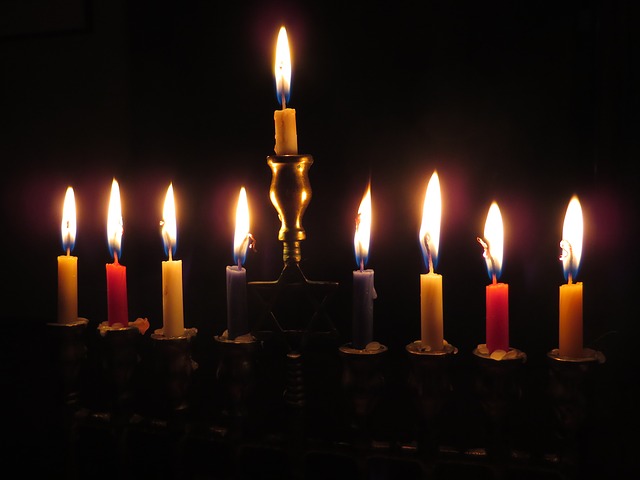
    Before I get this party started, I need to point out that today is the second day of Hanukkah! For Jews, this party is already well underway. Happy Hanukkah everyone!

    menorrah candles-897776_640

    November did not go as I planned. I started off gung-ho, but by the end of the month I was off track, and missed my most important post: Chapter One of The Second Wife’s Story. All I can say is hooray for a new month!

    Maybe the holiday season was not the best time to be reviving and preparing for a relaunch of Stories From the Past. Maybe I should have started off slower. I could probably blame my missing first chapter of The Second Wife’s Story on the flu that I caught immediately after Thanksgiving. Or just maybe I could say, Well, I’m not quite there yet; take a closer look at where I went wrong, and start fresh.

    I think I’ll do that.

    No Excuses

    I was inspired by a simple post from one of my favorite bloggers. Christian Mihai, titled The Five Habits of Extremely Prolific Bloggers.  The first habit on his list? Yeah. “They never make excuses.”

    So without any more excuses, and remembering that every day is a clean slate, I can take a look at the past, see where I went wrong, and try again.

    Habit Building

    As I think about the month of December, and my plans for the New Year, I am reminded that I am building new habits for the rest of my life. Habits don’t change overnight, and I have to be patient and not take on more than I can handle. I am building a blog, writing a book, and building a habit, so I need to take on one task a time.

    In his article, How Long Does it Actually Take to Form a New Habit? (Backed by Science)James Clear debunks the 21-day habit myth and explains, “if you want to set your expectations appropriately, the truth is that it will probably take you anywhere from two months to eight months to build a new behavior into your life — not 21 days.” This is encouraging, and a bit daunting, as I was hoping to have my new daily routine set before the New Year begins.

    There I go again, expecting perfection overnight. Well, that ain’t happening.

    But eight months? I’m not expecting it to take that long, but at least I can be assured that with dedication and determination, my goals of regular, on-time posting and having Mary Davis Skeen’s biography, The Second Wife’s Story, ready for publishing will be accomplished  within the new year. I CAN do this.

    Re-launch

    I have to remember that December is the busiest month of the year in the United States, and that my readers are probably just as overwhelmed with holiday preparations as I am. I still have a lot of planning and organizing to do in order to prepare for a professional New Year launch.

    I intend to follow my own inner clock which tells me that December is a time for reflection while January is a time for renewal. This month I’ll be looking over what I have completed so far, and tweaking and preparing for a clean new start in January.

    My posts will be simple, as my focus will be on completing two chapters of The Second Wife’s Story (appearing after Christmas), and cleaning up and preparing Stories From the Past for its new start in January.

    What to Expect this December

    photo of a fire lamp
    Photo by Vlad Bagacian on Pexels.com
    • Navajo Greetings and exploration of the name (Navajo vs. Diné)
    • Hanukkah for non-Jews (with a nod to rembembering the Shoah)
    • A Slovenian Christmas Eve (Recipe and Tradition)
    • (n)O Christimas Tree (Stories from Olean, New York, and Lark, Utah)
    • Mary Eynon ancestor profile page (not a post)
    • The Second Wife’s Story, Chapter 1, Wales
    • The Second Wife’s Story, Chapter 2, Aboard the Clara Wheeler: from Liverpool to New Orleans

    To accommodate for the holidays, posts will not necessarily appear on their regularly scheduled days and times.

    Fundraising for Austria:

    dachau-arbeit-59.4
    New generations are already forgetting, and denying,

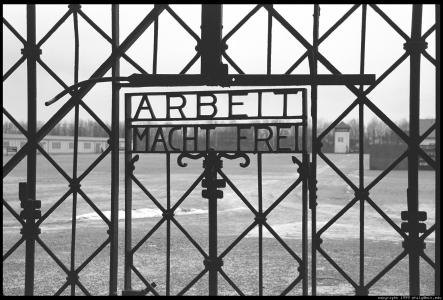
    I’ve been invited to Austria for the inauguration of a museum housing exhibitions on the Jews in Bucklige Welt and Wechselland regions titled “With – Without Jews.” The museum will tell the stories of the many families who disappeared during the Holocaust–including mine.

    I will be able to gather so many more stories of people who can’t tell them.

    Fundraising for this trip begins in January.

    Tentative stories for the upcoming months:

  • On Thanks

    On Thanks

    I have no story to tell today.

    Looking into my own past, Thanksgiving has always been a warm fuzzy day ushering in the holiday season in the United States. But stories? I have plenty to say about Christmas. I can come up with stories about the New Year, Valentine’s Day, and even Halloween, but Thanksgiving just tends to get plopped right there as a place to stop and breathe between ghosts and goblins and shop, shop, shopping. 

    Ugh.

    But I digress.

    I LOVE Thanksgiving. I especially love the history behind Thanksgiving in the United States.  

    I’m not talking about Mayflower Pilgrims and Native Americans; I’m talking about finding opportunities to be thankful even when there doesn’t seem to be much to be thankful for.  

    Take that so-called first Thanksgiving for instance. When the Mayflower arrived in Massachusetts Bay, it carried 102 people. Twelve months later, their numbers had been cut in half. Not a good beginning for people seeking freedom from oppression. But despite loss of friends and family, those 52 pilgrims did have much to be grateful for. 

    They survived a long hard winter full of hunger, disease, and death. They were lucky to have been aided by Tisquantum (Squanto) who helped them learn to survive in their new surroundings and to forge an alliance, albeit uneasy, with the neighboring Wampaoag tribe. Squanto was one of the last remaining members of the Patuxet tribe which had been decimated by European diseases, and the Wampanoag hadn’t fared much better for the same reason. For both groups, the fall of 1621 brought in a decent harvest with the hope for better times to come.

    Thanksgiving in the United States is often thought of to as a uniquely American tradition stemming from that harvest celebration in 1621. But harvest celebrations were really nothing new.  As long as there have been growing seasons and winters, people around the world have been celebrating harvests, and the pilgrims were actually participating in a centuries-old tradition originating with the Celtic Pagans called Lammas. It’s also probable that Squanto and the Wampanoag were sharing their own customary harvest celebrations with the newcomers.

    Despite what we were taught in grammar schools, the Massachussetts Bay celebration was probably not as peaceful as we are prone to believe. Several accounts tell of gunfire and threats resulting in bloody skirmishes within a very short time following their three day meal. Within a generation there was nothing left of the Patuxet people, and the Wampanoag people had been pushed nearly to extinction between warfare with European settlers and neighboring tribes. The peace and harmony of the fall of 1621 was short-lived.

    The celebration of harvest may have waxed and waned depending on the size and qualtity of the harvest, but the idea of finding reasons to be grateful caught hold in Colonial America. At the end of the Revolutionary war. George Washington proclaimed the first official day of Thanksgiving, but that was a one-time thing. But by 1863, several states in the U.S. had officially adopted annual Thanksgiving holidays.

    Thinking back to those early colonial days when two clashing cultures came together to celebrate survival in the hardest of times, I’d like to say that “first Thanksgiving” was the inspiration for Abraham Lincoln’s Thanksgiving declaration in the midst of Civil War. 

    Just that word, thanksgiving, has been inspirational to me in years when I felt like I didn’t have much to celebrate. Instead of lamenting the commercialization of Christmas and dreading the upcoming holiday season, or even decrying the inequity of fate and ignorance leading to the maltreatment of remaining Native American people, I have learned to embrace the opportunity to share a meal with friends and family, and find opportunities to give thanks.

    Because there is always something to be thankful for. 


  • When a Navajo Introduces Herself, She Gives her Genealogy

    When a Navajo Introduces Herself, She Gives her Genealogy

    Happy American Indian Heritage Month! 

    Talk about Native Americans and the first two things to come to my mind are my grandchildren. My oldest granddaughter and her younger brother are both Navajo by birthright, but I know more about what it means to be a Navajo than they do, which saddens me.

    I taught high school English to students from the Navajo Reservation for just one year, but that is not where my son met his wife. While I was teaching, and learning from, the Navajo people in Arizona (Most prefer to be called the Diné), my son was living 350 miles away in Utah where he met and married a graduate of Brigham Young University who identifies as half-Navajo. This makes my grand children one-quarter Navajo.

    My daughter in law does not talk much about her family history. In fact, I can easily tell what I do know about her genealogy in just one paragraph. She is half Italian (her father is an immigrant), and half Navajo. Her mother was born on the Navajo Reservation (the largest reservation in the U.S.), but was raised in Utah with a foster family. Her mother passed on a few years ago, and though she remembered her family from the reservation, she was never really interested in returning or integrating with the culture. And that’s it.

    My daughter in law is quite reserved, and doesn’t talk much about her family’s background, but I wish she would. Over time, I believe I’ll be able to get more out of her and I will share as I learn more. In the meantime, I am determined not to let my grandchildren lose their indigenous identity. I hope that one day they will come to understand all sides of their geneology, and maybe even come to embrace the  Diné culture.

    Part of the Diné culture includes knowing and embracing your clans (best described as branches of the family tree). I had originally planned to put the traditional introduction into my own words, but it is a complicated system (maybe not so complicated to those who were born into it), and I don’t feel that I can give it justice. Thankfully there are many indigenous Americans still interested in reviving and embracing their native cultures, so it wasn’t hard to find a good video to explain it. 

    I do feel that it is important to explain one thing that doesn’t usually get explained by the Diné, probably because it is so ingrained in traditional Diné living that that they just don’t think about it. Navajo culture and society are organized matrilineally. Similar to the western patrilineal system of family organization, emphasis is put on the clan of the mother, and mothers are the heads of households and central focus of each clan. 

    Keep the matrilineal system in mind as you watch the video. I liked this one so well that I subscribed to the Vlog. Here is what the author, daybreakwarrior, says about the clan system and proper Diné  introductions:

    This video goes into the “basics” of Navajo clans, describing the importance of Navajo clans in the present day: it’s implications on identifying yourself & establishing Clan-relatives, how it identifies your ancestry, how it can “hint” at where you’re originally from, how it determines who you can & can’t marry, & how having Clan-relatives can help you in times of need. The main role that Navajo Clans have in this day and age is in introducing one’s self in public, and showing respect.

    I recommend watching the video in it’s entirety.     

    I hope you enjoyed it as much as I did. I’ll be back at least four times a year with more cool stuff about the Navajo Nation and the heritage of my grandchildren (November, December, March, and July– American Indian Heritage Month and birth months of my grandchildren and their mother).  

    Yá’át’ééh (it is good)!

  • Keeping Up With the (Benjamin) Joneses

    Keeping Up With the (Benjamin) Joneses

    How to track family documents when different people share the same name.

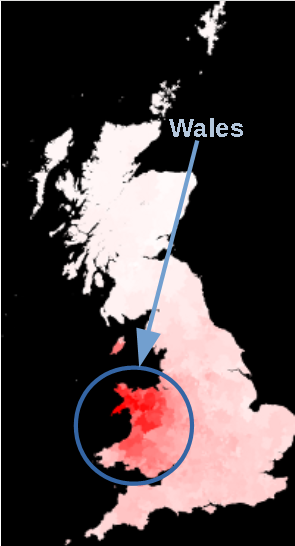
    Jones surname distribution map Wales
    Each occurrence of the Jones surname is indicated by a red dot. Image by Barry Griffin at http://www.celticfamilymaps.com (2016)

    I’ve been helping a friend work on her own family’s history. My friend’s  maiden name is Jones, which is problematic simply because it is the most common surname in Wales. If you live in Wales, or even Southern England, you know exactly what I mean. The name is everywhere. My friend’s problem is tripled by the fact that each successive head of household bears the same first and last name (no middle) for four generations.

    Welsh surnames are the results of an anglicized family tracking system called patronymics, meaning that all children, male and female took their father’s given name as their own surname for the duration of their lives.  The surnames of following generations took the form of the family patriarch’s first name. For example, if your father’s name was David, you would take the surname ap Dafydd, Davis, Davies, or some other form of David. If David’s father was Daniel, he would be known by David ap Daniel, or David Daniels.

    The patronymic system is not limited to Great Britain, though. Take a look at this example from my Dutch ancestry:

    1350 changing Dutch surnames
    I haven’t figured out where the van Beveren name came from, but each surname changes by generation, based on the name of the father. It would be safe to assume that the senior Willem’s father was named Daniel.

    It’s pretty easy to organize electronic files by surname. When I have enough documents under the same surname, I simply create a file with that surname, and organize each file by year of occurrence, for example a birth certificate for John Davies, born in 1820, would be included in the Davies, or Davis, file. The record would be labeled 1820 DAVIES John, but a census record for John Davies would be labeled. That way, all records for John Davies would essentially end up together in the Davies file between the years of his birth and death. Any immediately family members would have records before or after him according to their year of occurrence.

    organization by date and surname
    KNIGHT file. Documents are organized by year, month, day, SURNAME, given name, and middle name or initial. Other relevant information follows date and name.

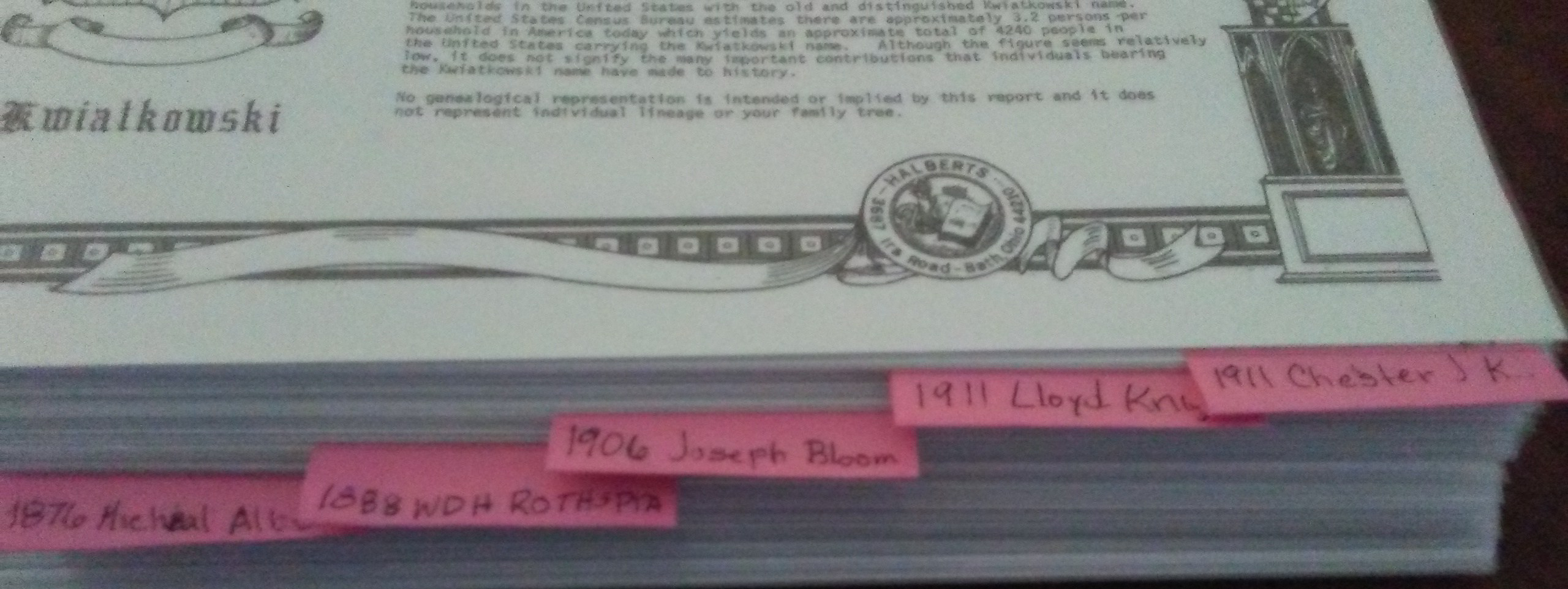
    My friend is older, though, and prefers to keep each family’s file in a binder, which works too. I use both systems when I am dealing with primary sources (such as photographs and original documents like birth, marriage, and death certificates). It’s always good to have digital back-up. Her problem, she explained, was that she could not keep track of four individuals in her family tree named Benjamin Jones: Her great-great grandfather, her great grandfather, her grandfather, and her uncle. Using my system, I explained how to use birth years of each individual to organize them and to put documents for the most recent Benjamin Jones first.  Instead of including creating a fourth file for her uncle, his documents were included with the rest of his siblings in her grandfather’s family group, so she only needed three new tabs.

    20181113_164408.jpg
    documents ordered by birth year and given name, then surname. If each ancestor had the same given and surnames, I would have easily been able to distinguish between ancestors by looking at the birth year.

    Tabbed inserts don’t work in binders where documents are kept in protective sleeves; they are too narrow to easily distinguish between family sections. I fold a 2×2 post-it note in half and tape it to both sides of a protective sleeve instead of tabbed pages for file sections. My friend chose to purchase adhesive tabs made expressly for that purpose. Either way, an attached tab works best anytime you are working with protective sleeves. All you need to write on each tab is the birth year and first name of the head of household and work backwards chronologically. It didn’t take long, and now my friend can see at a glance which Benjamin Jones is which.

  • The Story of a House as told in Facebook comments

    The Story of a House as told in Facebook comments

    If a picture paints a thousand words, this one certainly did.  More than that, it painted memories.I had no idea of the flood I’d break loose when I posted this photograph to a group in Facebook four years ago.  It’s just an old house that my family lived in for less than two years. My memories of it at the time were minimal. I turned eight a few days after we moved in, and we moved out when I was still nine.

    But this post isn’t about me. It’s about the people from an old mining town overwhelmed by the encroaching ore dumps of the Bingham Canyon Mine, more commonly known as Kennecott Copper Mine.  The town was Lark; named after one of the prospectors who laid claim to the land in 1863. Originally owned by the two miners who started two different claims, Dalton and Clark, the mine was merged and later bought out by the United States Smelting and Refining Company. By 1923 the company owned the whole town.

    Lark expanded and hit its heyday in the decade following World War II. It boomed as the babies boomed. I can imagine spanking white houses, freshly paved streets, and a steady stream of traffic down the main road to the mercantile and post office. But that Lark only exists in my imagination and the memories of the remaining people who bonce built their lives there.

    The mine had closed by the time my family rented the big house in the picture. Many of the old miners had already moved out when we moved in. By the time we left, the old mercantile with the only gas pump in town had closed and the town had come under control of the Kennecott Copper Corporation. In 1977, less than three years after we moved out, the people of the town were told to leave.

    The town of Lark  was set at the foot of the same mountain which housed the old Bingham Canyon Mine. It was a 45 minute drive around the edge of the mountain from Lark to Bingham Canyon. By 1972, the year we moved in, the mine had gained the dubious distinction of being the largest open pit mine in the world, and the town no longer existed at the foot of a mountain but the foot of an ore dump. If my memories serve me correctly, it was the encroaching ore dump from the Bingham Canyon Mine that forced Kennecott to close the town. The dump had nowhere to go except to the edge of the mountain it existed in, and Lark was right in its path.

    Lark in Green Bay Press Gazette
    Article from Green Bay Press Gazzette, Green Bay, Wisconsin, 29 Dec 1978, Main Edition, Page 22. Found on Newspapers.com

    So three years after my family moved out of the old Lark house, Kennecott announced the eviction of the remaining residents.  It took a couple of years to get everyone out and resettled, but when the last resident in city limits left, every building within city limits was razed to the ground.  By 1979, the only buildings left standing were a couple of houses on the way into town and the old Drift Inn (the local bar). Lark had become a ghost town.

    Fast forward a few decades. Being the nostalgia nut that I am, I eagerly joined Lark, Utah’s Facebook Group and started conversing with some of my old classmates. I don’t remember if I posted much, and I visited the group only occasionally, but when I posted that photograph, something remarkable happened. People started commenting, not on the picture, but on their memories of Lark in relationship to the picture. It was really cool to learn so much about a town I didn’t think I had remembered much of.

    I honestly don’t remember what my expectations were, but here is my original post accompanying the photograph:

    This is the house I lived in while my family lived in Lark. Floyd Rasmussen’s family lived there for several years before we moved in. We lived here for two years before moved on to our property in the Oquirrh Mountains. I think we were the last family to live there.

    Within the first few hours a flurry of comments flowed in, and the vibrancy of the old town of Lark immediately showed its face.

    People were remembering:

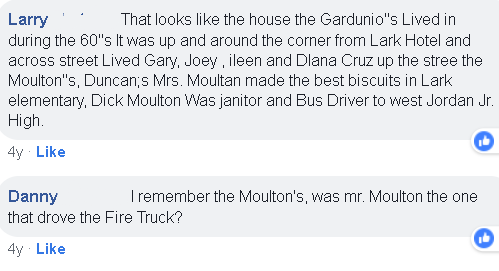
    Lark house1
    Yes, I was on that zoo trip. I remember girl scouts with much fondness and most of the names as well.

    Remembering 2renewing connections:
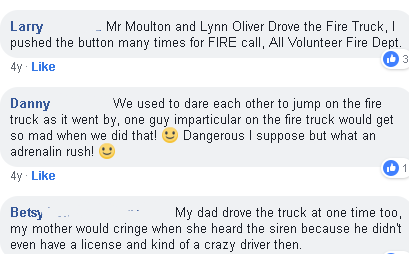
    reconnectingand telling stories:

    telling stories
    Mr. Moulton’s first name was Bob. There might be a few other slight inaccuracies, but that’s how we remembered it.

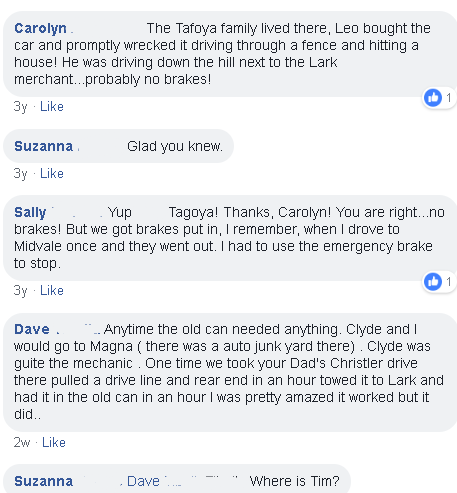
    So many comments and conversations that had absolutely nothing to do with me appeared in my news feed, and this went on for more than a year. I went on with life and ignored the comments for a while. Things were quiet for at least a couple of years and I  essentially forgot about it until a couple of weeks ago when someone randomly picked up the conversation just as if it had never ended. This is similar to all other posts. Just one photo, question or statement leads to all sorts of conversations in the comments.

    where we left off

    I’m really not the greatest fan of Facebook but there are a few things I have noticed. If you’re a history buff or a displaced member of a community or family, Facebook is a great place to reconnect and gather stories that otherwise might not have been told. I’ve used it extensively for Stories From the Past, and thanks to Steven Richardson, administrator of the Lark, Utah group page, I’ll be using it a lot more.

    You can look forward to more stories from Lark, Utah’s past in the upcoming year.

    House photograph from BYU Digital Collections. Image #75. https://contentdm.lib.byu.edu/digital/collection/SCMisc/id/29062


  • Pittsburgh

    Pittsburgh

    This is exactly how I feel, and maybe even what I would say if  Amy (the author) hadn’t taken the words right out of my mouth. But perhaps I feel a little less safe here than she does. I was already feeling on edge about my Jewish past before the Pittsburgh shooting.

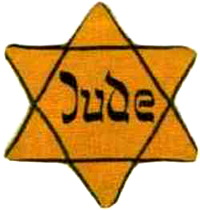
    As a star of david holocaustChristian of Jewish descent, I feel it is my responsibility to share:
    via Pittsburgh

    (from brotmanblog.com)

  • The Tomb of Rabbi Loew

    The Tomb of Rabbi Loew

    My original plan to retell the story of Judah Loew ben Bezalel’s golem for Halloween has changed a bit given recent events in Pittsburgh. I have decided to focus more on the man himself than the story that often has the Rabbi dabbling in occult mysticism. Although Judah Loew is credited as the creator of the golem, his contributions to the Jewish community in Prague, and to Judaism as it is practiced today, far outweigh anything the Rabbi may have accomplished through any sort of magic.

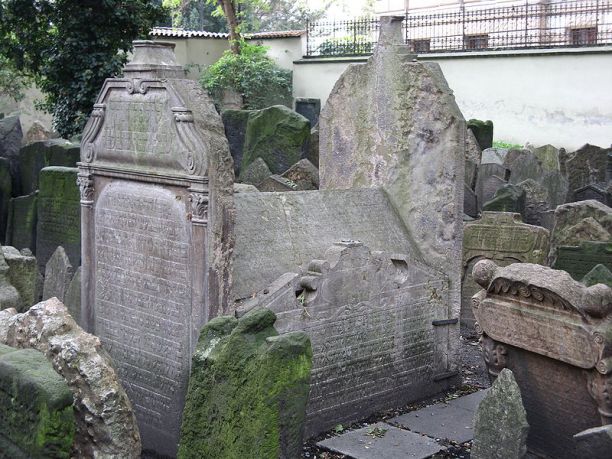
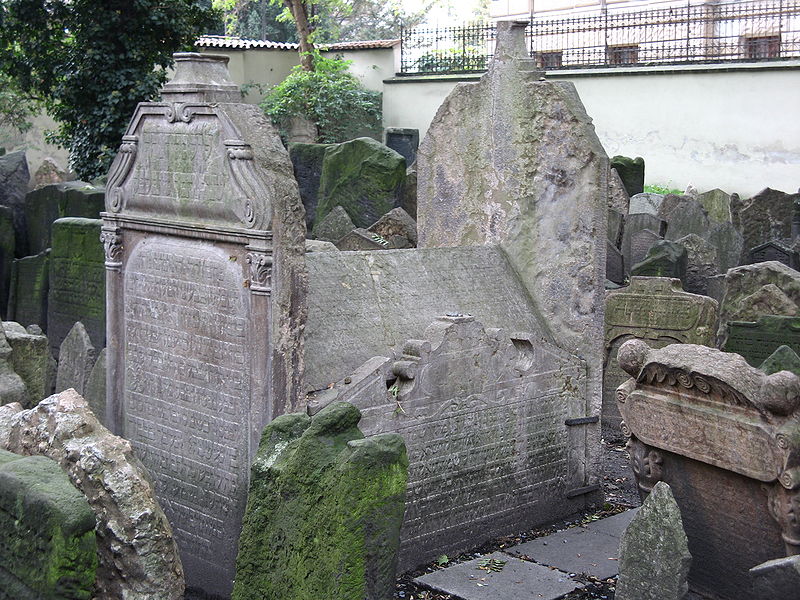
    tomb of Judah LoewRabbi Loew’s body was laid to rest among a great many others in the Old Jewish Cemetery in Prague. Also known as “The Maharal of Prague” (great teacher), Judah Loew ben Bezalel was born somewhere between 1510 and 1530. Less ambiguous is his place of birth; most accounts place his birth in Poland, although his family is said to have come from Germany. Others say he was born in Germany and moved to Poland later. What is not debated is the fact that Rabbi Loew was a great leader to the Jews of Prague.
    The Maharal came from a family of well-known Rabbis and Jewish scholars. It should be no surprise, then, that Judah Loew immersed himself not only in the study of the Talmud, but also science, math, physics and astronomy. Loew was an avid reader and his studies included the Kaballah, a mystical interpretation of the Bible, the writings of Copernicus, and Martin Luther’s translation of the Bible in German. It is no wonder, then, that the medieval Jewish community of Prague revered him, and even considered him the wielder of great mystical power.

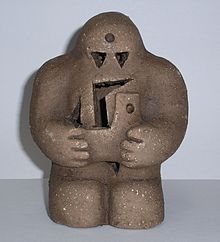
    220px-Prague-golem-reproductionThe story of the golem is the type of myth that urban legends are borne from, but it is also the kind of myth that has the power to evoke fear and grow the seeds of hatred. Like any urban myth, the story changes depending on who is telling it. In short, the Rabbi created a man made out of clay (golem).  He used a Talisman to bring the golem to life during the day when it would be sent out to perform good deeds among the community. At night the golem would be returned to its inanimate form. When the golem had outlived its usefulness, he was placed in the attic of the synagogue in Prague and was never seen again.

    Other more sinister versions of the story are told, turning the Rabbi into more of a Dr. Frankenstein than a great leader, and the golem into an out-of-control monster which was destroyed in order to save the people from its ravenous evil appetite. Perhaps it is just as well that the story of Rabbi Loew’s Golem never quite made it into the repertoire of well-known Halloween legends. Personally, I prefer to think of the Rabbi as a great leader and scholar who was revered by his people to the point that they believed him capable of magic.

    For further study on Judah Loew ben Bezalel, I recommend the following:

    To those who have been waiting for Thomas Davies‘ ancestor landing page, I would like to assure you that it is finished. However, due to the immense variation in genealogical details and a couple of migraine headaches, I did not finish it until last night, and I did not want to publish a page and a post on the same day. On Monday, November 5, I will publish a newsletter detailing what can be expected for the month, and Thomas Davies’ landing page will be posted the next day (November 6).