

the biography of Mary Davis Skeen
There is a sign hanging in my mother’s laundry room. It says, “On this site in 1897 nothing happened.” But who knows if that’s actually true? Who’s to say nothing happened on that site. Right there. You know, on that very spot right next to the washing machine? If there’s no evidence of schoolchildren following a path to an old schoolhouse just down the road, a young woman milking cows, an old farmer stooping to clear a clogged ditch, or a native woman searching for firewood to warm her hearth, I’m betting that there were a whole lot of somethings going on not too far away, and every time I see that silly sign, I wonder exactly what those somethings were.
Of course, I might be exaggerating a little, but the first log cabin was built in the area in 1877, so something could have happened there. Mom’s laundry room memorial makes me think. We post memorials for all sorts of historical events, things like battles, negotiations, inventions, catastrophes, births of historical figures, and of course, deaths (to name a few). Those memorials can tell us a lot. And although I could probably visit the local museum to find out if anything happened in the general vicinity of my mother’s dryer in 1897, I was inspired by Edgar Lee Masters’ somewhat irreverent and semi-fictional collection of poetic epitaphs to look in a graveyard.
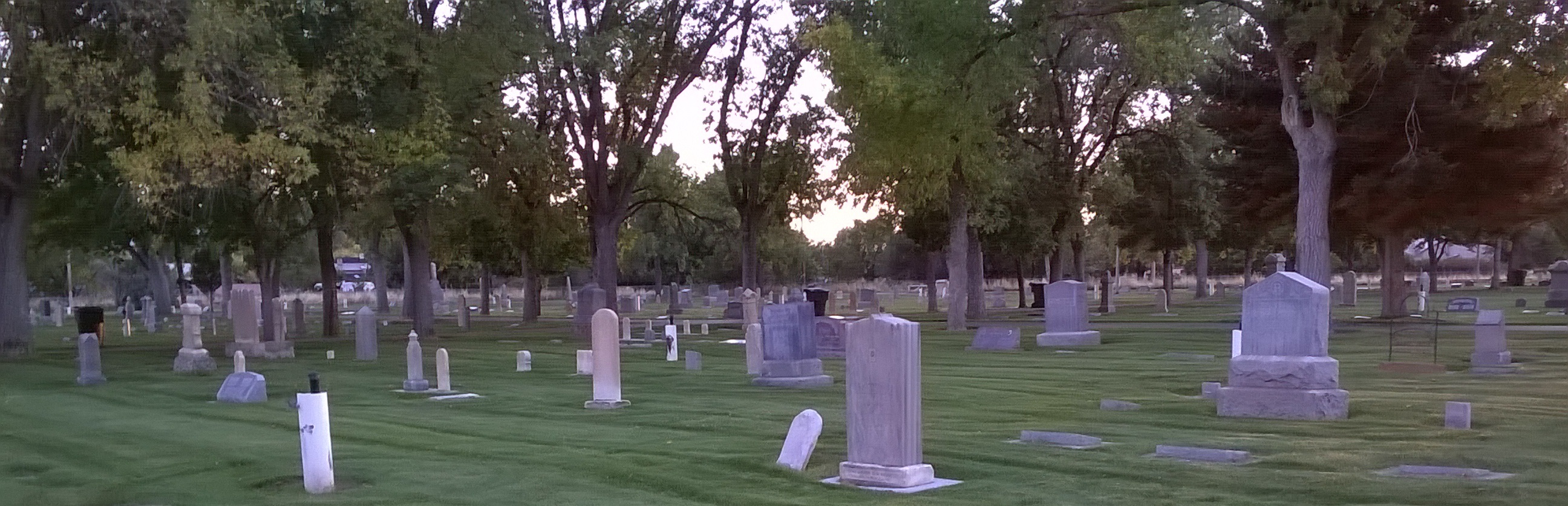
I have always been drawn to cemeteries. In 1997 when Utah celebrated the 150th anniversary of the arrival the first wave of Mormon Pioneers, metal plaques emblazoned with the phrase, “Faith in every footstep,” began appearing on tombstones throughout the state. Those tombstones belonged to Utah pioneers who traveled by foot, horseback, wagon, or handcart, before the arrival of the transcontinental railroad in 1869. The year was 2001, and those markers were the first thing I thought of, so I headed for the first cemetery I could think of.
I was raised in Utah and I have absolutely no pioneer ancestors, but I still remember the stories of courage, struggle, heartache and triumph that accompanied the many families who crossed the American plains mostly by foot. It was an unfathomable journey taking about three months. I tried it a few years ago by car with my daughter and granddaughter from Kentucky to Utah. It took us four days. Of course, it was a round-trip ride, which meant a total of eight days in an air conditioned car. By the time we arrived back home, we discovered that we’d picked up stowaways in the form of bed bugs along the way. I am in no hurry to try that trip again any time soon.
By 2001 when my interest in graveyards had fully matured. The histories known, and the mysteries unknown, called to me like ghosts in a romantic novel. So when I stepped into the Cemetery in Plain City Utah, I was hoping those ghosts would lead me to a story.
And they did.
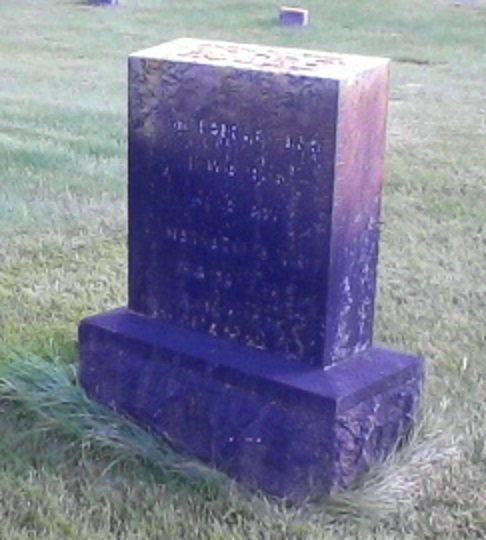
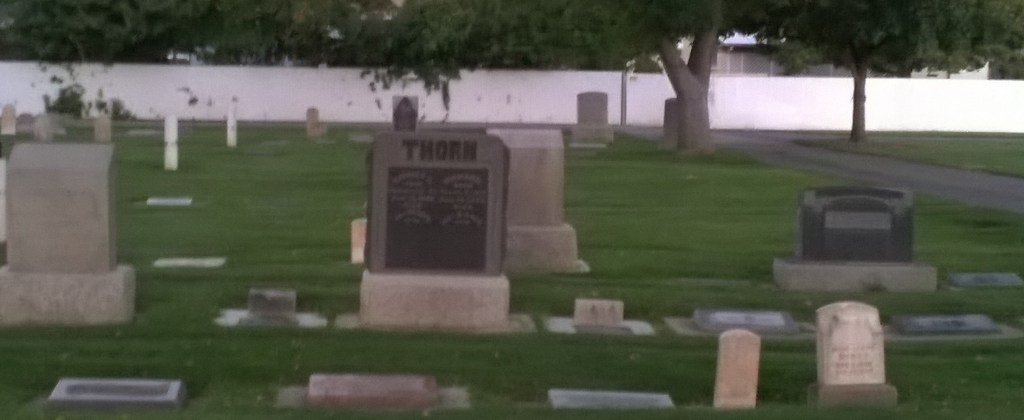
Inscriptions on tombstones are not usually put there to make you laugh (even though some do). They are there to make you think. The family memorial I found that day left me thinking for years. Along with the pioneer grave marker, names and dates are inscribed on all four sides of the tombstone. I could tell just by looking at birth dates that this was the grave site of pioneer settlers, but that’s not what got me thinking. It was the birth and death dates accompanying nine other names; all children. In the Fall of 1870, and into early winter of the next year, eight of those children died. Now I knew there had been an epidemic of some sort and I could see that there was a mystery begging to be solved.
I was in college on that initial visit, and a single mom at that. I didn’t have time to look for clues and answers, but that story stuck with me enough that I knew I had to write about it. I used an essay assignment from one of my English classes as an excuse to put my conjectures into writing. The essay won second place in a department contest at Weber State University, and I kept it over the years.
When I finished school and became an empty-nester, I finally started digging for the tombstone’s story. My first foray came up with some answers–enough to help me see that I could easily build a history around that grave marker. I went back to Plain City and took pictures of all four sides of the tombstone. What I found, shocked me. On the backside of the tombstone are the names of three of the children who died during the epidemic, and one more who was born and died in the following years. It wasn’t those children that surprised me, though. It was the inscription I had missed in my first visit at the bottom of the back side of the tombstone. It said, “Children of William and Mary Skeen.” I stepped back around to the front and looked at the bottom. It said, “Children of William and Caroline Skeen.” There were two different mothers and one father. This was a polygamous family.
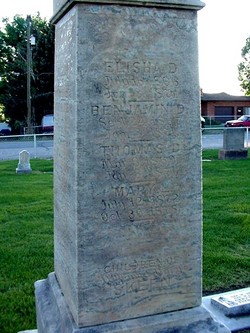
I grew up in Utah as a member of the Church of Jesus Christ of Latter-day Saints. Most of the English speaking world knows us as Mormons. In recent years, active members of the church have cast off that misnomer, and choose the full mouthful of the title or simply use the acronym of LDS. Those who don’t know us well often conflate the term Mormon with polygamy. However, I am very familiar with polygamy. Many Utah pioneers practiced polygamy, and I had friends who were descendants of polygamous marriages. There were even a handful of families in my old neighborhood who still practice it even though it was disavowed by the LDS Church in the late 19th century. Current church members who enter into such unions are now quickly excommunicated.
Knowing what I know about Utah and polygamy, I won’t pass judgment on the pioneer families of the past, or discuss those who still practice it despite laws and church condemnation. But I am not blind to the fact that some sects have taken the practice much too far by forcing children into unwanted marriages. It’s because of that second marriage that I decided to focus on Mary Davis, the second wife of William Dolby Skeen. I have no plans to base Mary’s story on her polygamous marriage. I will build the narrative around polygamy at the point where it affects her personally, but Mary’s story is the story of her life and polygamy was a small part of it.
I’ve lived outside of Utah for most of the time since I started my research, but that hasn’t stopped me. The internet was in its infancy when I started the project, but now I have access to nearly everything I need to complete my research. It’s a wonder to me that I could build a compelling biography of an utter stranger without ever having met her or having any access to written memoirs.
I nearly missed Mary, tucked away as she was at the bottom of the backside of that monument. When I found her, I realized that her story is far more compelling than the location on the tombstone suggests. At a first glance, it’s easy to think nothing happened here. But from surrounding names, places, and dates, I could see that something had happened, and that little name tucked away at the bottom on the back side had been there and had played an integral role in the town’s history.
It’s not her death that’s important, it’s her life. I don’t want Mary Davis Skeen to be forgotten, and I feel compelled to commit her to the memory of others who would never have known her otherwise.
We are surrounded on a daily basis by people living what they feel are ordinary and unremarkable lives, but if we make an effort to get to know them, we can learn valuable lessons and come to see them as crucial members of our community. Mary’s tale unfolds in bits and pieces. Like a patchwork quilt, it is colorful, warm and inviting. Her story includes heartache, tragedy and tribulation along with faith, perseverance and promise. While Mary’s story reminds us that happily ever after never happens, it also tells us that happy endings do.





 StoriesFromthePast.com