Author: Too Many Hats

  • Keeping Up With the (Benjamin) Joneses

    Keeping Up With the (Benjamin) Joneses

    How to track family documents when different people share the same name.

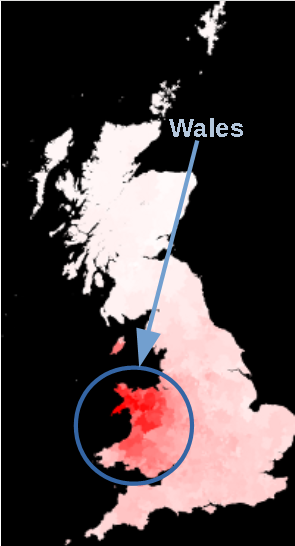
    Jones surname distribution map Wales
    Each occurrence of the Jones surname is indicated by a red dot. Image by Barry Griffin at http://www.celticfamilymaps.com (2016)

    I’ve been helping a friend work on her own family’s history. My friend’s  maiden name is Jones, which is problematic simply because it is the most common surname in Wales. If you live in Wales, or even Southern England, you know exactly what I mean. The name is everywhere. My friend’s problem is tripled by the fact that each successive head of household bears the same first and last name (no middle) for four generations.

    Welsh surnames are the results of an anglicized family tracking system called patronymics, meaning that all children, male and female took their father’s given name as their own surname for the duration of their lives.  The surnames of following generations took the form of the family patriarch’s first name. For example, if your father’s name was David, you would take the surname ap Dafydd, Davis, Davies, or some other form of David. If David’s father was Daniel, he would be known by David ap Daniel, or David Daniels.

    The patronymic system is not limited to Great Britain, though. Take a look at this example from my Dutch ancestry:

    1350 changing Dutch surnames
    I haven’t figured out where the van Beveren name came from, but each surname changes by generation, based on the name of the father. It would be safe to assume that the senior Willem’s father was named Daniel.

    It’s pretty easy to organize electronic files by surname. When I have enough documents under the same surname, I simply create a file with that surname, and organize each file by year of occurrence, for example a birth certificate for John Davies, born in 1820, would be included in the Davies, or Davis, file. The record would be labeled 1820 DAVIES John, but a census record for John Davies would be labeled. That way, all records for John Davies would essentially end up together in the Davies file between the years of his birth and death. Any immediately family members would have records before or after him according to their year of occurrence.

    organization by date and surname
    KNIGHT file. Documents are organized by year, month, day, SURNAME, given name, and middle name or initial. Other relevant information follows date and name.

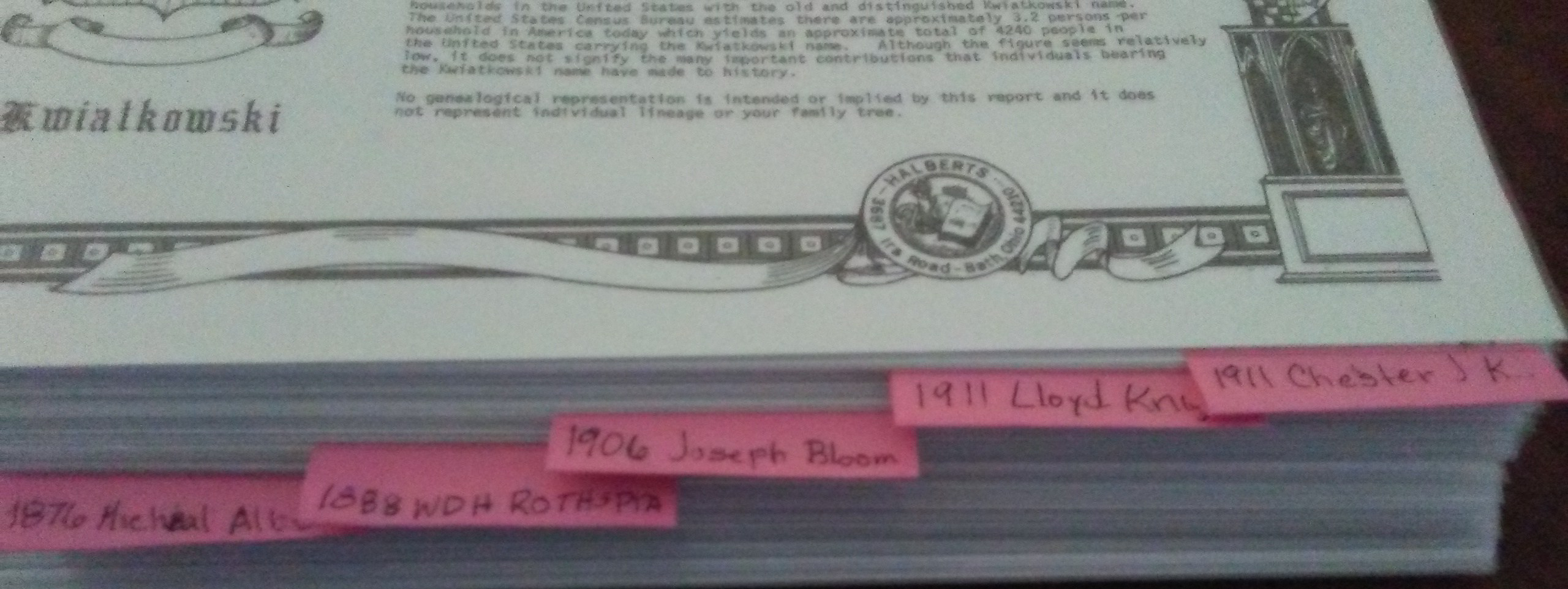
    My friend is older, though, and prefers to keep each family’s file in a binder, which works too. I use both systems when I am dealing with primary sources (such as photographs and original documents like birth, marriage, and death certificates). It’s always good to have digital back-up. Her problem, she explained, was that she could not keep track of four individuals in her family tree named Benjamin Jones: Her great-great grandfather, her great grandfather, her grandfather, and her uncle. Using my system, I explained how to use birth years of each individual to organize them and to put documents for the most recent Benjamin Jones first.  Instead of including creating a fourth file for her uncle, his documents were included with the rest of his siblings in her grandfather’s family group, so she only needed three new tabs.

    20181113_164408.jpg
    documents ordered by birth year and given name, then surname. If each ancestor had the same given and surnames, I would have easily been able to distinguish between ancestors by looking at the birth year.

    Tabbed inserts don’t work in binders where documents are kept in protective sleeves; they are too narrow to easily distinguish between family sections. I fold a 2×2 post-it note in half and tape it to both sides of a protective sleeve instead of tabbed pages for file sections. My friend chose to purchase adhesive tabs made expressly for that purpose. Either way, an attached tab works best anytime you are working with protective sleeves. All you need to write on each tab is the birth year and first name of the head of household and work backwards chronologically. It didn’t take long, and now my friend can see at a glance which Benjamin Jones is which.

  • The Story of a House as told in Facebook comments

    The Story of a House as told in Facebook comments

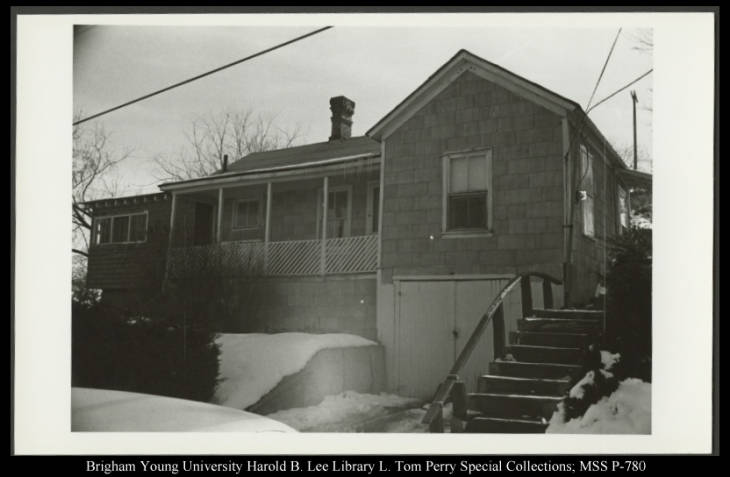
    If a picture paints a thousand words, this one certainly did.  More than that, it painted memories.I had no idea of the flood I’d break loose when I posted this photograph to a group in Facebook four years ago.  It’s just an old house that my family lived in for less than two years. My memories of it at the time were minimal. I turned eight a few days after we moved in, and we moved out when I was still nine.

    But this post isn’t about me. It’s about the people from an old mining town overwhelmed by the encroaching ore dumps of the Bingham Canyon Mine, more commonly known as Kennecott Copper Mine.  The town was Lark; named after one of the prospectors who laid claim to the land in 1863. Originally owned by the two miners who started two different claims, Dalton and Clark, the mine was merged and later bought out by the United States Smelting and Refining Company. By 1923 the company owned the whole town.

    Lark expanded and hit its heyday in the decade following World War II. It boomed as the babies boomed. I can imagine spanking white houses, freshly paved streets, and a steady stream of traffic down the main road to the mercantile and post office. But that Lark only exists in my imagination and the memories of the remaining people who bonce built their lives there.

    The mine had closed by the time my family rented the big house in the picture. Many of the old miners had already moved out when we moved in. By the time we left, the old mercantile with the only gas pump in town had closed and the town had come under control of the Kennecott Copper Corporation. In 1977, less than three years after we moved out, the people of the town were told to leave.

    The town of Lark  was set at the foot of the same mountain which housed the old Bingham Canyon Mine. It was a 45 minute drive around the edge of the mountain from Lark to Bingham Canyon. By 1972, the year we moved in, the mine had gained the dubious distinction of being the largest open pit mine in the world, and the town no longer existed at the foot of a mountain but the foot of an ore dump. If my memories serve me correctly, it was the encroaching ore dump from the Bingham Canyon Mine that forced Kennecott to close the town. The dump had nowhere to go except to the edge of the mountain it existed in, and Lark was right in its path.

    Lark in Green Bay Press Gazette
    Article from Green Bay Press Gazzette, Green Bay, Wisconsin, 29 Dec 1978, Main Edition, Page 22. Found on Newspapers.com

    So three years after my family moved out of the old Lark house, Kennecott announced the eviction of the remaining residents.  It took a couple of years to get everyone out and resettled, but when the last resident in city limits left, every building within city limits was razed to the ground.  By 1979, the only buildings left standing were a couple of houses on the way into town and the old Drift Inn (the local bar). Lark had become a ghost town.

    Fast forward a few decades. Being the nostalgia nut that I am, I eagerly joined Lark, Utah’s Facebook Group and started conversing with some of my old classmates. I don’t remember if I posted much, and I visited the group only occasionally, but when I posted that photograph, something remarkable happened. People started commenting, not on the picture, but on their memories of Lark in relationship to the picture. It was really cool to learn so much about a town I didn’t think I had remembered much of.

    I honestly don’t remember what my expectations were, but here is my original post accompanying the photograph:

    This is the house I lived in while my family lived in Lark. Floyd Rasmussen’s family lived there for several years before we moved in. We lived here for two years before moved on to our property in the Oquirrh Mountains. I think we were the last family to live there.

    Within the first few hours a flurry of comments flowed in, and the vibrancy of the old town of Lark immediately showed its face.

    People were remembering:
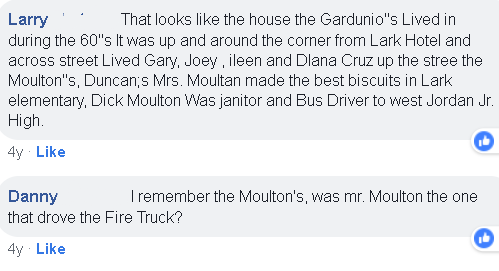
    Lark house1
    Yes, I was on that zoo trip. I remember girl scouts with much fondness and most of the names as well.
    Remembering 2renewing connections:
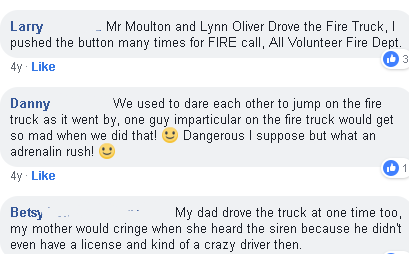
    reconnectingand telling stories:
    telling stories
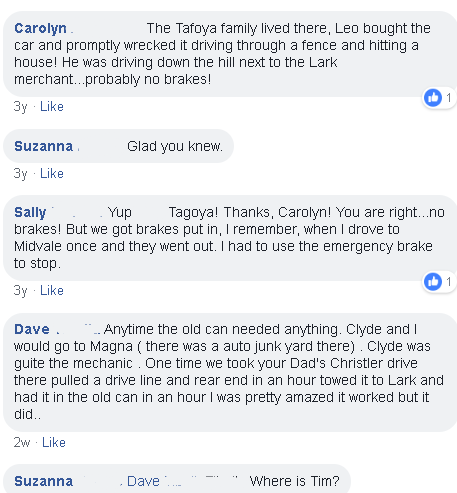
    Mr. Moulton’s first name was Bob. There might be a few other slight inaccuracies, but that’s how we remembered it.

    So many comments and conversations that had absolutely nothing to do with me appeared in my news feed, and this went on for more than a year. I went on with life and ignored the comments for a while. Things were quiet for at least a couple of years and I  essentially forgot about it until a couple of weeks ago when someone randomly picked up the conversation just as if it had never ended. This is similar to all other posts. Just one photo, question or statement leads to all sorts of conversations in the comments.

    where we left off

    I’m really not the greatest fan of Facebook but there are a few things I have noticed. If you’re a history buff or a displaced member of a community or family, Facebook is a great place to reconnect and gather stories that otherwise might not have been told. I’ve used it extensively for Stories From the Past, and thanks to Steven Richardson, administrator of the Lark, Utah group page, I’ll be using it a lot more.

    You can look forward to more stories from Lark, Utah’s past in the upcoming year.

    House photograph from BYU Digital Collections. Image #75. https://contentdm.lib.byu.edu/digital/collection/SCMisc/id/29062


  • The Tomb of Rabbi Loew

    The Tomb of Rabbi Loew

    My original plan to retell the story of Judah Loew ben Bezalel’s golem for Halloween has changed a bit given recent events in Pittsburgh. I have decided to focus more on the man himself than the story that often has the Rabbi dabbling in occult mysticism. Although Judah Loew is credited as the creator of the golem, his contributions to the Jewish community in Prague, and to Judaism as it is practiced today, far outweigh anything the Rabbi may have accomplished through any sort of magic.

    tomb of Judah LoewRabbi Loew’s body was laid to rest among a great many others in the Old Jewish Cemetery in Prague. Also known as “The Maharal of Prague” (great teacher), Judah Loew ben Bezalel was born somewhere between 1510 and 1530. Less ambiguous is his place of birth; most accounts place his birth in Poland, although his family is said to have come from Germany. Others say he was born in Germany and moved to Poland later. What is not debated is the fact that Rabbi Loew was a great leader to the Jews of Prague.

    The Maharal came from a family of well-known Rabbis and Jewish scholars. It should be no surprise, then, that Judah Loew immersed himself not only in the study of the Talmud, but also science, math, physics and astronomy. Loew was an avid reader and his studies included the Kaballah, a mystical interpretation of the Bible, the writings of Copernicus, and Martin Luther’s translation of the Bible in German. It is no wonder, then, that the medieval Jewish community of Prague revered him, and even considered him the wielder of great mystical power.

    220px-Prague-golem-reproductionThe story of the golem is the type of myth that urban legends are borne from, but it is also the kind of myth that has the power to evoke fear and grow the seeds of hatred. Like any urban myth, the story changes depending on who is telling it. In short, the Rabbi created a man made out of clay (golem).  He used a Talisman to bring the golem to life during the day when it would be sent out to perform good deeds among the community. At night the golem would be returned to its inanimate form. When the golem had outlived its usefulness, he was placed in the attic of the synagogue in Prague and was never seen again.

    Other more sinister versions of the story are told, turning the Rabbi into more of a Dr. Frankenstein than a great leader, and the golem into an out-of-control monster which was destroyed in order to save the people from its ravenous evil appetite. Perhaps it is just as well that the story of Rabbi Loew’s Golem never quite made it into the repertoire of well-known Halloween legends. Personally, I prefer to think of the Rabbi as a great leader and scholar who was revered by his people to the point that they believed him capable of magic.

    For further study on Judah Loew ben Bezalel, I recommend the following:

    To those who have been waiting for Thomas Davies‘ ancestor landing page, I would like to assure you that it is finished. However, due to the immense variation in genealogical details and a couple of migraine headaches, I did not finish it until last night, and I did not want to publish a page and a post on the same day. On Monday, November 5, I will publish a newsletter detailing what can be expected for the month, and Thomas Davies’ landing page will be posted the next day (November 6).
  • Let’s get this Story Started

    Let’s get this Story Started

    Can I ask for your help?

    I’ve been researching and gathering information about the life of Mary Davis Skeen off and on for several years. Thanks to great record-keeping by Davis and Skeen family genealogists and local historians, I have plenty of information to tell a complete story from beginning to end.

    But Mary Davis Skeen is not my family, and I want to honor her memory as best I can. I have been told by one of her great-grandchildren that Mary could not read or write, so she could not have written her own memoirs. Therefore, your knowledgeable input is the most valuable resource I have, especially if you are related to any of the players in Mary’s story.

    What you will see of Mary’s life is my rough draft of her complete biography. There will be gaps and inaccuracies that you can help me fix. I would love to hear from you especially if you belong to any one of the following categories:

    Descendant/s of

    • Thomas Davies (1816-1899  or Thomas Davis/Davies/David 1790-1865)
    • Mary Davis Skeen (The second wife)
    • Caroline Smart Smith Skeen (The first wife)
    • Abraham O Smoot

    Have family from

    • Carmarthen, Wales
    • Llanelly, Wales
    • Burry Port, Wales
    • Plain City, Utah

    Have family stories (especially written memoirs) of descendants regarding

    • Eisteddfod and the early Mormon Tabernacle Choir
    • Welsh customs, traditions, and recipes
    • LDS church history in Southern Wales
    • Welsh maritime history before 1860
    • 1855 Voyage from Liverpool to New Orleans on HMS Clara Wheeler
    • Mormon Grove, Kansas
    • Abraham O Smoot  missionary experiences in Wales 1850-1855
    • Abraham O Smoot 1856 pioneer company
    • Dry Creek, Deseret Territory (Lehi Utah)
    • Dry Creek water disputes
    • Plain City, Utah founders
    • Measles
    • Small Pox
    • Midwifery in Deseret Territory

    Please remember that I have access to libraries and online resources. What I don’t have is insider knowledge–something that may have come through your ancestors to you. I am especially looking for primary sources but secondary sources can be very helpful too.

    Finally, I want your corrections, suggestions, perspective, praise, and constructive criticism. You can comment below,  send me a private message, or join our Facebook group for extended conversation on the subject.

    Right now, I am putting together Mary’s family and early childhood in Wales for the first chapter to come in February 2020.  Next week I am posting an ancestor landing page for Thomas Davies (b. 1816 Llanelly, Carmarthenshire, Wales – d .1899 Plain City, Utah.)

    Thanks in advance for your interest and input! I hope we can make this a successful community effort.

  • Tombstones Don’t Grow on Trees

    Tombstones Don’t Grow on Trees

    That’s because they grow in them.

    At least at the Lindon Grove Cemetery in Covington, Kentucky, that is. The cemetery is named after the grove of Lindon trees that once grew naturally in this part of town, so trees are important here. Lindon Grove is not just a Cemetery. It’s also a city park and certified arboretum. Many of the older and larger trees in the cemetery are marked with plaques designating both species and native origination.

    Of course tombstones aren’t intentionally planted in the trees, but as the trees grow they encroach upon  nearby tombstones, nearly swallowing them. The photograph below is probably the most picturesque I found, but there are a great many tombstones growing in the trees here. Some are still identifiable; others are more tree than stone.

    Tombstone in tree.jpg

    Of all the cemeteries I’ve ever visited, this one ranks among my favorites. It’s not a typical, run-down, Halloween-type graveyard, although it is one of the many I have seen that once suffered from neglect and vandalism. Despite the absence of play equipment, children feel welcome here. I brought my granddaughter with me, and she was just as entranced by the trees, tombstones, and gently rolling landscape as she would have been in a playground.

    curious little girl
    Fascinated by tombstones.

    This particular graveyard sits on the northern edge of the former Confederate States of America. Just two miles away, across the Ohio River, lays the land of freedom for African Americans still in the bonds of slavery. This is Underground Railroad country and a former hotbed of strife where brother fought against brother. Kentucky was the first southern state to fall back in to Union control.

    This particular cemetery does not hide its dark past; it embraces and rises above it. Set up as a public cemetery by a local Baptist Theological Institute, it began as a fully integrated cemetery including a pauper section where those who could not afford a proper burial were buried for free. A veteran’s section includes memorials for all United States’ wars since the cemetery’s establishment in 1843. Black and white, bond and free are all buried here.

    Civil War history is prominent in Lindon Grove. Because Kentucky did not last long as a Confederate State, both Union and Confederate memorials are laid row by row with Union stones facing off against Confederates. A wide pathway separates the two in semblance of the uneasy front line of a battlefield.  Interestingly, and certainly not intentionally, if one looks north towards Ohio, they can see the tips of Cincinnati’s towering skyline above the the war memorials as a reminder that freedom from the bonds of slavery was not far away.

    At Linden Grove, contemporary life is inspired to mingle with the past. Pebbled walkways meander through the park encouraging foot traffic. Historic walking tours through the cemetery are occasionally offered. The serenity of the area is perfect for yoga enthusiasts. There are also picnic tables for a relaxing repast with family and friends. In the warmer months, the cemetery turns into a theater where theatrical performances and movies are provided for family entertainment. And of course the tombstones make great conversation pieces.

    There is so much history here. The cemetery is actually included on the U.S. National Register of Historic Places. Among the prominent members of the cemetery, are the city’s founders, politicians, soldiers, and every day heroes including slaves, freed slaves, and their free progeny. One memorial marks the grave of B. F. Howard, a black railroad porter, and founder of the first African-American Elks Chapter in Cincinnati, Ohio. Another belongs to Dr. Louise Southgate, a female physician and early women’s rights activist.

    headless angelIt does not take much digging to find information on the many stories that are buried here. After just one visit and a quick Google search I had everything I needed for several blog posts. I could spend days digging through the mounds of historical information available at the Historic Linden Grove Cemetery & Arboretum website, and I could fill the rest of my lifetime telling stories from just this one cemetery. As Dave Schroeder, former director of Kenton County Public Library put it, “. . . If . . . you start writing down the names of some of the folks and look at the dates of birth and death and do a little research, you can learn so much about the community and what it was like at the time period just by taking your stroll through the cemetery.” My sentiments exactly.

    If you try it, let me know! I’d love to share the stories you find.


  • In 1870, Something Happened Here

    In 1870, Something Happened Here

    Preface to The Second Wife’s Story (a biography)

    There is a sign hanging in my mother’s laundry room. It says, “On this site in 1897 nothing happened.” But who knows if that’s actually true? Who’s to say nothing happened on that site. Right there. You know, on that very spot right next to the washing machine? If there’s no evidence of schoolchildren following a path to an old schoolhouse just down the road, a young woman milking cows, an old farmer stooping to clear a clogged ditch, or a native woman searching for firewood to warm her hearth, who’s to say nothing actually happened right there, on that very spot?  If something did not happen on that very site next to my mother’s washer in 1897, I’m betting that there were a whole lot of somethings going on not too far away, and every time I see that silly sign in Mom’s laundry room, I wonder exactly what those somethings were.

    Of course, I might be exaggerating a little, but the first log cabin was built in the area in 1877, so something could have happened there. Mom’s bathroom memorial makes me think. We post memorials for all sorts of historical events–things like battles, negotiations, inventions, catastrophes, births of historical figures, and of course, deaths (to name a few). Those memorials can tell us a lot. And although I could probably visit the local museum to find out if anything happened in the general vicinity of my mother’s bathroom sink in 1897, I could also look for memorials in the cemetery.

    I love cemeteries. In fact, I still need to get myself that bumper sticker with the warning, “Caution, I brake for Cemeteries.” In 1997, when Utah was celebrating it’s sesquicentennial of the arrival of the Brigham Young and his followers, someone at the headquarters of The Church of Jesus Christ of Latter Day Saints came up with a reason to make me love cemeteries even more: A plaque to adorn every tombstone belonging to Utah pioneers who came before the arrival of the transcontinental railroad in 1869. I was raised in Utah as a member of that church. I wasn’t born there, and I had absolutely no pioneer ancestors, but I still remember the stories of courage, struggle, heartache and triumph that accompanied the many families who crossed the American plains mostly by foot. It was an unfathomable journey taking about three months. I tried it last summer by car with my daughter and granddaughter from Kentucky to Utah. It took us four days. Of course, it was a round-trip ride, which meant a total of eight days in an air conditioned car. By the time we arrived back home, we discovered that we’d picked up stowaways in the form of bed bugs along the way. I am in no hurry to try that trip again any time soon.

    But I digress.

    faith in every footstep. Sons of Utah Pioneers
    Utah pioneer grave marker image courtesy of Sons of Utah Pioneers

    The metal plaque, emblazoned with the phrase, “Faith in every footstep,” soon began appearing on tombstones throughout the state. By 2001, the pioneer plaques had been placed on nearly every known pioneer tombstone. By that time, my interest in graveyards had fully matured, and the histories known, and the mysteries unknown, called to me like ghosts in a romantic novel.  So when I stepped into the Cemetery in Plain City Utah, I was hoping those ghosts would lead me to a story.

    And they did.

    Inscriptions on tombstones are not usually put there to make you laugh (even though some do); they are there to make you think. The family memorial I found that day left me thinking for years. Names and dates are inscribed on all four sides of the tombstone. I could tell just by looking at birth dates, that this was the grave site of pioneer settlers, but that’s not what got me thinking. It was the birth and death dates accompanying nine other names. All children. In the Fall of 1870, and into January of the next year, eight of those children died. Now I knew there had been an epidemic of some sort. I  could see that there was a mystery begging to be solved.

    I was in college on that initial visit, and a single mom at that. I didn’t have time to look for clues and answers, but that story stuck with me enough that I knew I had to write about it. I used an essay assignment from one of my English classes as an excuse to put my conjectures into writing. The essay won second place in a department contest at Weber State University, and I kept it over the years.

    When I finished school and became an empty-nester, I finally started digging for the tombstone’s story. My first foray came up with some answers–enough to help me see that I could easily build a history around that grave marker. I went back to Plain City and took pictures of all four sides of the tombstone. What I found, shocked me. On the backside of the tombstone are the names of three of the children who died during the epidemic, and one more who was born and died in the following years. It wasn’t those children that surprised me, though. It was the inscription I had missed in my first visit at the bottom of the back side of the tombstone, “Children of William and Mary Skeen.” I stepped back around to the front and looked at the bottom. It said, “Children of William and Caroline Skeen.” There were two different mothers and one father. This was a polygamous family.


    I grew up in Utah, and I am very familiar with polygamy, even though I have no Utah Pioneer roots. Many Utah pioneers practiced polygamy, and I had friends who were descendants of polygamous marriages. There was even a handful of families in my neighborhood who still practiced it, even though it was disavowed by The Church of Jesus Christ of Latter-Day Saints in the late 18th century and church members who currently enter into such unions are excommunicated. Today, they call themselves Fundamentalist Mormons. Knowing what I know about Utah and polygamy, I can’t pass judgment on the pioneer families who still practice it despite laws and church condemnation. I’ve seen happy children and wives who claim to share equally in marital bliss. Neither am I blind to the fact that some sects have taken the practice much too far by forcing children into unwanted marriages. It’s because of that second marriage that I decided to focus on Mary Davis, the second wife of William Dolby Skeen.

    I’ve lived outside of Utah for most of the time since I started my research, but that hasn’t stopped me.  Thanks to the internet, I have access to nearly everything I need to complete my research. Sometimes I think I have too much, and that I will need to pare down the story before it gets too unwieldy. It has become interesting to me that I could build a compelling biography of an utter stranger without ever having met her or having any access to written memoirs.

    I nearly missed Mary, tucked away as she was at the bottom of the backside of the monument. When I found her, I realized that her story is far more important than the location on the tombstone suggests. At a first glance, it’s easy to think nothing happened here. But from surrounding names, places, and dates, I could see that something had happened, and that little name tucked away in the corner had been there and played an integral role in the town’s history. It’s not her death that’s important, it’s her life. I don’t want Mary Davis Skeen to be forgotten, and I feel compelled to commit her to the memory of others who would never have known her otherwise.  We are surrounded on a daily basis by people living what they feel are ordinary and unremarkable lives, but if we make an effort to get to know them, we can learn valuable lessons and come to see them as crucial members of our community. Mary’s tale unfolds in bits and pieces. Like a patchwork quilt, it is colorful, warm and inviting. Her story includes heartache, tragedy and tribulation along with faith, perseverance and promise. While Mary’s story reminds us that happily ever after never happens, it also tells us that happy endings do.

    Please join me in my journey to tell Mary’s story. Your comments and helpful criticism are welcome and encouraged. Treat each post as rough drafts to Mary’s biography, as that is what they are intended to be. Mary’s story will be told one chapter at a time, and one month at a time, over the next year. My ultimate goal is to publish them together in a book. If you feel that you have information that may be helpful, or that will clarify ambiguities in Mary’s story, please leave a comment or contact me. And thank you in advance for your help!
  • A Tale of Two Cemeteries

    A Tale of Two Cemeteries

    Too many years ago I wrote an essay. I wasn’t really doing it just for fun, but I can honestly say it was the most rewarding essay I’ve ever written (for school, that is). That essay, titled Untold Stories, won second place in a department contest and put me on a journey of discovery that led me to create this blog. Written for one of my many English classes (Do you think I majored in English?), it was a comparison of Cemeteries; one in Prague, the capitol city of the Czech Republic, and the other in Plain City, Utah. I was required to write eight to twelve pages. I can’t remember how many pages it actually ended up being, but I felt it was just too long for a blog post, so in the spirit of Cemetery Month and reviving this blog, I’ve decided to share a new abridged version:

    UNTOLD STORIES

    (revised, and abridged 2018)

    by Marianne Kwiatkowski

    I  begin with lines borrowed from Walt Whitman’s poem, Song of Myself. Although the title leads the reader to believe that Whitman is about to embark on a narcissistic journey of self-love (he begins with, “I celebrate myself, and sing myself”), one quickly discovers that we share qualities as members of the human race, making us more like him than not. It was the following lines, though, that got me thinking of the many stories that we bury with our dead:

    –I guess the grass is itself a child . . . the produced babe of the
    Vegetation–
    –now it seems to me the beautiful uncut hair of graves.
    Tenderly will I use you curling grass,
    It may be you transpire from the breasts of young men,
    It may be if I had known them I would have loved them;
    It may be you are from old people and from women and from
    offspring taken soon out of their mother’s laps,
    And here you are the mother’s laps.–
    –O I perceive after all so many uttering tongues!
    And I perceive they do not come from the roofs of mouths for
    nothing.
    I wish I could translate the hints about the dead young men and
    women,
    And the hints about old men and mothers, and the offspring
    taken soon out of their laps.
    What do you think has become of the young and old men?
    And what do you think has become of the women and children?

     As I stoop to read weather-beaten, time-worn headstones, I wonder as Whitman must have;  If I had known them, would I have loved them? I wonder about the loved ones that were left behind.  What kind of anguish was suffered at the untimely death of children?  What kind of heartbreak occurred at the death of a beloved spouse?  Was it a relief to know that long-term suffering had ended?  What about the families of strong young men who left brave-hearted and never returned from war?  What kind of reunion took place between the spirits of those who quietly slipped away to join their loved ones beyond the veil? These stories hang in the air at every grave site I visit.

    Seventeen years ago, I visited Europe.  While I was there, I explored the Jewish cemetery in Prague.  Located in the Jewish sector of the old town, the Prague cemetery is the second oldest Jewish cemetery to survive the Holocaust.  Back home in Utah, I explored another cemetery in the small town of Plain City.  It holds the remains of some of the original Mormon pioneers.

    I wanted to visit the old Jewish cemetery in Prague because my Americanized grandmother was raised Jewish in that part of the world.  Many of her family members disappeared during World War II.  Visiting the cemetery in Prague was a way to connect with my ancestral past. The stories of the Jews are just as intriguing, and far more lamentable than the Mormon pioneer stories.  It was so difficult for my grandmother to tell her own history that she refused to talk about it.  My mother tells me that she often heard my grandmother sobbing late in the night when she thought her family was sleeping. The Holocaust was so hard on her, but we’ll never know the details of her despair.  Like so many of the inhabitants of these cemeteries , Grandma’s story died with her.

    I went to Prague just once, but I took many pictures.  I used to live in Plain City, have visited the cemetery there many times and taken just a few pictures relevant to my story.  I liked to visit at dusk in the summertime, as the activities of the day were quieting down, and the people of the town began to prepare for a night’s rest.  One visit in particular occurred on a frosty November morning.  This time I went with the purpose of finding a story.  I was not disappointed.

    The graveyard in Plain City has many graves of Mormon pioneers who crossed the plains by wagon or handcart.  These are the stories that interest me.  Stories of faith and courage.  Stories that ended in triumph as families settled into their new homes after surviving the long arduous pilgrimage across the plains. Many of these stories have been told somewhere in the annals of the family histories in Utah.  I have no such pioneer heritage, so the stories and faith of those pioneer people are unknown and yet intriguing to me, just as the untold stories of family members who were separated by the Holocaust intrigue me.


    Memorials to so many children are located in the older end of the Plain City cemetery.  I spent nearly an hour hovering around one large needle shaped memorial.  At first I was intrigued about the family who had buried each of their children together.  As I walked around the four sides of the stone though, an intensely tragic story began to unfold, and I discovered the preface to an unwritten book, one that I desperately wanted to read.  Nine small stones lie neatly in two rows next to the memorial.  Each stone says simply, “Skeen.”  These little graves tell the beginning of a sorrowful journey for their saddened parents.

    Skeen Family

    Apparently the story began in the fall of 1870 when one by one, seven of the Skeen’s  children began to fall ill.  Whatever the epidemic was, the household must have been quarantined, because I was only able to find the grave of one other Plain City child who died during those three months.  It must have been six year-old Jane who brought the illness into the household.  On November twenty-third, the little girl succumbed to the illness and left this earthly life, leaving behind at least six siblings, a pregnant mother, and a worried father.

    Less than three weeks later, Caroline Skeen gave birth to a baby who died the same day it was born.  One more spirit to keep little Jane company.  Two days later, the ten year old namesake of Caroline died.  Maybe for a while it looked like the worst might be over, but after what must have been a very sad Christmas, two more children joined their siblings in death.  Four year-old Benjamin and five-year old Elisha died on January third of the new year.  By this time, the epidemic was raging throughout the Skeen household and nothing would stop it.  Five days later, two year-old Thomas died, followed by seven year-old Amanda on January tenth.

    I wondered about the oldest child, William, who was thirteen when he died on January fifteenth.  Was he hanging on in an attempt to care for his brothers and sisters?  How the parents must have mourned as each of their children went to the grave, one after another, in such a short time.

    The Skeen’s tragic story doesn’t end here, though. Several years after my discovery of the tragedy, I returned to take another look at the tombstone. On the opposite side of the tombstone where the names of Caroline and William were inscribed, are the names of a second wife, Mary Davis Skeen and some of her children.  Polygamy was not uncommon in Utah Territory in those days, specifically among devout Mormon families.  Two decades later, polygamy was officially denounced and the church abstained from further plural unions. I decided that I could not pronounce any condemnation upon the heads of William, Caroline, or Mary, though. For all I know, both marriages were solid, amicable, and willingly entered into by all parties.  In fact, I am well aware that many polygamous families have laid claim to happy unions and cordial friendships among wives and children.

    One more child was born to the Skeen family nineteen months after the tragedy.  Unfortunately, this little girl also joined her brothers and sisters in death just six years later.  This is just the beginning of the untold story of the Skeen family.  I wonder what their lives must have been like before and after the deaths of their children?  Which children belonged to which wife? Did they live together in the same house or even on the same street? Did they have any other children who survived?

    Less than a century after the Skeen tragedy occurred, a new devastation began to unfold in the Old World.  As the Holocaust swept over Europe, it wreaked larger destruction upon the inhabitants of the European continent than even the Skeen family could imagine.  After those black days, one Jewish cemetery in Prague stood as a testament against Nazi snipers.  The small plot in Prague escaped destruction, but as Longfellow penned in his poem, The Jewish Cemetery at NewportThe dead nations never rise again.”  Like the graves in Plain City, each cemetery has its own tale of sorrow.  Prague is no different.

    I couldn’t read the headstones at the cemetery in Prague.  Most of the markers were inscribed in “the mystic volume” of Hebrew, and other markers were in Slavic languages.  Even so, the majority of the headstones were weathered to the point that they would have been nearly impossible to read in any language.  I didn’t need to read them. The town’s history and the condition of the graveyard told its own intriguing story of heartache and struggle.  Longfellow thought the Jewish cemetery in Maine to be strange.  To me, it wasn’t strange or gratifying; it was sad and unjustified.  Then again, the very existence of the cemetery tells a tale of triumph over  bigotry and hatred.

    The casual observer in the old Jewish sector would find “narrow streets and lanes obscure” just as Longfellow described, but the cemetery is hidden from casual view. It is located on a small hill completely enclosed by a stone fence. I don’t think that the hill occurs naturally. After 700 years of burials on such a paltry lot of land, it became necessary for the Hebrew community to bring in more soil to bury their dead.

    Jewish cemetery PragueLess than an acre of land. Seven hundred years of death. Men, women, children. Old and young. All of their dead went there. As the years went on, bodies were uncovered, lifted up and reburied with new companions. People who were total strangers, never met, and lived hundreds of years apart became roommates in death. Strange bedfellows.

    Entering the cemetery from a busy street, one is met with an eerie silence. Brownish tombstones, large and small, rest grotesquely upon one another. Most of the stones are so old that the writing has been erased through years of wind and rain. The newer stones are written in Hebrew and couldn’t be read anyway (by me, at least). A pencil-thin pathway winds forlornly through the piles of hand-hewn rock. Above in the trees that serve to hide the sepulchral plot from mortal view, big black birds caw solitarily to one another, adding to the unearthly atmosphere. The calls reminded me of Edgar Allen Poe’s plea; “Is there–is there balm in Gilead? –tell me–tell me, I implore!” I almost expected to hear the raven’s plaintive cry of “Nevermore!”nhsd_raven

    Death is always sad for the living. Billions of tears were shed worldwide for the loss of over six million lives of the Holocaust. I am sure that the Plain City community mourned in a similar fashion for the loss of the Skeen children at what should have been a joyous time of the year. They were the tears of loss. Those who died may have been lucky, as Whitman put it, but those who were left behind lost a piece of their own lives as they put their loved ones into the ground. Often the only solace for the living is knowing that one day they will join their cherished families in death. If there is indeed life beyond the grave, then death cannot part loved ones, it only separates them for a while.

    As for the rest of this world, people come and go from this life daily. Some leave histories.  Most don’t.  Their voices are silent.  Their stories die with them.  My interest is to find tales worth telling and uncover their secrets.  There are some things that will never be known to the living, but the mysteries make great stories.