Tag: Holocaust

  • Where is the Love?

    Where is the Love?

    Last month, one of my readers commented on my newsletter that readers are an audience, and that I can do what I want without consulting them. Please don’t get me wrong, it is valuable advice for many blogs, but when I started Stories From the Past, I meant for it to be something bigger than that. I wanted this to be a place to revive the stories of “average” people who slipped out of this life and into obscurity. While their lives may have seemed unimportant and mundane to them, following generations don’t necessarily agree. There are stories of heroism left unwritten, lessons to be learned, entertaining insights, and great ideas that are otherwise lost to the world if they are not put into words and made accessible, so input from my readers is extremely valuable to me.

    For history nuts like myself, reading and telling stories of bygone days is fun, but I am repeatedly told that telling the true stories of past generations is a valuable service. There are plenty of biographical tidbits all over the internet, in books and other published media, but I wanted this to be a place where otherwise untold stories could find a home.

    What I really want is for this to be an interactive site where I am not only telling stories from my own family’s past, but incorporating stories from readers, collecting stories from friends, inviting others to submit their own stories, and reaching out in search of lost stories. It’s done well by me so far, and I want to do well by my contributors, so the monthly newsletter will continue to act as a way to reach out to family, old friends, new friends, and new-found cousins for feedback and more stories. And, of course, it will always continue to function as foundation for accountability on my part.

    What am I Doing Wrong?

    Last month I set up a Go-Fund-Me fundraiser to help me get to Austria. I was so excited when less than five minutes after publication I had a $100 donation. Great! I thought, I’m on my way. Then nothing. I posted to Facebook, LinkedIn, made an individual Facebook message for many of my friends, and still got nothing other than that one original donation. I would really love for someone with Go-Fund-Me experience to give me some advice. I must be doing something wrong . . .

    Click here to visit my Go-Fund-Me page.

    In the meantime, my Fundraiser will stay open until I have received enough donations and/or saved enough to go to Austria. Even if I have to go later. I may miss the museum inauguration, but I can still go when I can afford it.

    Still in the Race

    I didn’t get a whole lot done last month, but I am still plugging along on two or three hours a day, five days a week. I’m definitely not moving at Stephen King pace, but I am happy that I’m still going.

    Photo by Michelle Yorke on Pexels.com

    February 2019

    February 5 is Chinese New Year. I don’t want it to be forgotten. In fact, I intend to include a series of stories for my husband’s Chinese family. However, I have rarely mentioned my husband. This is mostly due to the fact that my husband is a high-functioning adult with autism. Anyone with autistic family members may be quite aware that people with autism have little to no interest in thoughts, ideas, activities, or events that do not directly affect them, so when I brought up the idea of researching his ancestors, he told me, “Why don’t you just leave them alone? They’re dead. They don’t care.” LOL. I ignored him and kept on researching and writing.

    So in honor of my husband, I intend to make this month’s Raising Voices about something that directly affects him: disability, and the misuse of terms like idiot, retard, and even disability. In the future, I’ll be focusing more on stories from his Chinese background.

    So here’s what’s going on this month:

    January Review:

    • Mary Eynon ancestor profile page (not a post) -incomplete
    • The Second Wife’s Story, Chapter 1, Wales
    • The Second Wife’s Story, Chapter 2, Aboard the Clara Wheeler: from Liverpool to New Orleans
    • North American Slave Narrative: the story of Isaac Johnson
    • Tante Rosa and Tante Rosa’s stories

    February Preview

    • February’s Newsletter
    • Your Village Called (February’s Raising Voices)
    • A Valentine for the Last Man Burned at the Stake for Heresy
    • Complete Mary Eynon ancestor profile page (not a post)
    • The Second Wife’s Story, Chapter 1, Wales
    • The Second Wife’s Story, Chapter 2, Aboard the Clara Wheeler: from Liverpool to New Orleans

    Tentative upcoming stories for 2019:

  • Dead Nations Rising One Citizen at a Time

    Dead Nations Rising One Citizen at a Time

    This year’s cemetery month begins with graveyard poetry. For today’s post, I begin with the end: the final stanza of The Jewish Cemetery at Newport by Henry Wadsworth Longfellow. The poem was first published 160 years ago, in 1858, and contemplated an abandoned Jewish graveyard established nearly 200 years previously in 1677. Among Longfellow’s contemplation, he wondered about the first major Jewish settlement in the American Colonies and their subsequent disappearance from the streets of Newport Rhode Island a century after their arrival. In similitude, people around the world have wondered about the Jews who lived actively within thriving European communities but disappeared by the millions in less than a decade during the Holocaust. Longfellow’s final stanza is this lament:

    But ah! what once has been shall be no more!
          The groaning earth in travail and in pain
    Brings forth its races, but does not restore,

          And the dead nations never rise again

    Perhaps Hitler and his Nazi sympathizers counted on the fact that the Jews lost in the Holocaust would remain lost and forgotten like the Jews of Newport. But thanks to the efforts of people like Ruth Contreras in Austria, the dead nations are rising again. Perhaps not literally, but they are being revived in the memories of towns across Europe like Pitten, Austria, and their names are being reconnected with family members who have lost contact. Those dead nations are indeed rising, one-by-one.

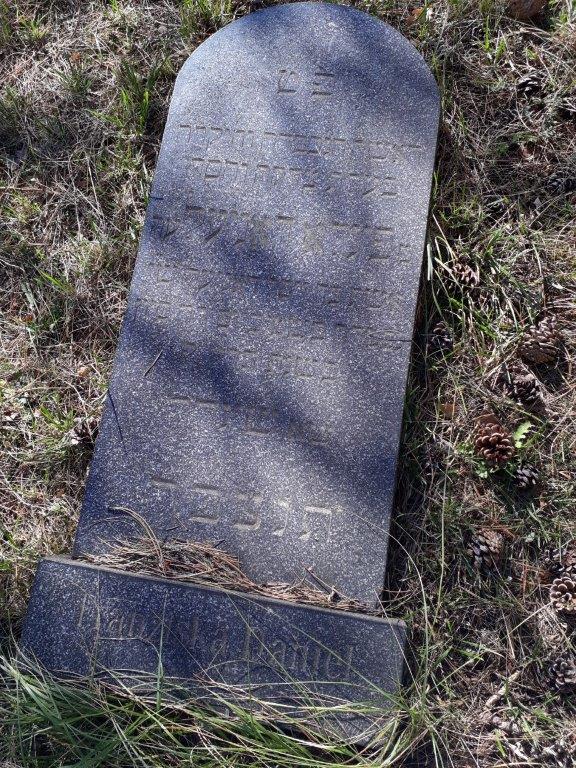
    Four years ago, I posted the photograph of a tombstone in Europe. Like the tombstones of Longfellow’s poem, it was spelled “. . . backward, like a Hebrew book, Till life became a Legend of the Dead.” That tombstone was indeed a mystery to me and my family. We had been unable to find anyone to help us connect that tombstone with or own family story.

    Until ten months ago, that is, when I received an email from Ruth Contreras referring to my blog, and asking about my post, How my Mormon Mom Learned She was a Jew. Attached to Ruth’s message was a photograph of a broken tombstone written in Hebrew and lying in the grass. The bottom of the tombstone bore my great-grandmother’s name in Roman lettering.  I’d seen that tombstone before, but I didn’t recognize it in its dilapidated condition.

    Ruth wanted to know if my grandmother was the same Josephine Daniel who was the daughter of Franziska Abeles Daniel from the tombstone and had lived in Pitten a century ago. If so, could I possibly help her get in touch with any of Josephine’s living relatives? As I read through the letter, I realized that this was a person who had done some in-depth research into my grandmother’s family. She mentioned dates, names, and places particular to my family, and in my intense overload of excitement, I missed the fact that she was even solving the mystery of the tombstone, like Longfellow’s “mystic volume of the dead.”


    I felt like an overexcited puppy being let out to play after a long day home alone. I was positively bouncing; and if I had a tail, I’m sure my whole back end would have been wagging.  The first thing I did was call my parents in Utah to share the message. My mom was just as elated as I was. After all, she had spent years searching for information regarding my third great grandfather who had lived in Pitten all those years ago. This was a break-through for my family. My reply to Ruth’s first inquiry included a photograph of the woman belonging with the tombstone.

    Over the next few weeks a flurry of emails went back and forth between Kentucky, Utah, and Austria. Each new message from Austria was followed up by a phone conversation with Mom and Dad. During that first flurry of messages I learned that Ruth was the granddaughter of the family that lived next door to my grandmother and third great-grandfather in Pitten in the years between the first world war and the Holocaust.
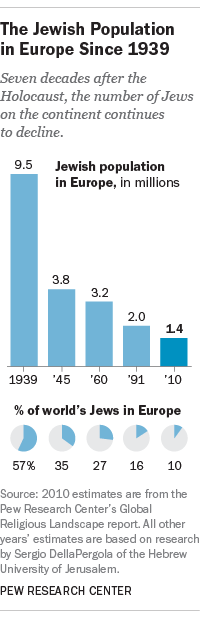
    FT_15.02.04_JewsEurope200pxMy first and most empowering understanding of the Holocaust was my study of The Diary of Anne Frank in eighth grade. To my young mind, Anne’s story explained so much of a grandmother I barely remember. My mother heard grandma speak of her Jewish past only once, and never again. I was able to learn of my own relationship to that Jewish past through a reel-to-reel tape recording of that same conversation. The recording, and my study of Anne Frank raised difficult questions: Who were my relatives in Austria? How many of Grandma’s close friends and cousins died among the six million in the Holocaust? How many others survived? Who were they? Where are they now?

    Ruth’s mission, she explained, was to answer some of those questions. She was looking for the members of the former Jewish community in Pitten, Austria, in order to explain what had happened to them after the annexation of Austria to Nazi Germany in 1938. The Jewish community in Pitten was small, but given that out of the 9.5 million Jews living in Europe before 1938, only 1.4 remain, finding the descendants of those missing Jews is like finding a needle in a haystack . Six million died in the Holocaust, and the remaining 2.1 European Jews are scattered across the globe.

    In the past ten months, Ruth has been collecting and organizing information, and I have not been telling my stories. I’ve been dealing with life, putting the “grand” into grandmothering, fighting bed bugs (The reason for no posts in September. WHY did we move here?), and feeling guilty for not telling stories. But I have not forgotten that one of the reasons I established this blog was to attract previously unknown family members looking to connect with their ancestors and their untold stories.

    My family’s stories are largely unknown, but thanks to Ruth Contreras, I can begin by telling previously unknown stories from my own Jewish ancestors, aunts, uncles and cousins. I hope that Ruth will let me tell her family’s story as well. I’ll never be able to tell even close to six hundred stories of the Jews lost in the Holocaust (let alone six million), but as Ruth reminded me, “The generation of survivors of the Shoah [Holocaust] very often hesitates to speak about what happened, but I think it is the obligation of the second and third generation  to find out as much as possible to ensure that this does not happen again.” Ruth is of the second generation. I am of the third. I take this obligation seriously.

    Ruth was also able to tell me of some neighbors to my ancestors in Pitten, Austria:

    • Ruth’s mother and grandparents lived next door to my family before the Anschluss. They relocated to Columbia, and their property was Aryanized. The family returned to reclaim their property in 1948, and Ruth lives there now.
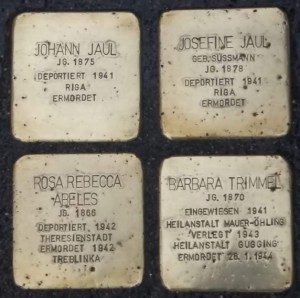
    • Johann Jaul and his wife Josephine, also victims of the Holocaust, owned the property my family lived in, and lived about ten minutes away by foot. The Jauls’ daughter and her husband escaped to Argentina, but their former properties no longer exist.
    • A fourth Pitten resident, Barbara Trimmel, was a victim of Nazi Eugenics (biological purification of the Aryan race). She was not Jewish, but fit into another category targeted by the Nazis.

    Related results of Ruth’s efforts include:

    • Pitten Stumbling Blocks
      Photo contributed by Ruth Contreras

      A photo of my great-grandmother will be included in an exhibit of Jewish life in the Museum of Contemporary History in Bad Erlach.

    • Four bronze “Stumbling Blocks” laid next to the secondary school in Pitten, including one for my third great-aunt, Rosa Rebecca Abeles who died in Treblinka.
    • A commemorative event for the alumni of the secondary school in Pitten.  Ruth reports that the event was quite successful. In her words, “I think the kids learned a lot about prejudices, marginalization of minorities and they will have to discuss a lot at home with their parents. Never again!”
    • An article published in Messenger from the Bucklige Welt telling of Ruth’s quest to identify Holocaust victims and their families, including the story of how she found my family through a web search leading her to Stories From the Past.

    So the dead nations are rising one by one through the  commemoration of their lives in museums, on the streets of their hometowns, magazine articles, and stories told on the internet.

    May we never forget.


    A special thanks to Pitten Mayor Helmut Berger, Stumbling Block artist Gunter Deming, project initiator Ruth Contreras, and research director Werner Sulzgruber.


    How strange it seems! These Hebrews in their graves,
          Close by the street of this fair seaport town,
    Silent beside the never-silent waves,

          At rest in all this moving up and down!

    The trees are white with dust, that o’er their sleep

          Wave their broad curtains in the south-wind’s breath,
    While underneath these leafy tents they keep

          The long, mysterious Exodus of Death.

    And these sepulchral stones, so old and brown,

          That pave with level flags their burial-place,
    Seem like the tablets of the Law, thrown down

          And broken by Moses at the mountain’s base.

    The very names recorded here are strange,

          Of foreign accent, and of different climes;
    Alvares and Rivera interchange

          With Abraham and Jacob of old times.

    “Blessed be God! for he created Death!”

          The mourners said, “and Death is rest and peace;”
    Then added, in the certainty of faith,

          “And giveth Life that nevermore shall cease.”

    Closed are the portals of their Synagogue,

          No Psalms of David now the silence break,
    No Rabbi reads the ancient Decalogue

          In the grand dialect the Prophets spake.

          And not neglected; for a hand unseen,
    Scattering its bounty, like a summer rain,

          Still keeps their graves and their remembrance green.

    How came they here? What burst of Christian hate,

          What persecution, merciless and blind,
    Drove o’er the sea — that desert desolate —

          These Ishmaels and Hagars of mankind?

    They lived in narrow streets and lanes obscure,

          Ghetto and Judenstrass, in mirk and mire;
    Taught in the school of patience to endure

          The life of anguish and the death of fire.

    All their lives long, with the unleavened bread
          And bitter herbs of exile and its fears,

    div>The wasting famine of the heart they fed,

          And slaked its thirst with marah of their tears.

    Anathema maranatha! was the cry

          That rang from town to town, from street to street;
    At every gate the accursed Mordecai

          Was mocked and jeered, and spurned by Christian feet.

    Pride and humiliation hand in hand

          Walked with them through the world where’er they went;
    Trampled and beaten were they as the sand,

          And yet unshaken as the continent.

    For in the background figures vague and vast

          Of patriarchs and of prophets rose sublime,
    And all the great traditions of the Past

          They saw reflected in the coming time.

    And thus forever with reverted look

          The mystic volume of the world they read,
    Spelling it backward, like a Hebrew book,

          Till life became a Legend of the Dead.

    But ah! what once has been shall be no more!

          The groaning earth in travail and in pain
    Brings forth its races, but does not restore,

          And the dead nations never rise again.


  • Unknown Family Members Identified

    Unknown Family Members Identified

    We interrupt your regularly scheduled blog post for this important announcement:please stand by

    I am pleased to report that I have made a very special connection to family, friends, and neighbors who were lost in the Holocaust.

    In the past few days a flurry of emails have gone back and forth between my parents, myself, and a new acquaintance from Austria.

    It began with a message coming directly through this website. (Hooray for contact forms!) A woman in Austria has found my posts regarding my grandmother and my great-aunts who were members of the pre-holocaust Jewish community in Lower Austria. She wanted to know if I could put her in contact with surviving members of the Abeles family from Pitten, Austria.

    Hey, that’s me!

    Completely stunned, I had to read the message three times before I could comprehend that this woman not only knew of my family, but even had some information regarding my family that I did not yet have. I did not quite understand why she was contacting me, but the fact that she knew so much about my grandmother and great-great grandfather was enough to spur me to respond–right after making a very excited phone call to my mother in Utah.

    It turns out that this Austrian woman seems just as excited to have gotten a positive response from me. You see, her family lived next door to my family before both families were sent fleeing from imminent Nazi threat. She was eager to know if there were survivors of her family’s old-time friends. The good news is yes, there were several survivors, and the fact that she was able to find me is evidence.

    I. Am. Ecstatic.

    off the airAs a result of my excitement over this new contact, I accidentally closed out all of the renewed pages I had open for research on this week’s new page and corresponding blog post. Once again, I am having to start over to gather resources for the page and article on Aucke Wikoff that was supposed to have been posted last week.


    Thanks to this new information, my family was able to update existing family members and add another we were unaware of. On top of that, we now know where my great-grandmother was buried and have a photo of her grave. I think the new page and blog post are going to be put on the back burner for the next couple of weeks as I converse with my new family friend and sort out this new story from the past.


    Luckily, this new information came before the post I had planned for next week on the Daniel family. It looks like I’ll be doing something a little different now that I have new information that actually helps to clarify the blog post I had planned for next week. I am really looking forward to sharing all of this with you.

    Hooray for Geneablogging and the internet!


  • She looks just like me. But who is she?

    She looks just like me. But who is she?

    I missed posting on Wednesday. Writing about my Tante Rosa was important, but it took a lot out of me.  By the time I had completed the post, I was emotionally worn down.  I didn’t feel like I was just blogging about my aunt; I was writing for all of  the families of the holocaust. As a parent and grandparent, I imagined being forcefully separated from my young children and grandchildren.  From a child’s standpoint, I imagined the horror of discovery that the people whom I put my deepest faith in could not keep me from being snatched away from my family and sent to an unimaginable doom. It was tough and I needed a break. So Wednesday’s blog comes today.

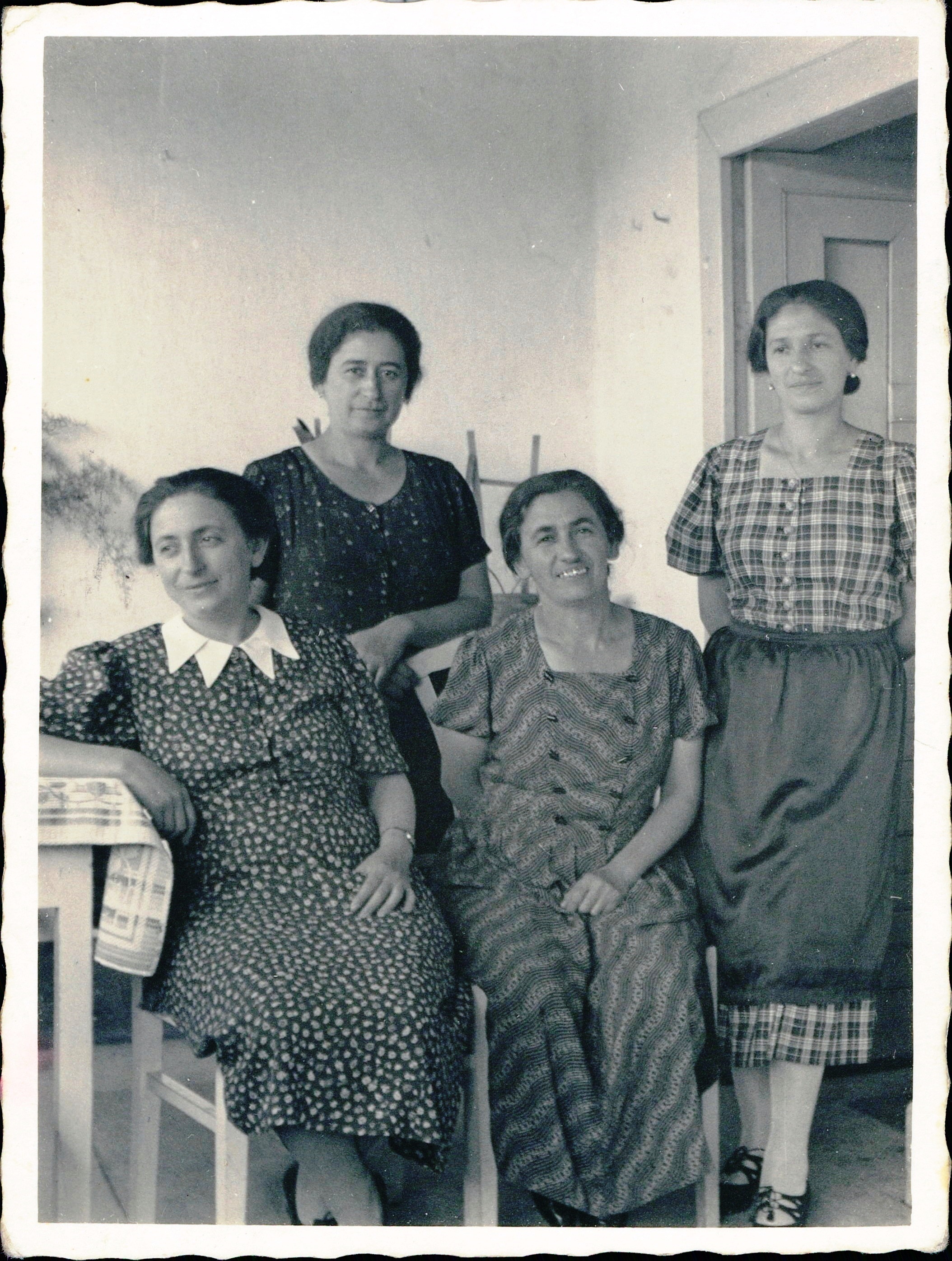
    We are pretty sure that the woman on the left is Gisela. Standing in the back is Helene (we knew her). But the woman sitting to the right and the one in the doorway–we are unsure of . They are most likely Rosa and Sommer (Hermine?), but which is which?

    I talked with my mother at length regarding September 3rd’s post (Why Grandma Cried). But memory is a fickle thing, coming and going without permission as we get older.  From my childhood I remember mom talking about Grandma’s four sisters; but as I started putting records together and gathering photos, I was only able to find evidence of three.  I told my mother this, and she began questioning her own memory.  Together, we decided that our memory had failed us. We labeled the photo of the four women according to this discussion, despite Mom’s insistence that her mother had four sisters.

    A few days after my post appeared I got a phone call. It was my dad. “Your Grandma Rothsprack had four sisters. The one that was missing was named Hermine.”  Okay, now the story is starting to make more sense.  I remember Mom saying that Grandma had four sisters. So I did a little more digging and sure enough, it came out of my own Grandmother’s mouth.  My father had tape-recorded my grandma’s life story when I was just a baby and had made type-written transcripts for each of his children.  This is what Grandma said:

    “I am one of five girls in the family–no boys. [She lists them] Gisela who lives in Austria. Rosa: killed in Auschwitz (sic). Not Married. Helen: Lives in Graten [California]. Sommer – lives in Austria.”

    Wait.

    Didn’t dad say the other sister’s name was Hermine?  This is confusing. Tante Leni didn’t have any children, I’ve never met my Austrian cousins, and Tante Leni and Grandma are not around to help us get it straightened out.

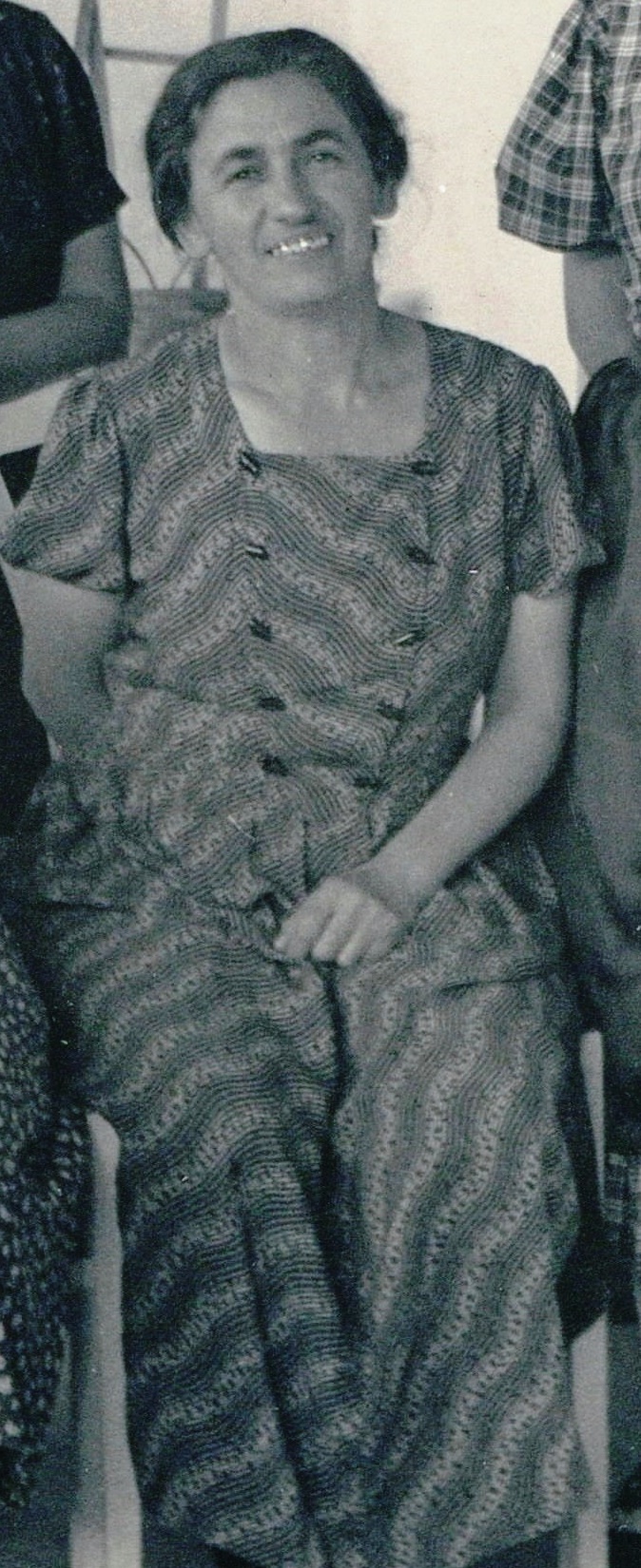
    Same eyes, same nose, same smile, same tilt of the head. Even the same eyebrows!
    Same eyes, same nose, same smile, same tilt of the head. Even the same eyebrows!

    As we were looking at the photograph I noticed something interesting.

    She is either Rosa or Sommer (or Hermine?)
    She is either Rosa or Sommer (or Hermine?)

    When I pointed it out to my husband he disagreed. I kept thinking about it, and I was pretty sure that he was wrong. Until last night.  I was at our local family history library because I was trying to solve the mystery of the missing sister. I showed the genealogist my information and the photograph from my blog; as she looked at the photo, her jaw dropped open, her eyes got big, and she pointed at the photograph. “Do you see this woman?” She asked. I laughed with relief. She saw it too.  We know it is my grandmother’s sister. Because Rosa and Giselle were the oldest, I think it is my Tante Rosa. And she looks like me!

    For me, this is the most awesome thing about genealogy.  I am living proof that I am related to this woman, and she is an integral part of my past. My dad tells me that he just uncovered several more photographs of Rosa.  I can’t wait to get the copies and make the comparisons.